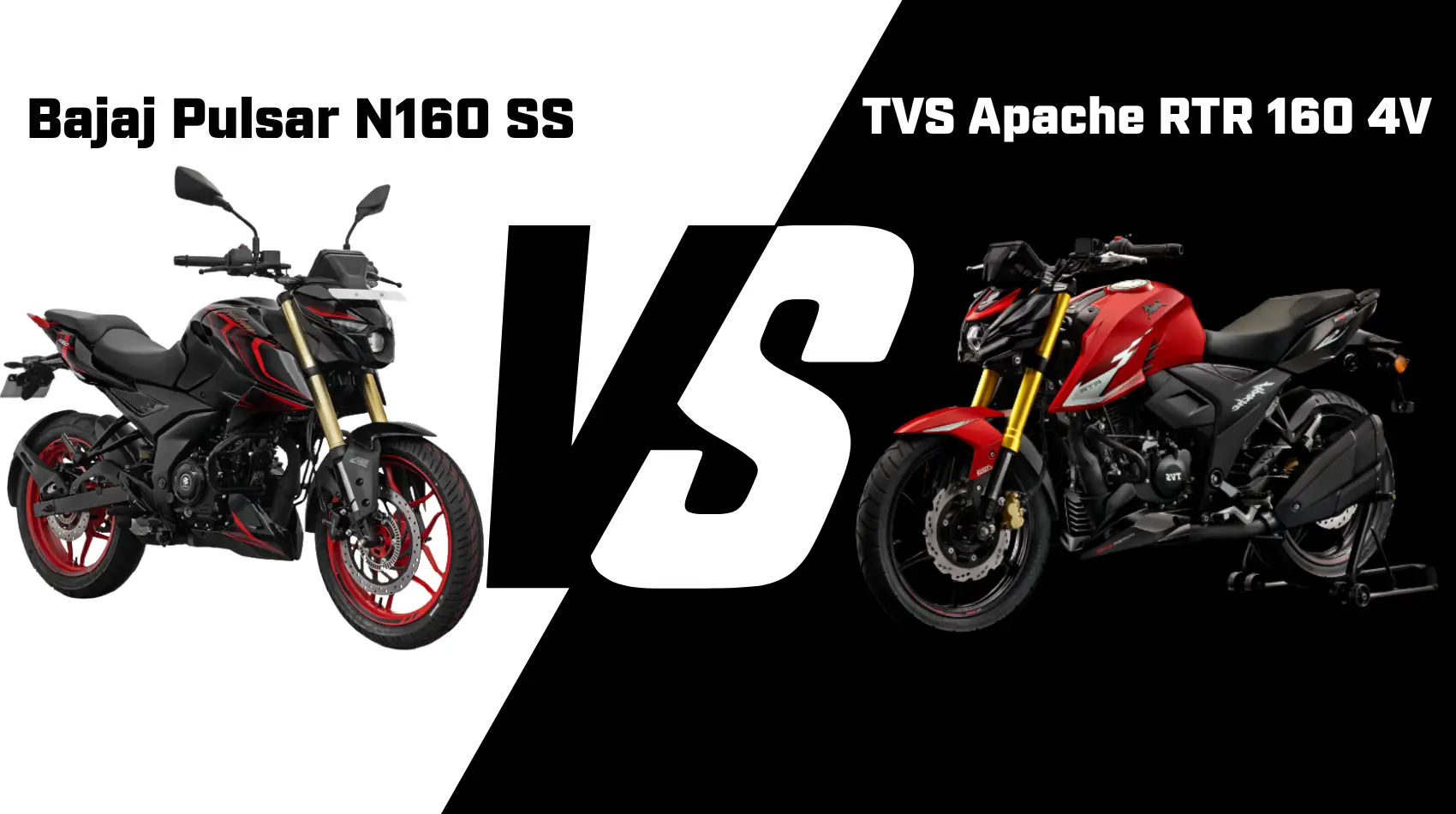
The 160cc motorcycle segment in India has become increasingly competitive, with manufacturers offering more performance, technology and rider aids than ever before. The TVS Apache RTR 160 4V has been one of the segment’s strongest contenders, but Bajaj has now introduced the new Pulsar N160 range and they get a new four-valve engine along with a host of additional features, making it a more serious rival to the Apache RTR 160 4V. But how does the top-spec Pulsar N160 SS compare with its long-standing competitor? Let’s find out.
Performance
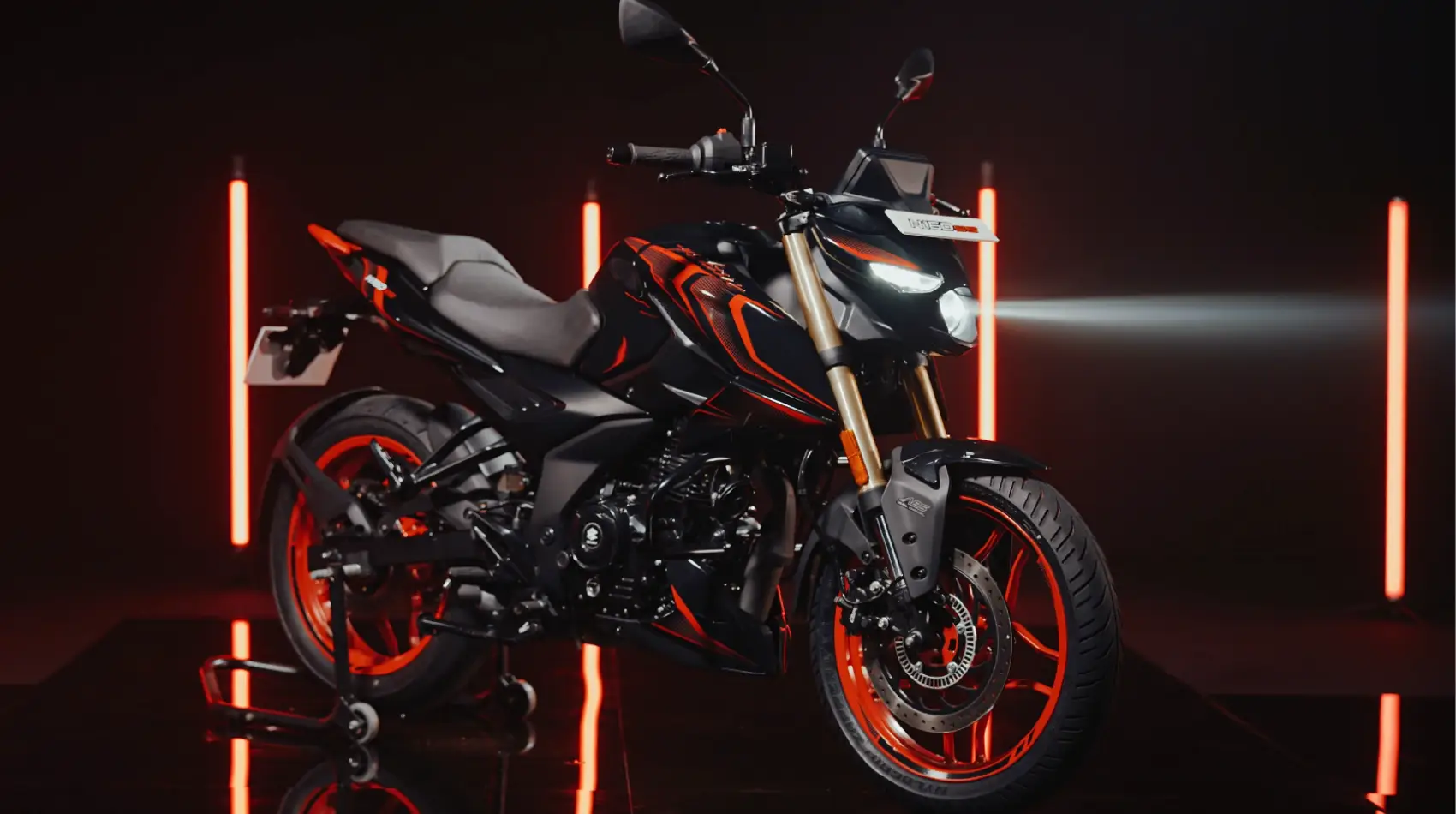
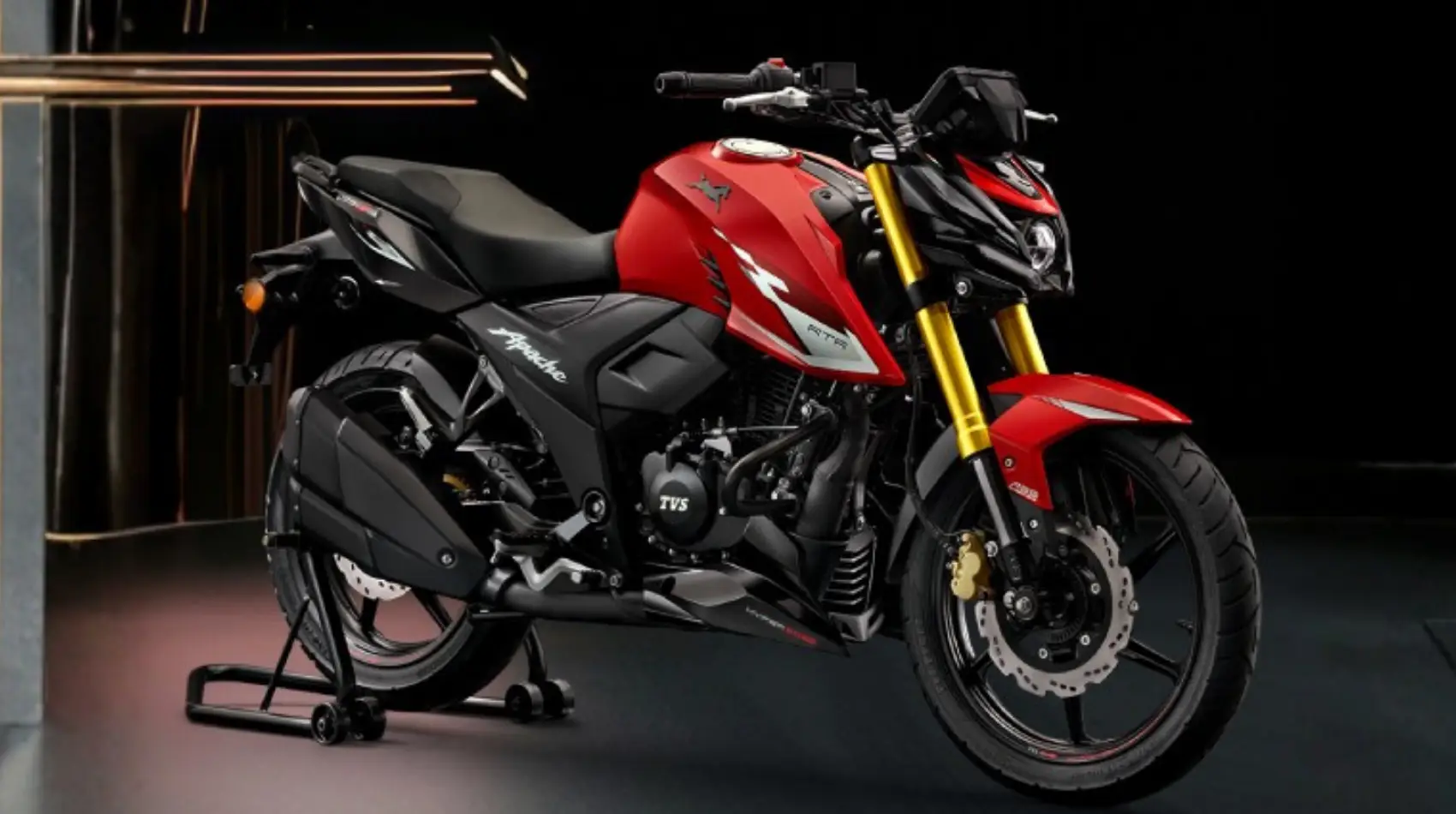
The Bajaj Pulsar N160 SS is powered by a 164.9cc, four-valve, oil-cooled engine producing 18.2hp at 9500 rpm and 14.4Nm of torque at 8000 rpm. Bajaj claims a 0-60kmph acceleration time of just 4.5 seconds. On the other hand, the TVS Apache RTR 160 4V is powered by a 159.7cc, four-valve, oil-cooled engine. This mill produces 17.55hp at 9250 rpm and 14.73Nm of torque at 7500 rpm. Looking purely at the numbers, the Pulsar has the advantage in terms of peak power, while the Apache produces slightly more torque and delivers it at lower rpm. The Pulsar’s larger engine and higher power output should give it an edge when it comes to outright performance.
Suspension and brakes
Braking duties on the Pulsar N160 SS are handled by a 300mm front disc and a smaller 230mm disc at the rear. Suspension duties are handled by 37mm upside-down forks at the front and a monoshock with 130mm of travel at the rear.
The Apache RTR 160 4V gets a smaller 270mm front disc at the front, and a 240mm disc. It also gets 37mm upside-down forks at the front and a monoshock at the rear.
Both motorcycles offer USD forks at the front, which is something that has become increasingly common in this segment. However, the Pulsar gets the larger front brake disc, which should provide a stronger braking setup.
Wheels and tyres
The Bajaj Pulsar N160 SS rides on 17-inch wheels at both ends. The Apache RTR 160 4V also uses a similar 17-inch wheel setup. Both motorcycles get a 130/70 R17 radial tyre at the rear.
There isn’t much to differentiate between the two motorcycles in this area. Both use the same basic wheel and tyre setup. The radial rear tyres on both motorcycles should offer good stability and inspire confidence, especially at higher speeds and cornering.
Features and Rider aids
The N160 SS gets a 5-inch TFT display with Bluetooth connectivity. It also gets Google Maps integration. The Pulsar now gets ride-by-wire technology, which enables four riding modes: Road, Rain, Sport and Off-Road and traction control. It also gets Bajaj’s Crawl Tech feature, which is aimed at making low-speed riding easier in heavy traffic. It is designed to reduce the amount of throttle and clutch input needed when crawling through bumper-to-bumper traffic. For someone who spends a lot of time riding in cities, I think this could actually be one of the more useful additions.
The Apache RTR 160 4V also gets a 5-inch TFT display with Bluetooth connectivity and TVS SmartXonnect. However, its navigation system is more limited, with turn-by-turn navigation rather than the Google Maps integration offered by the Pulsar.
The Apache also gets TVS’ Glide Through Technology, which helps with low-speed launches by allowing the motorcycle to move forward with a slow clutch release without requiring throttle input.
Both motorcycles offer a similar set of features, but the Pulsar gets Google Maps integration and ride-by-wire technology, which enables multiple riding modes and traction control. These additional rider aids give the Pulsar a slight advantage over the Apache in terms of technology and electronics.
Price and Verdict
Priced at ₹1.42 lakh (ex-showroom), the Bajaj Pulsar N160 SS costs around ₹4,000 more than the TVS Apache RTR 160 4V, which is priced at ₹1.38 lakh (ex-showroom). In my opinion, the small premium is easy to justify considering everything the Pulsar brings to the table. With more power, four riding modes, traction control, ride-by-wire, Google Maps integration and Crawl Tech, the N160 SS feels like the more complete and feature-packed motorcycle. The Apache is still a strong option, but I think Bajaj has raised the bar with the new Pulsar. For just ₹4,000 more, the Pulsar N160 SS has created a strong impact in the 160cc segment.