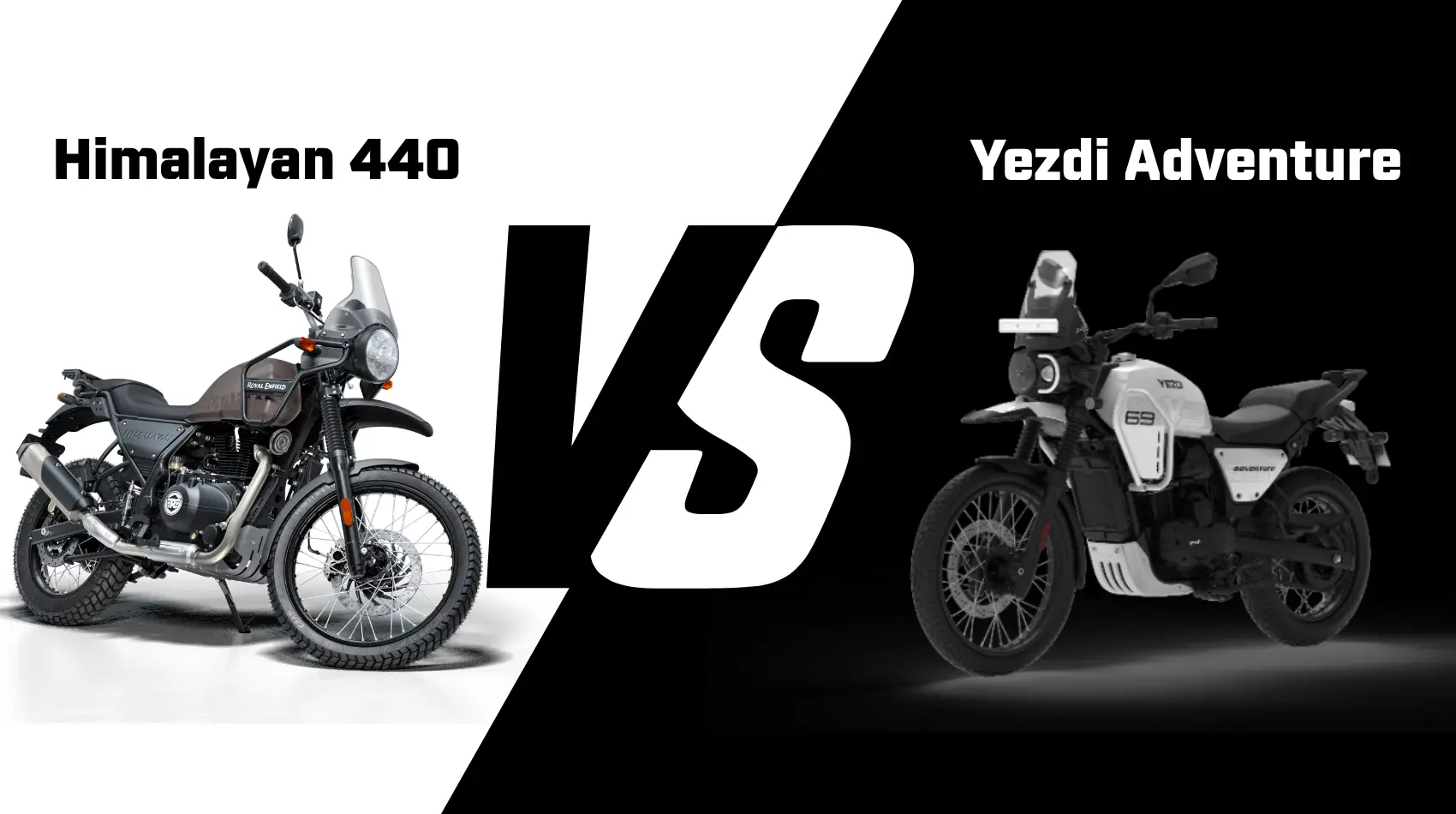
The Himalayan name has been closely associated with affordable adventure motorcycling in India since the original Himalayan 411 arrived a decade ago. The new Himalayan 440 brings back that familiar formula with a larger engine, while keeping things relatively simple compared to the Himalayan 450. The Yezdi Adventure, meanwhile, takes a slightly different approach, combining a 334cc liquid-cooled engine with more electronic rider aids.
On paper, the two motorcycles may appear to target the same buyer, but there are some important differences between them. Here is how the Himalayan 440 stacks up against the Yezdi Adventure.
Engine and Performance
The biggest difference between the two motorcycles is their approach to performance.
The Royal Enfield Himalayan 440 uses a 443cc, single-cylinder, air/oil-cooled engine producing 25.4hp and 34Nm of torque. It is paired with a six-speed gearbox. The engine is tuned more towards usable torque than outright performance, with peak torque arriving at 4000rpm.
The Yezdi Adventure gets a smaller 334cc, liquid-cooled, single-cylinder engine. It produces around 29.6hp and 29.8Nm, also paired with a six-speed gearbox. This gives the Yezdi a clear advantage in terms of peak power, while the Himalayan produces more torque. More importantly, the Royal Enfield delivers that torque at a lower engine speed, which should make it feel more relaxed at low speeds and when riding on loose surfaces. The Yezdi’s liquid-cooled motor, meanwhile, is likely to feel more eager when the revs climb. It is the motorcycle to pick if outright engine performance matters more to you. The Himalayan, on the other hand, appears better suited to riders who prefer a relaxed engine with strong low-end response.
Wheels and Dimensions
Both motorcycles use a 21-inch front wheel and a 17-inch rear wheel, giving them the basic hardware expected from a proper adventure motorcycle. The Yezdi Adventure comes with spoke wheels and is also available with tubeless rims, while the Himalayan 440 continues the traditional wire-spoke setup. The Himalayan 440 has 220mm of ground clearance, which matches the Yezdi Adventure’s 220mm figure. This should give both motorcycles enough clearance to deal with broken roads, rocks and off-road sections. The Yezdi gets an 815mm seat height, while the Himalayan 440 has an 800mm seat height. That 15mm difference may not sound significant on paper, but it could make the Royal Enfield easier to manage for shorter riders, particularly when coming to a stop on uneven terrain.
The Himalayan also weighs around 199kg kerb, while the Yezdi Adventure’s kerb weight is around 187kg. That gives the Yezdi an advantage on paper in terms of power to weight ratio.
Suspension and Brakes
The two motorcycles use fairly conventional suspension hardware. The Himalayan 440 gets 41mm telescopic forks at the front with 200mm of travel, while the rear uses a linkage-type monoshock with 180mm of travel. Its suspension setup is clearly aimed at retaining the long-travel, rough-road character that made the Himalayan 411 popular. The Yezdi Adventure also uses 41mm telescopic forks at the front, while the rear gets a linkage-type monoshock with seven-step adjustable preload.
On the braking front, the Yezdi gets larger hardware, with a 320mm front disc and a 240mm rear disc. The Himalayan 440 gets a 300mm front disc and a 240mm rear disc. So while both motorcycles have disc brakes at both ends, the Yezdi has the larger front disc and offers considerably more electronic assistance.
Electronics and Rider Aids
This is where the Yezdi Adventure has a clear advantage. The Yezdi gets traction control as standard along with three ABS modes: Road, Rain and Off-Road. The different ABS modes allow the rider to alter the amount of electronic intervention depending on the riding conditions. The Himalayan 440 takes a much simpler approach. It is positioned as a less technologically complex alternative to the Himalayan 450, which means it does not get the same level of electronics as its larger sibling. This difference could be important depending on what you expect from your motorcycle. Riders who enjoy having electronic aids and selectable modes will find the Yezdi more appealing. Those who prefer a simpler motorcycle with fewer systems to worry about may find the Himalayan’s approach more attractive.
Features
The Yezdi Adventure gets a digital instrument cluster with Bluetooth connectivity, turn-by-turn navigation and a USB charging port. These features make it a practical option for riders who spend long hours touring.
The Himalayan 440 gets a simpler twin-pod instrument setup with a Tripper navigation pod. The motorcycle gets Google Maps-powered turn-by-turn navigation, while the design is considerably simpler than the TFT-equipped unit found on the Himalayan 450. Neither motorcycle is trying to overwhelm the rider with technology. However, the Yezdi’s Bluetooth connectivity and electronics package give it a slight edge in terms of features.
Fuel Tank and Touring Ability
Adventure motorcycles are often bought for their ability to cover long distances, and both bikes have reasonably large fuel tanks. The Himalayan 440 gets a 15-litre fuel tank, while the Yezdi Adventure has a larger 15.5-litre tank. The difference is small, but the Yezdi has the advantage on paper. The Himalayan’s greater torque should make it a relaxed motorcycle for long-distance riding, while the Yezdi’s higher power output could make it the more energetic option on highways. Ultimately, both should be capable touring motorcycles, but their characters are likely to be quite different. The Himalayan appears to be aimed at relaxed exploration, while the Yezdi offers a little more performance and electronic assistance.
Pricing
The Yezdi Adventure is priced at ₹2.13 lakh (ex-showroom) for the standard Yellow Falcon variant, putting it ₹16,000 below the Royal Enfield Himalayan 440, which is priced at ₹2.29 lakh (ex-showroom).
That makes the Yezdi the more affordable motorcycle at the entry level, despite offering more outright power and a longer list of electronic rider aids. It also gets traction control, three ABS modes and a seven-step adjustable rear monoshock. The Himalayan 440, however, counters with its larger 443cc engine, higher torque output and lower 800mm seat height. It is also aimed at riders who prefer a simpler adventure motorcycle with the familiar Himalayan character. The Yezdi Adventure therefore makes more sense if features, power and value for money are high on your priority list. The Himalayan 440, meanwhile, could appeal more to riders looking for a relaxed, torque-focused adventure motorcycle with an accessible seat height and the legacy of the original Himalayan.