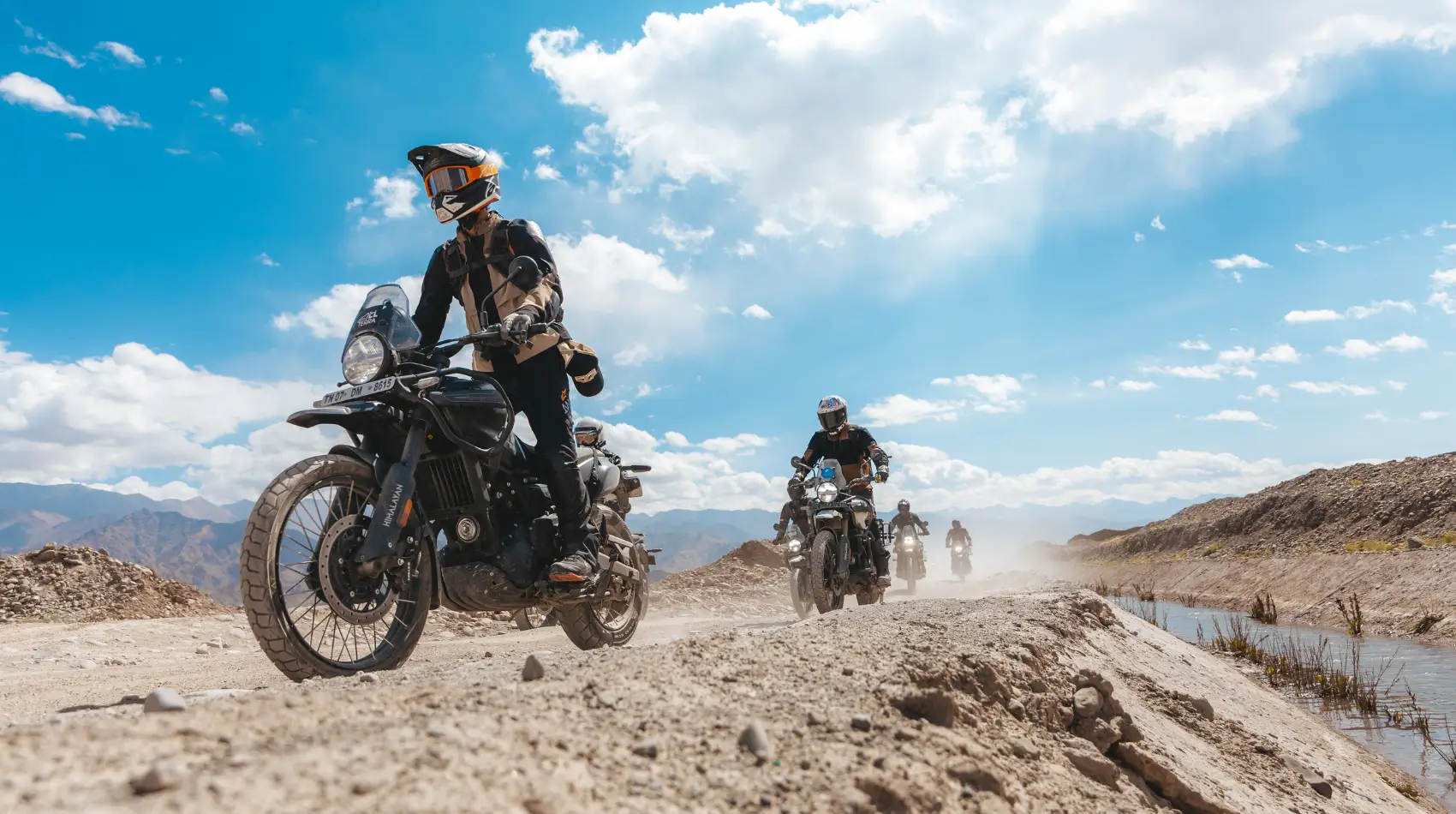
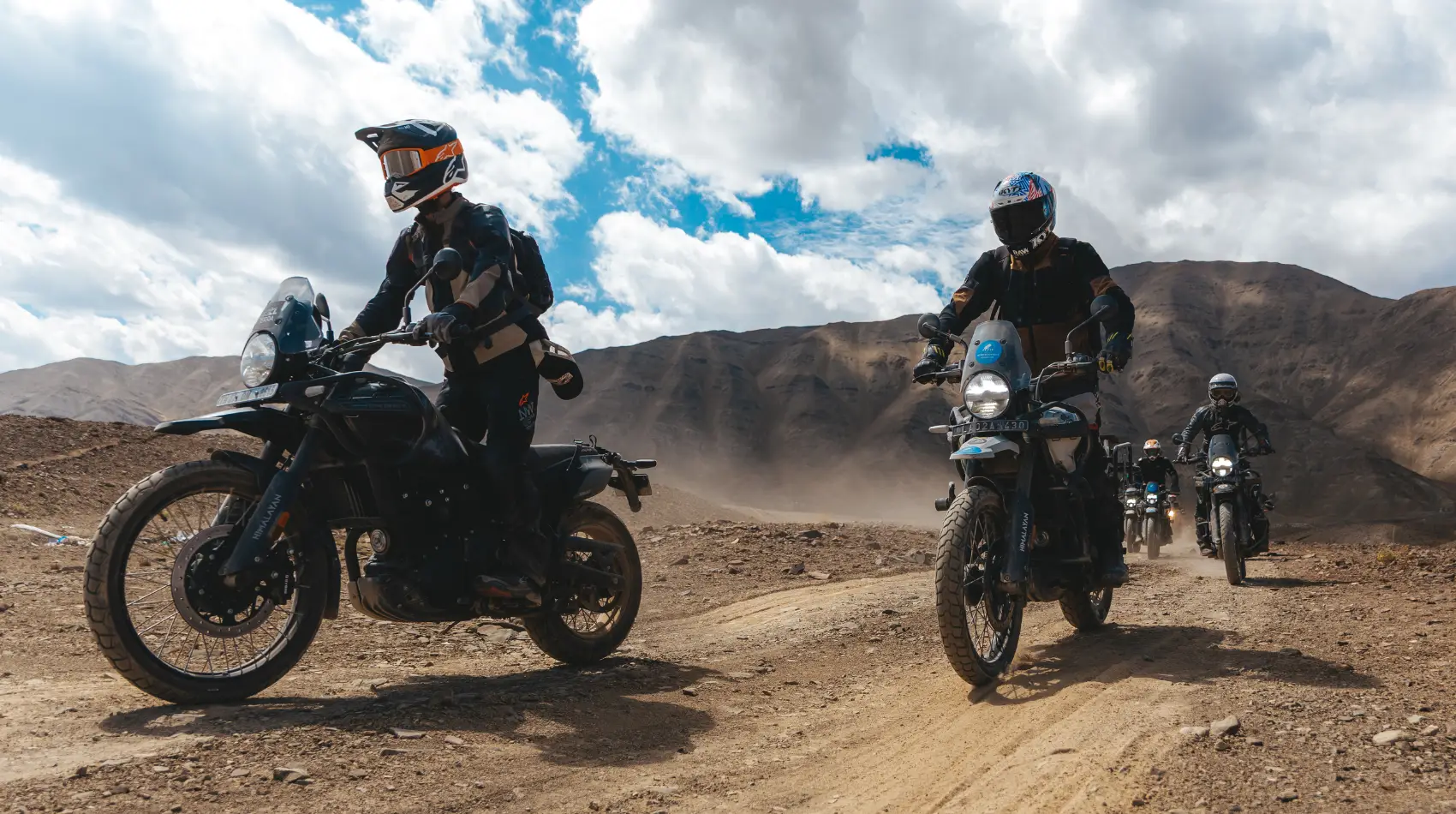
I was staring down a steep slope and wondering if I had made a terrible mistake. Wasn't a particularly dramatic one by Ladakh standards. There was no sheer cliff, no raging river waiting at the bottom, no impossibly technical section of trail. It was simply a sharp downhill section of loose dirt and rocks, the kind of obstacle that an experienced off-road rider would probably dispatch without giving it a second thought. But I had never ridden off-road before. I had never ridden in Ladakh either. And now I was sitting on a Himalayan 450, staring at a descent that had suddenly acquired considerably more significance than it probably deserved.
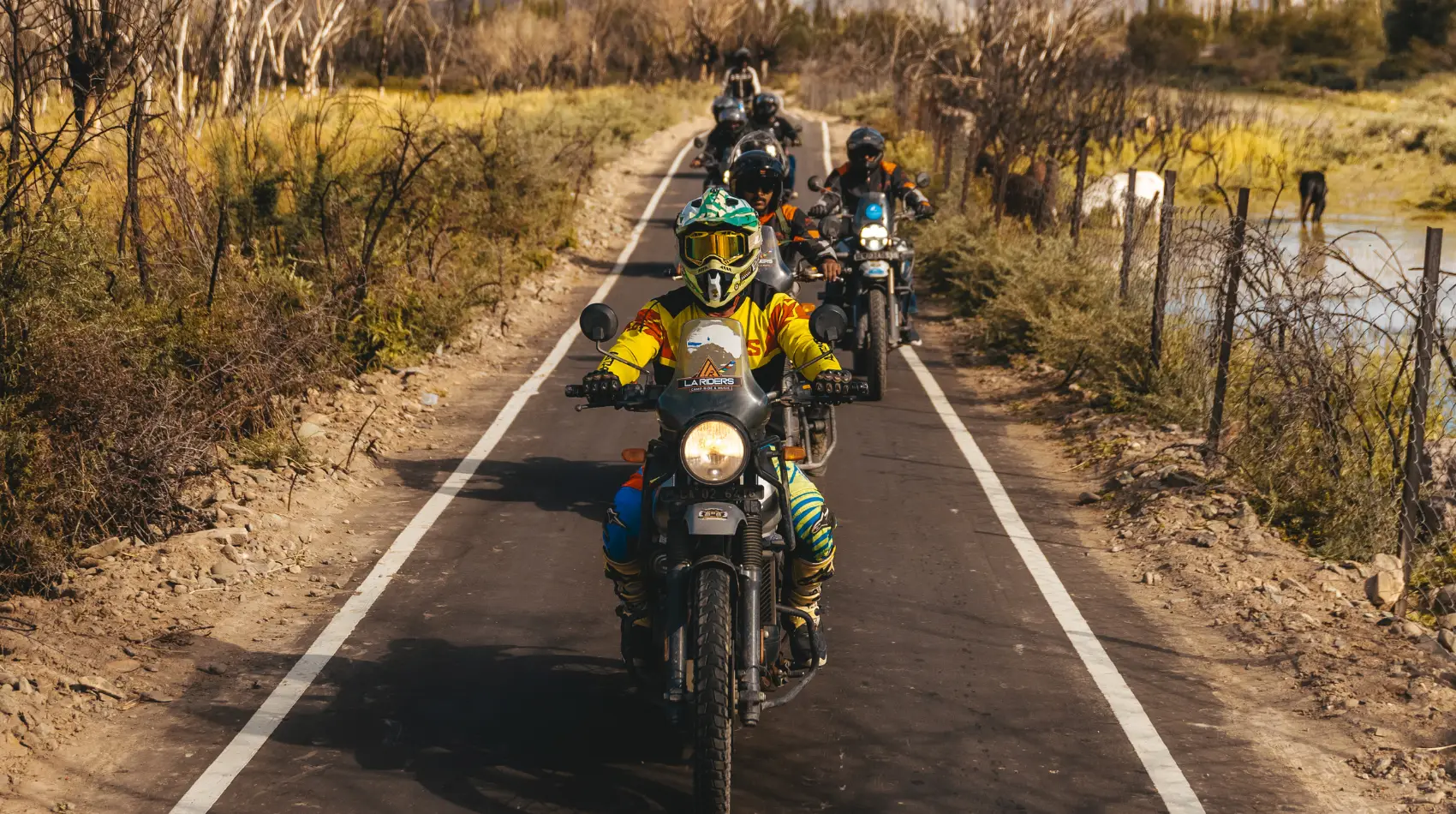
Everyone had stopped. That didn't help. We were on an off-road ride with Alpinestars as part of Royal Enfield's Himalayan Basecamp, with the gallant and free-spirited Jamie Robinson (better known online as @motogeo) leading the way. Jamie has the sort of infectious confidence that makes difficult things look suspiciously easy. He talked everyone through the descent, insisting that it was no big deal. Then, naturally, he went first and made it look exactly like that.
One by one, the riders followed. I watched, feet trembling a bit. The sensible part of my brain was doing what it had been doing since the beginning of the ride: assessing every obstacle, imagining every possible way it could go wrong and quietly suggesting that perhaps turning around was a perfectly reasonable option. There had been obstacles before this one. At each of them, I had wondered whether I should carry on. I had carried on anyway, but always with that little voice asking whether I really needed to.
This time, though, I rolled towards the edge. I braked. I stopped. And immediately moved aside to let another rider through. I told myself I was just being cautious. In reality, I was scared. Then another thought crept in. I didn't want to be the last one left at the top. It sounds ridiculous now. It wasn't even about the slope anymore. It was about that peculiar human fear of being the person who doesn't go when everyone else does. So I turned the Himalayan around, came back towards the descent, took a breath and decided to stop thinking.
I went. The bike dropped down the slope almost absurdly smoothly. The tyres found their way through the loose surface, the suspension soaked up the imperfections, and the Himalayan just kept moving beneath me. By the time I reached the bottom, I was grinning inside my helmet, still panting from all that nervousness. Relief came first. Then came something else. I realised I was having fun.
The ride continued, but something had changed. Somewhere between the top and bottom of that little slope, I had crossed a line that existed almost entirely in my head. I may have shed a tear or two inside that helmet. It sounds melodramatic when you write it down. It didn't feel that way while it was happening.
Because I hadn't just ridden down a hill. I had realised something about myself. I had spent the better part of the last few years becoming very good at living inside my comfort zone. Life has a funny way of teaching you that protecting yourself is sensible. When things hurt, you retreat a little. When something feels risky, you think twice. Eventually, without quite noticing, you can build a fairly comfortable little shell around yourself.
Mine had become rather sturdy. That descent cracked it.
There was something almost absurdly liberating about discovering that the thing I had been afraid of was neither particularly dangerous nor particularly difficult. I had simply made it bigger in my head than it really was. And that tiny distinction between something being genuinely dangerous and simply feeling frightening stayed with me for the rest of the ride. It also made me think about why we ride motorcycles in the first place.
THE FIRST SLIDE
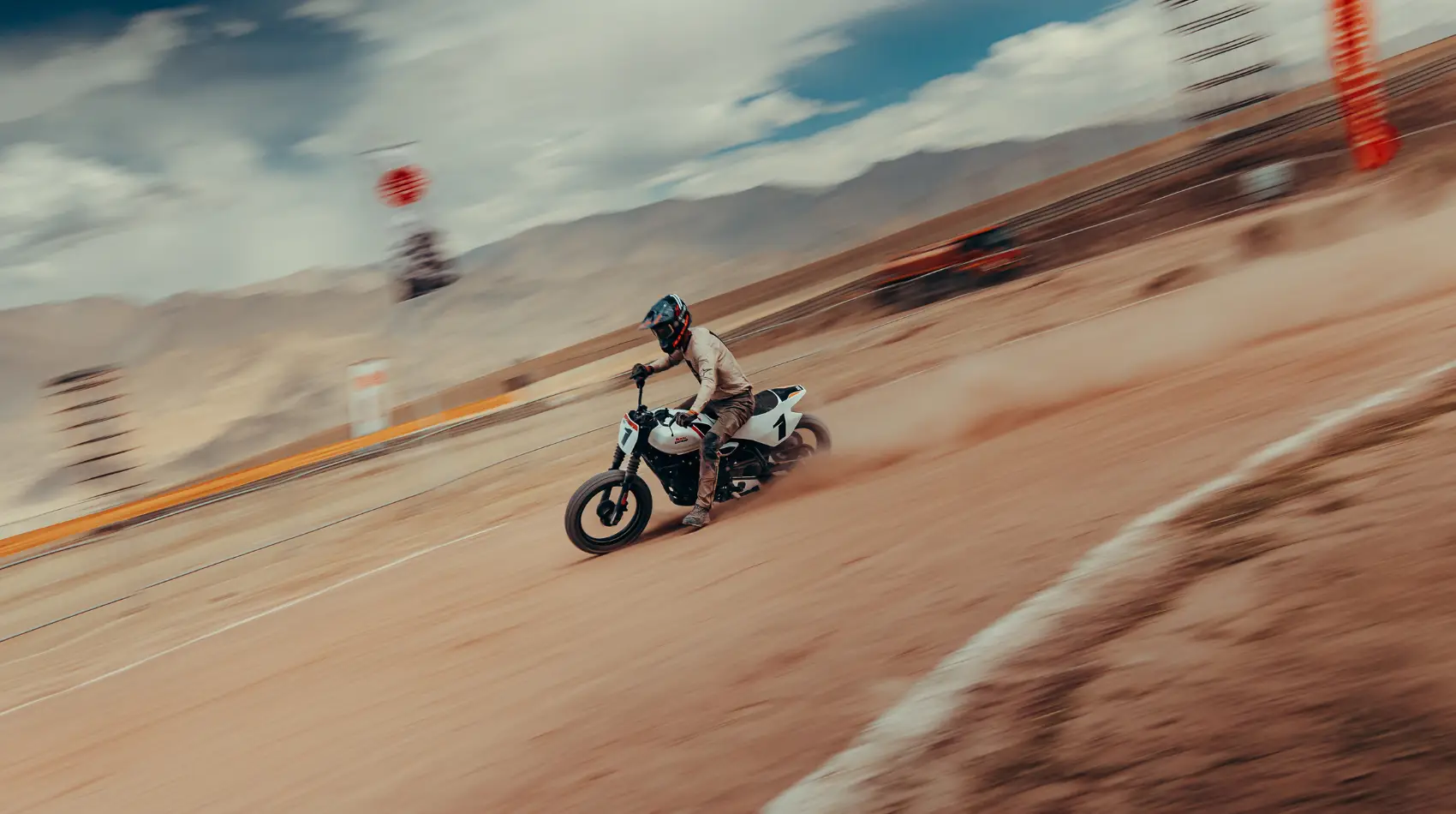
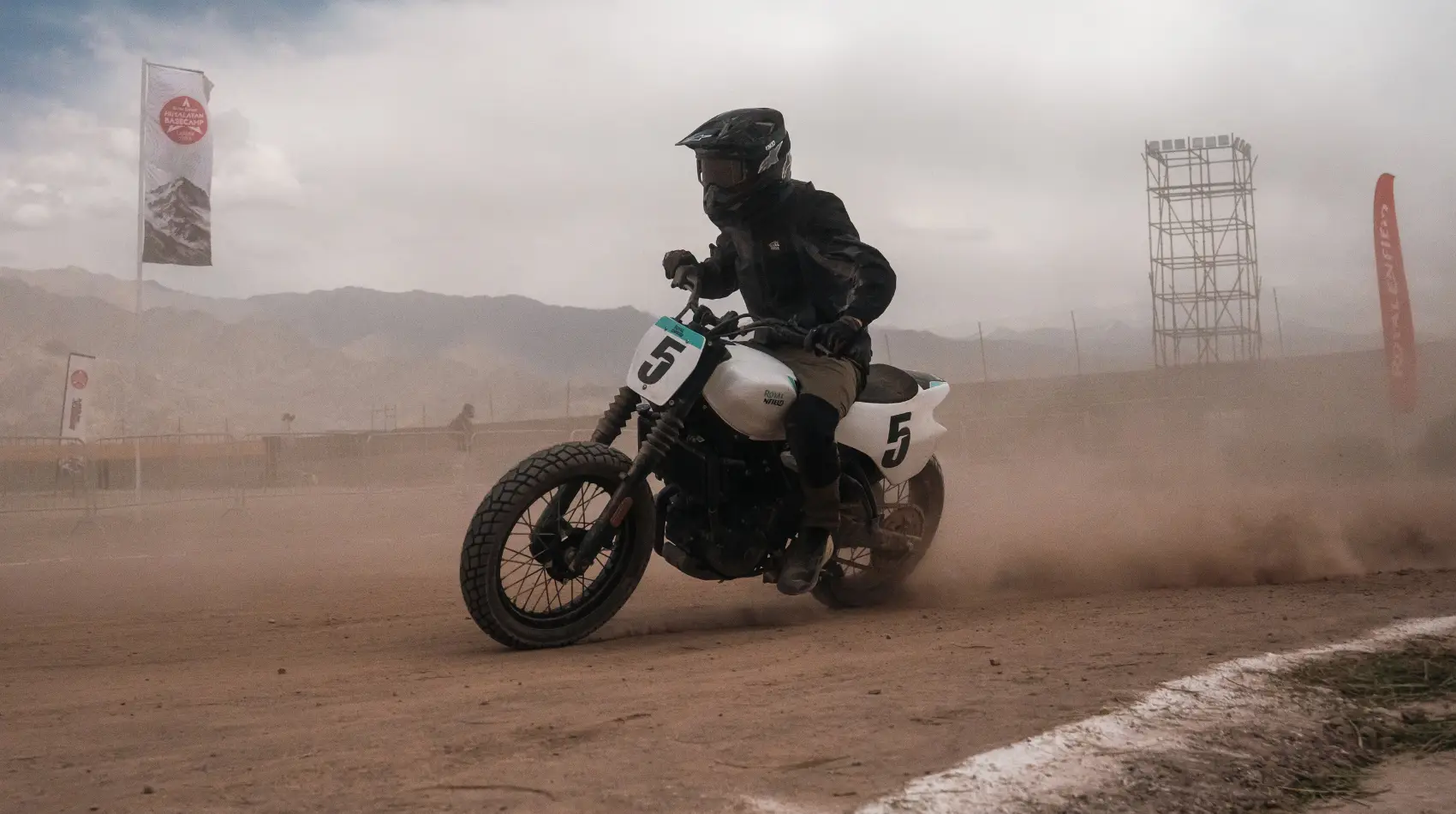
The irony is that my Himalayan Basecamp experience had already begun by asking me to do something I had never done before. A day prior to the off-road ride, I found myself at a special Slide School session. Sliding a motorcycle around on loose dirt had never featured particularly high on my list of things I thought I would be doing in Ladakh. At first, every movement felt unnatural. The rear stepping out beneath you is not something your instincts immediately welcome.
Then you begin to understand it. A little more throttle. A little more confidence. Let the bike move. Stop trying to correct every little movement. And suddenly the rear tyre kicks out, the dirt flies, and you realise you're smiling like an idiot. Once I got the hang of it, it was enormous fun. That was the first small lesson of Himalayan Basecamp: sometimes you have to allow the motorcycle to do something that your instincts are telling you to prevent.
Royal Enfield's Slide School is built around exactly that idea, using a controlled environment to teach riders the fundamentals of flat tracking and sliding. It is also a rather good metaphor for adventure itself. You cannot experience the slide while desperately trying to prevent the motorcycle from moving. At some point, you have to trust the tyres, trust the bike and, perhaps most importantly, trust yourself. I didn't realise how much that lesson would matter the following day.
THE PLACE
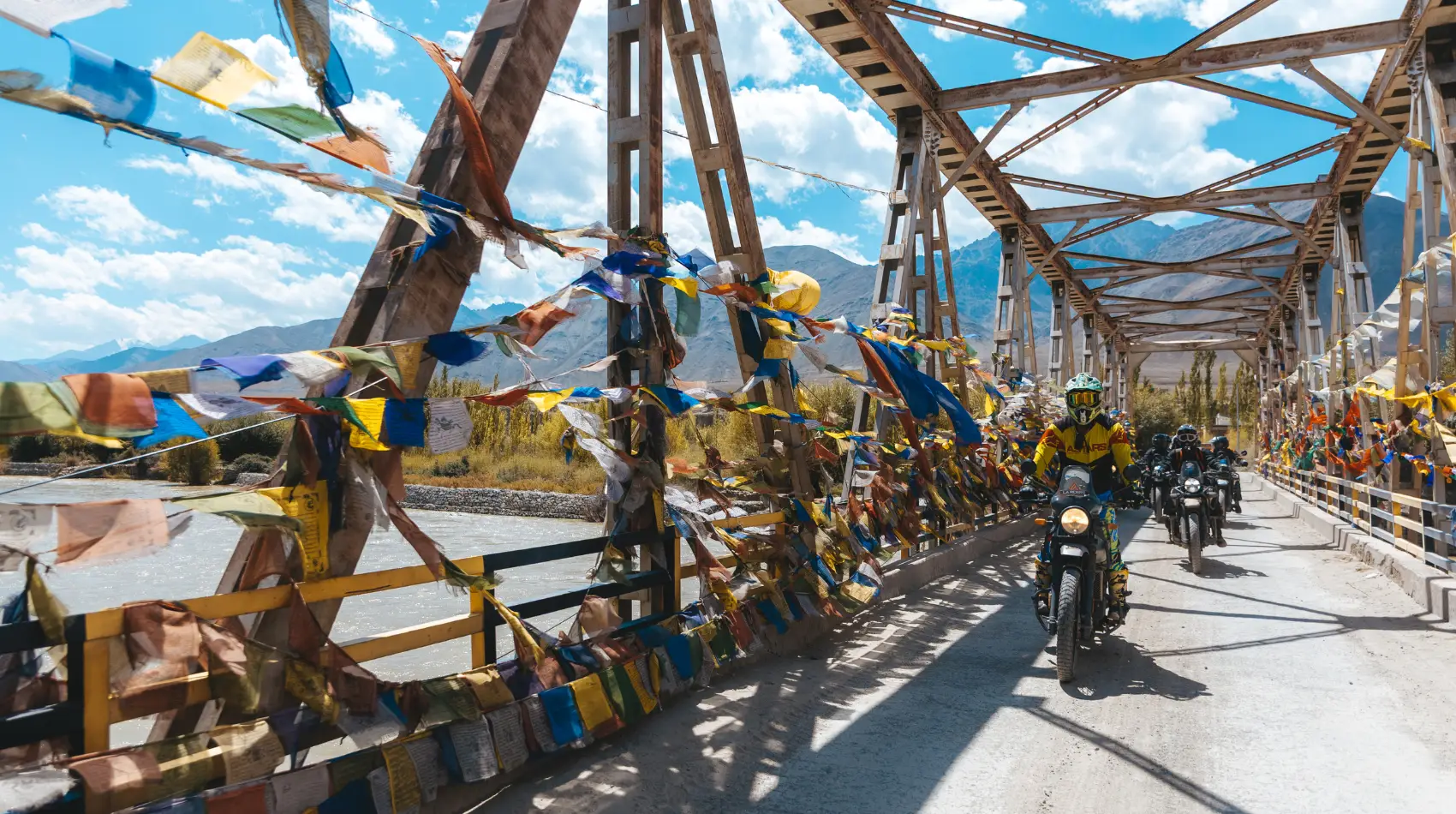
There was another reason the off-road ride hit differently in Ladakh. I had never ridden here before. In fact, I had never really experienced Ladakh from a motorcycle at all. Only through a car, which I wasn’t even driving. Needless to say I’m never going to do that again now. You can look at photographs of this place for years and still not be prepared for what happens when you're actually riding through it.
The scale is disorienting. Mountains seem to stretch forever, the landscape changes colour without warning, and the road can disappear into terrain that looks almost hostile from a distance. On a motorcycle, though, the landscape stops being scenery. You are in it.
You feel the cold through your gloves. You feel the surface changing beneath the tyres. You smell the air. You hear the engine working. You notice every rock, rut and change in gradient. You become acutely aware of where you are, because there is very little separating you from the environment around you.
That, I think, is the profound thing about riding. A car can take you to a beautiful place. A motorcycle makes the journey part of the place. And when you're somewhere like Ladakh, that difference becomes enormous.
TEN YEARS, AND BACK TO WHERE IT BEGAN
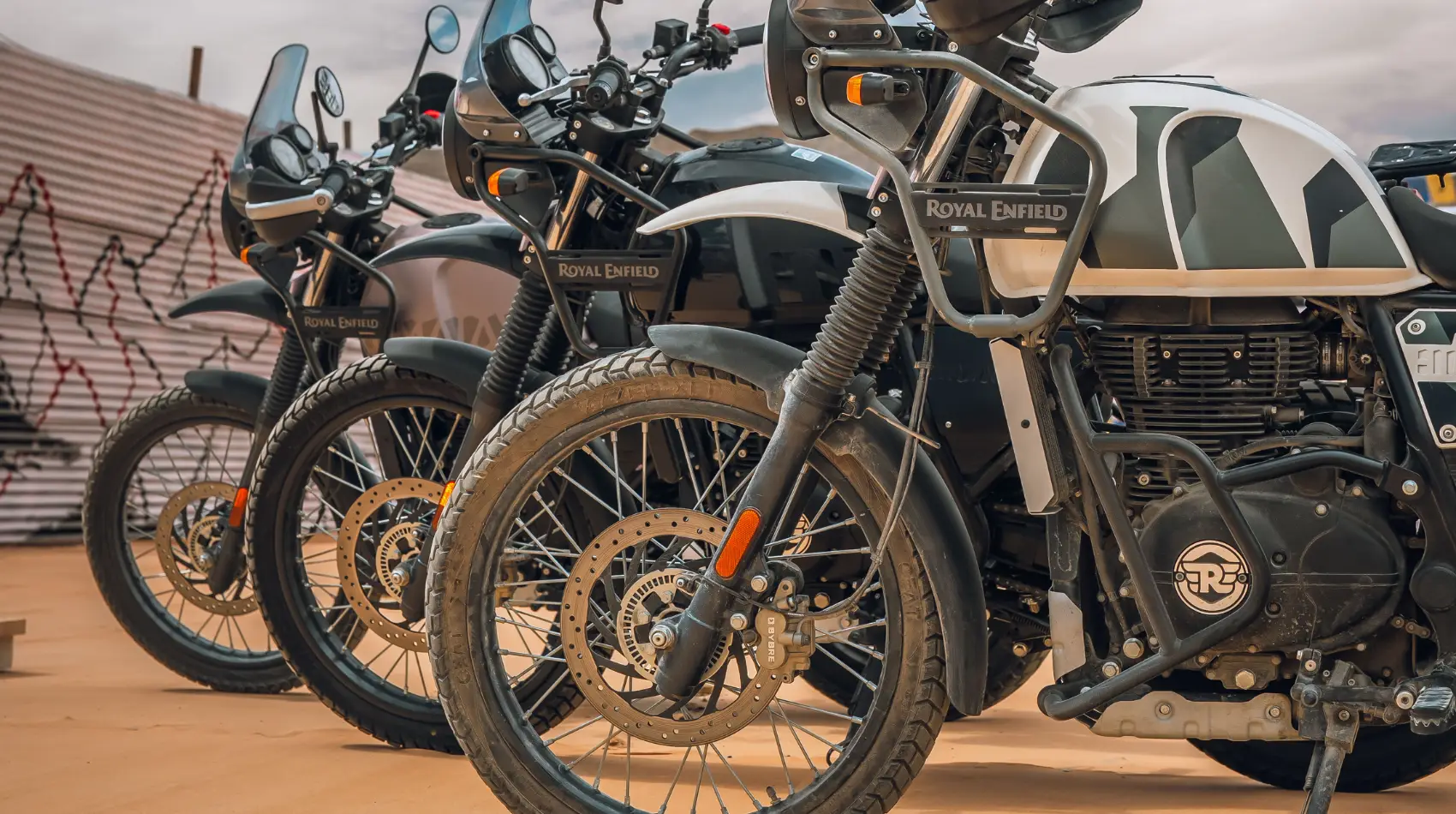
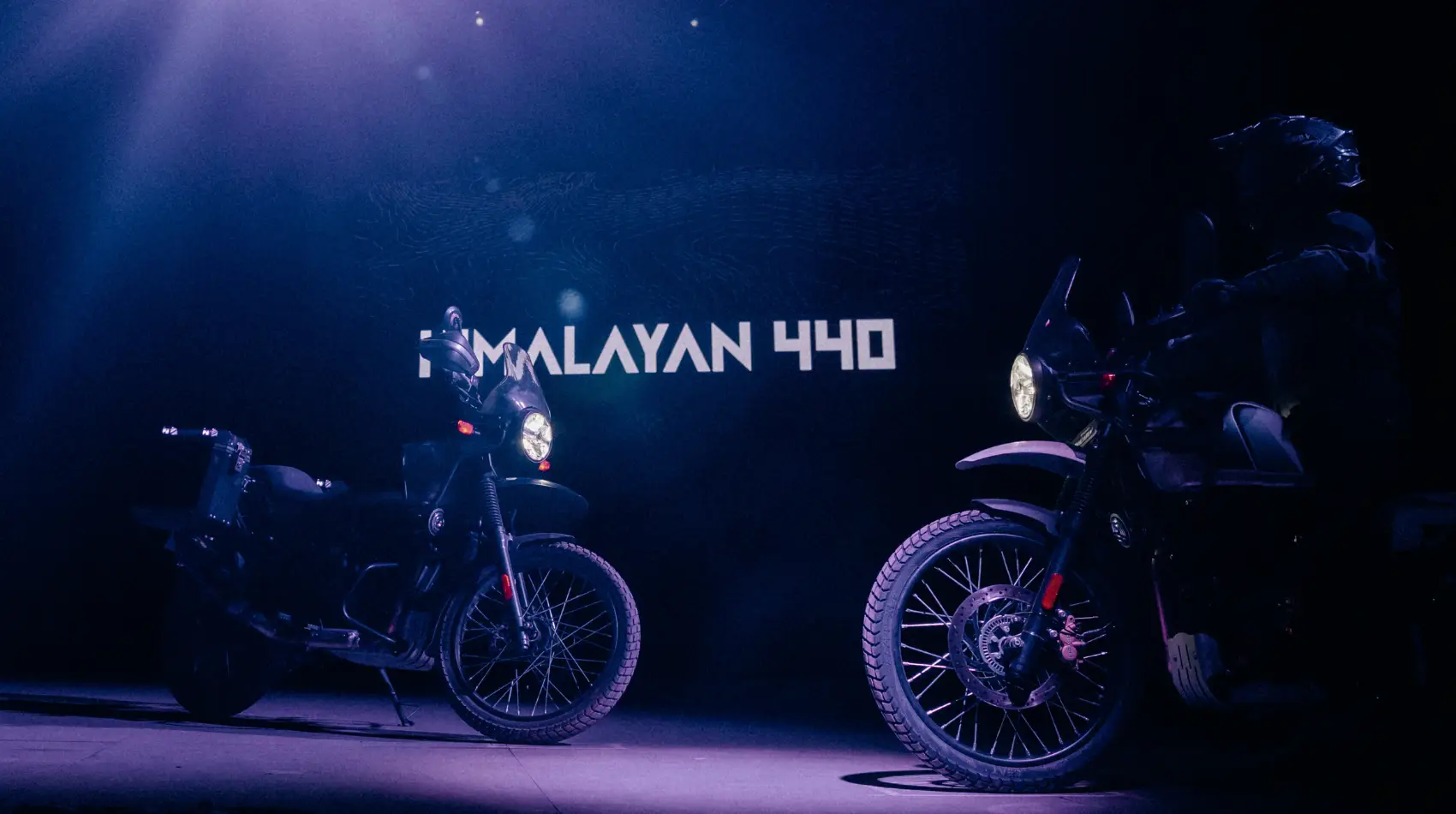
It was fitting, then, that the Himalayan story itself had come full circle at Basecamp. A decade after the original Himalayan arrived, Royal Enfield brought back the simpler Himalayan formula with the Himalayan 440. The new motorcycle retains the essential idea of an approachable adventure bike, but gets a 443cc long-stroke engine producing 25.4bhp and 34Nm, a six-speed gearbox, 220mm of ground clearance and an 800mm seat height. The 21-inch front wheel remains central to its rough-road ability.
I didn't get to ride the Himalayan 440 in Ladakh. The launch and Basecamp experience gave me plenty of time around it, but the proper ride impressions came later, in Mumbai, and those sit elsewhere in these pages.
Perhaps that was appropriate. Because Basecamp ended up teaching me something that had very little to do with specifications. The original Himalayan was born from a very straightforward idea: make a motorcycle that allows people to go looking for places beyond the obvious. Ten years later, the machinery has evolved, but the reason for riding one hasn't changed very much.
You ride because you want to see what is around the next bend. Sometimes, you ride because you don't know whether you can make it around that bend. And sometimes, you ride because you need to remind yourself that you can.
THE NIGHT
Basecamp wasn't all about testing your nerve, thankfully. After spending the day riding, sliding and generally finding new ways to get dirt into places where dirt has no business being, the evenings offered a very different kind of adventure.
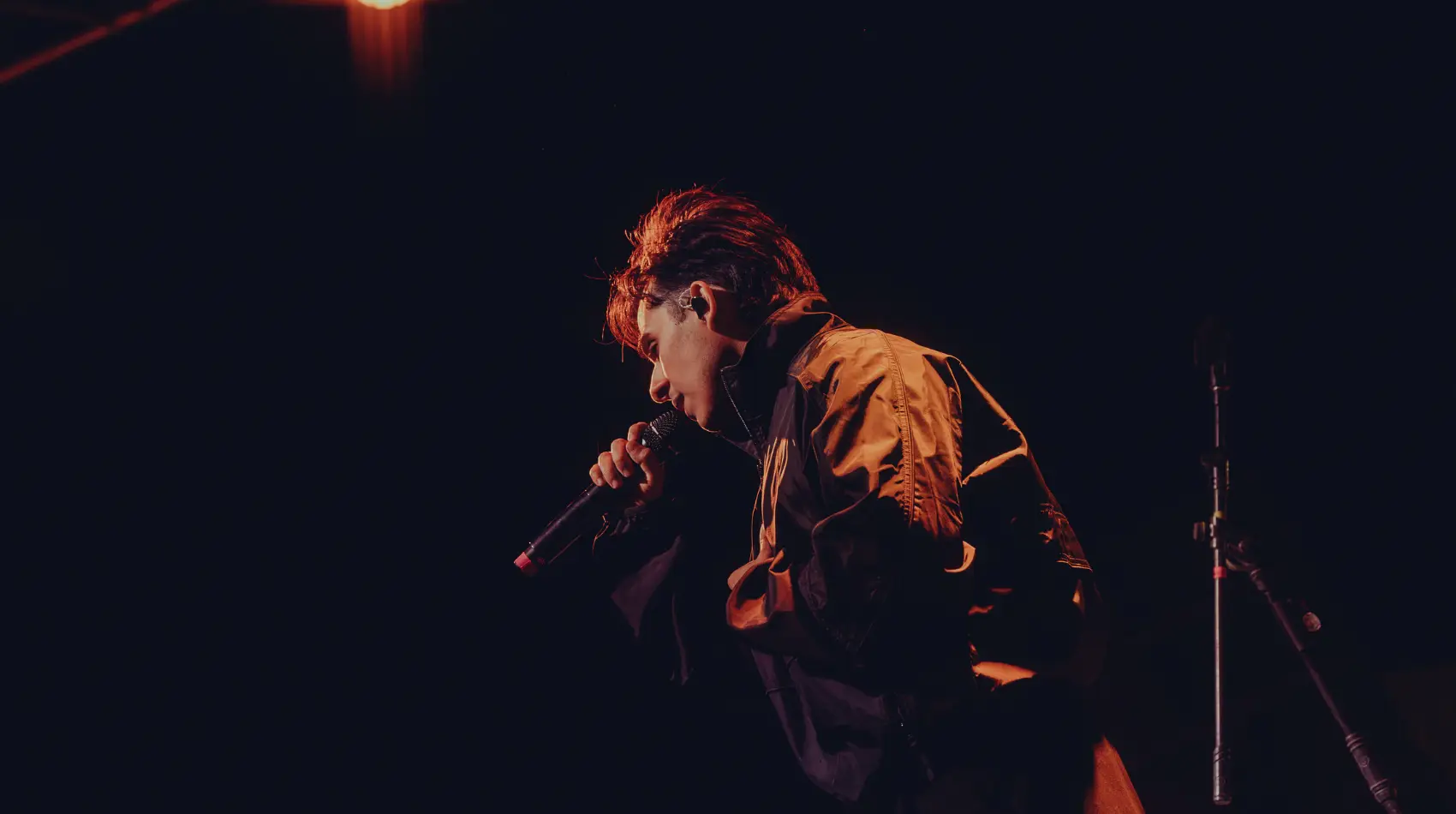
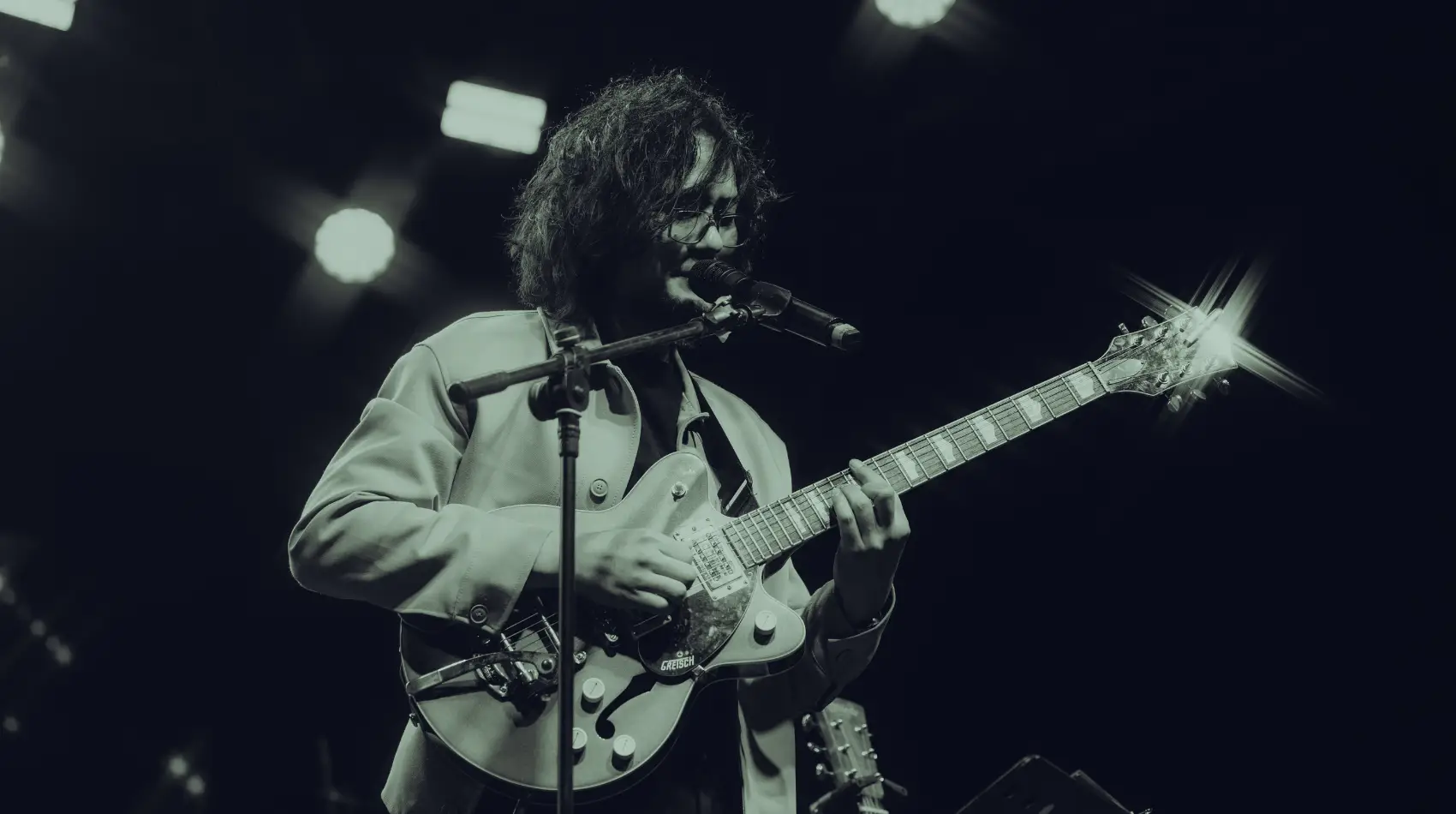
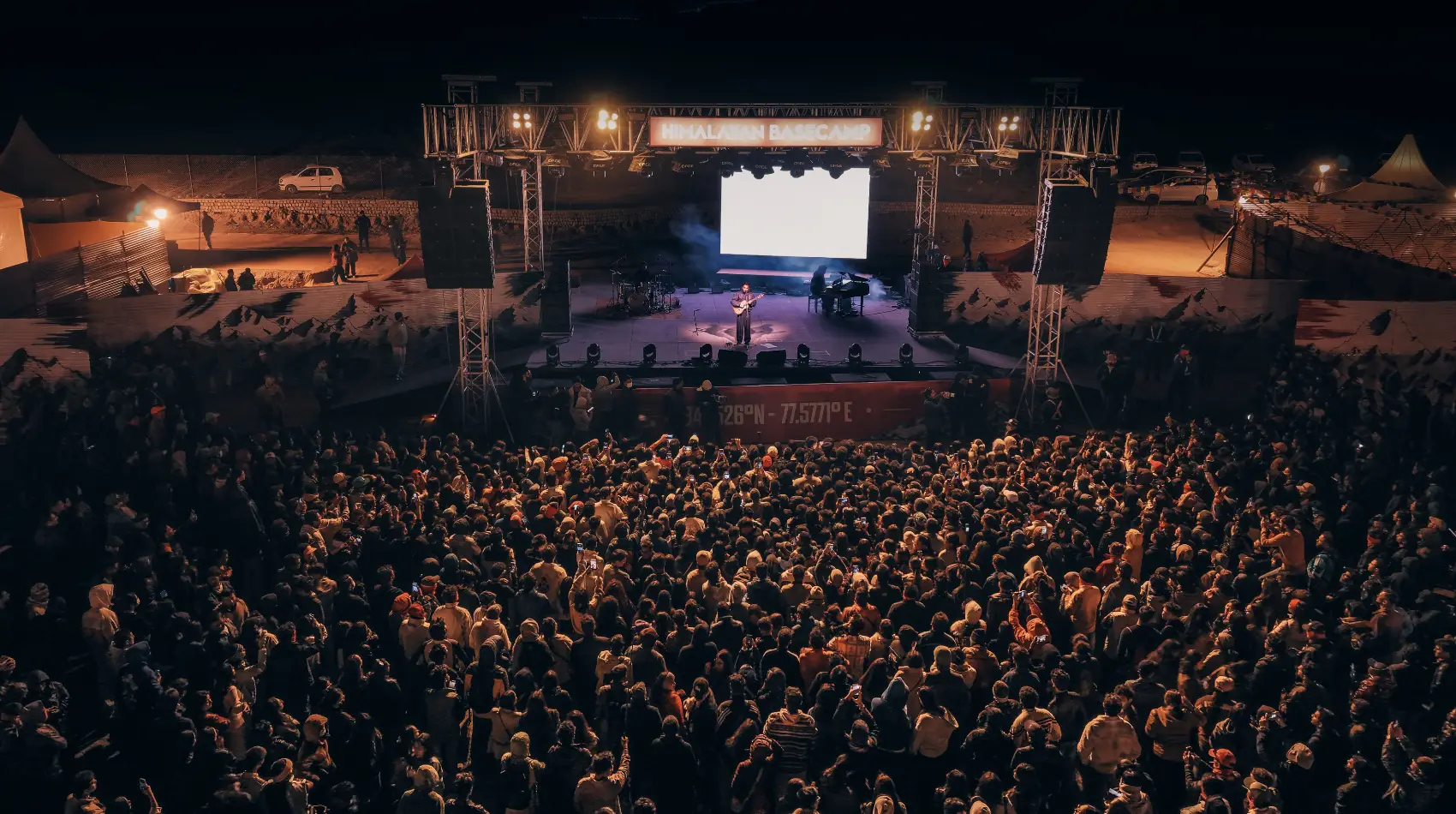
Music took over. Taba Chake and Anuv Jain played sets that were almost hypnotic against the Ladakhi night. Also happy to have discovered an enthralling and riveting local band called Da Shugs, whole brought the house down with their Ladakhi folk music renditions. There is something particularly surreal about standing in the mountains, surrounded by people who have travelled from across India and beyond, in 9 degrees Celsius breezy weather, and listening to music under a sky that feels considerably closer than it does back home.
Ankur Tiwari was scheduled to close out the final day, but I had already flown back to Mumbai by then. The concerts were more than just entertainment after a long day. They gave Basecamp another dimension. Locals and visitors, riders and non-riders, people who had arrived on motorcycles and people who had simply come to experience the festival, all ended up in the same place. For a few hours, nobody was worrying about the next trail or the next obstacle. You simply stood there and listened, occasionally thinking about that bowl full of thukpa you’re gonna slurp once you get to your hotel.
THE LEAP
I kept thinking about that slope, and I still do. And not because it was difficult. It really wasn't. That's the point. The obstacle was small. But my reaction to it wasn't. At least from my perspective. It made me think about all the times in life when fear disguises itself as rationality. Sometimes caution is exactly what keeps you safe. Sometimes it is simply the excuse your brain constructs because it would rather remain where it is.
Adventure has a peculiar way of exposing the difference. That is why motorcycles have always felt like more than transportation to me. They put you in situations where you have to pay attention. They demand a little faith. They occasionally ask you to do something that your brain would rather not do.
And when you do it, something happens. You remember what it felt like to learn to ride a bicycle as a child. That first pedal stroke when you were certain you were going to fall. The first time you faced a fast bowler in the nets and wondered whether you had any business standing there. The first time you did something before you knew whether you could.
You were frightened. Then you did it. And suddenly, it was fun. Maybe that's what adventure really gives us. It doesn’t give you the danger or bravado, or some idea of being fearless that was manufactured to sell aerated drinks. It gives you a reminder that fear doesn't always deserve the final word.
For me, that reminder came somewhere in the mountains, on a Royal Enfield Himalayan 450, at the top of a dusty slope, with a group of riders waiting below. I stopped. I thought about turning back. Then I took the leap. And for a few glorious seconds, the motorcycle, the mountain, and I were moving together. Everything else disappeared.
That is why we ride.