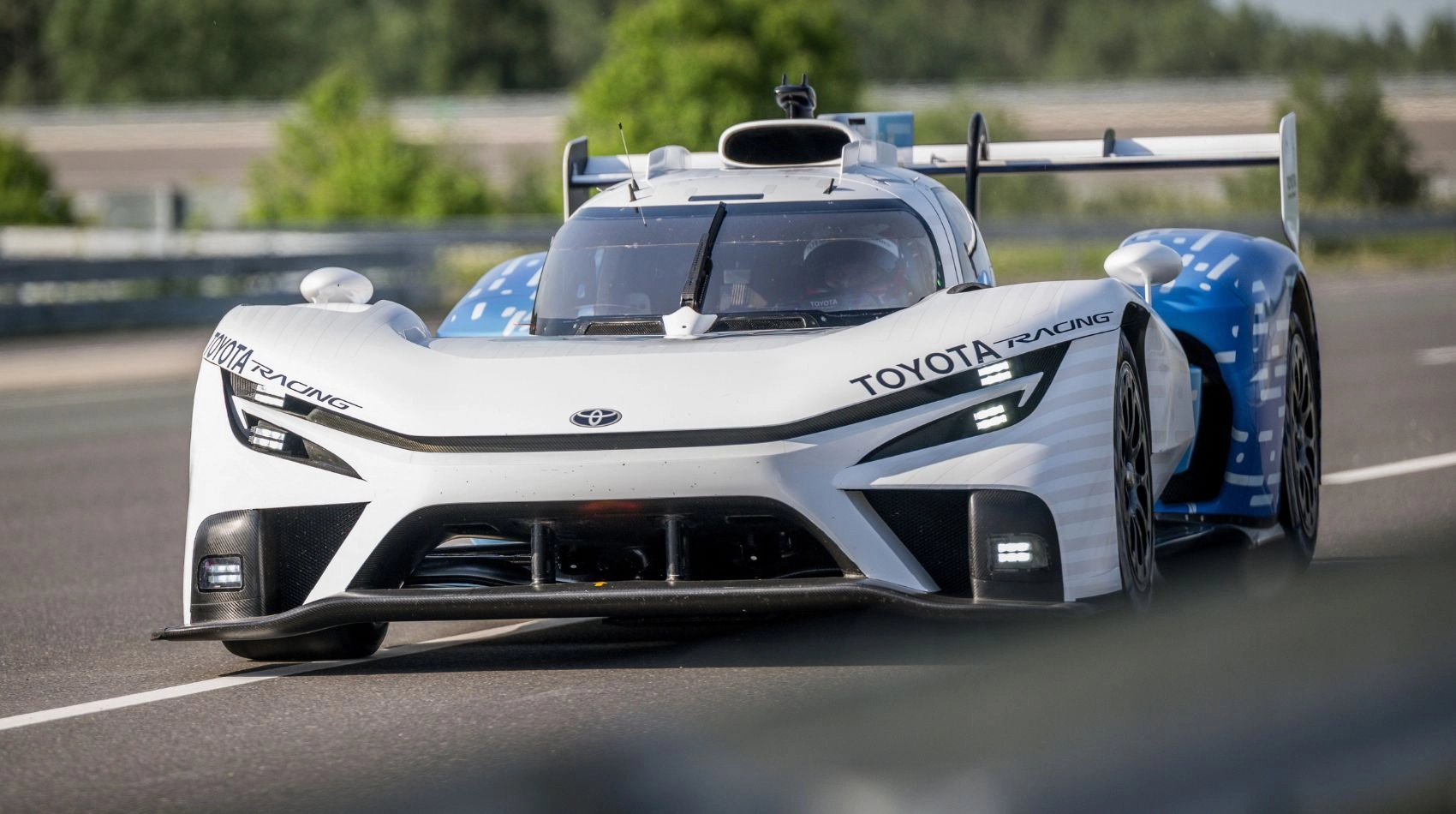
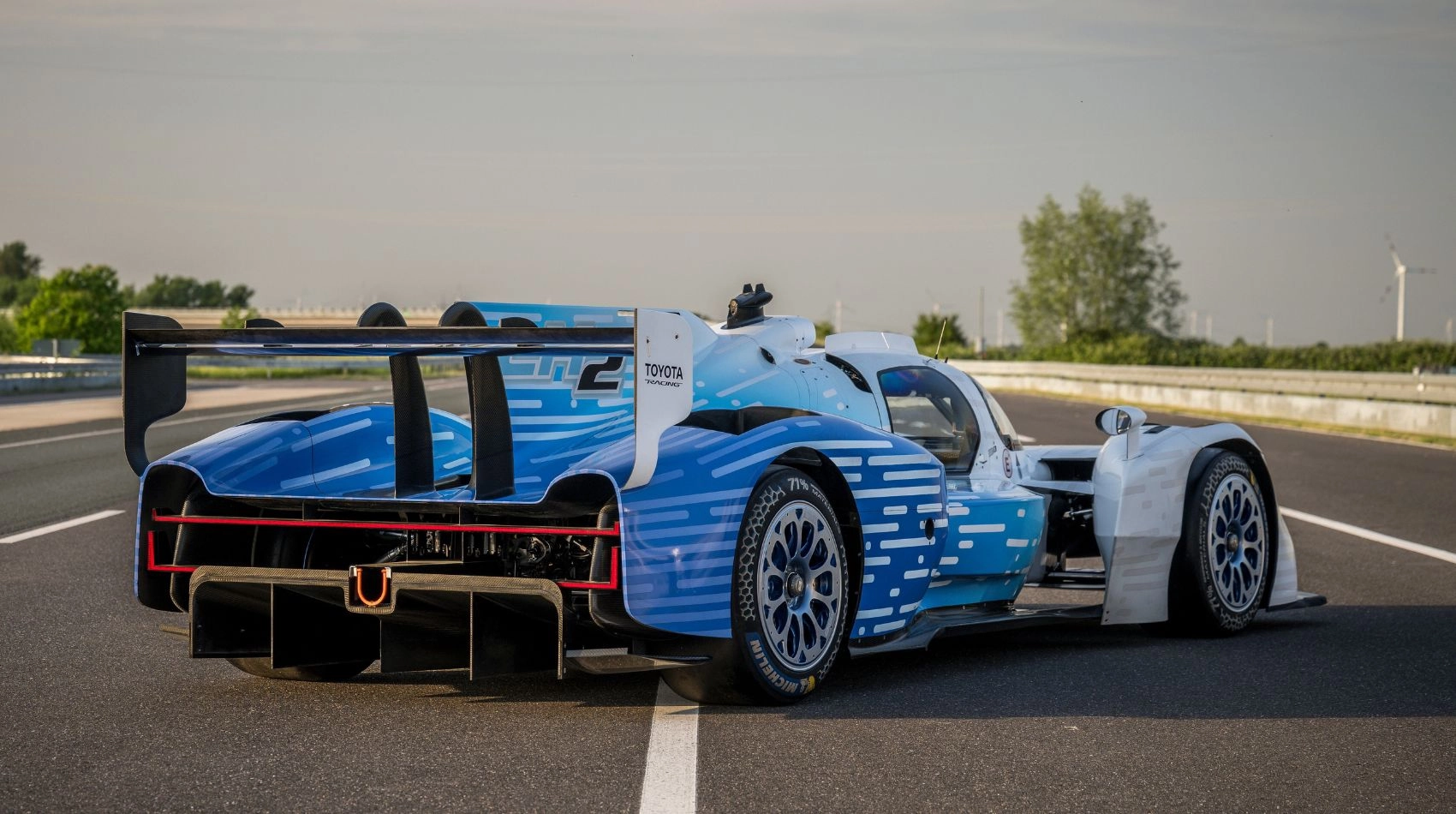
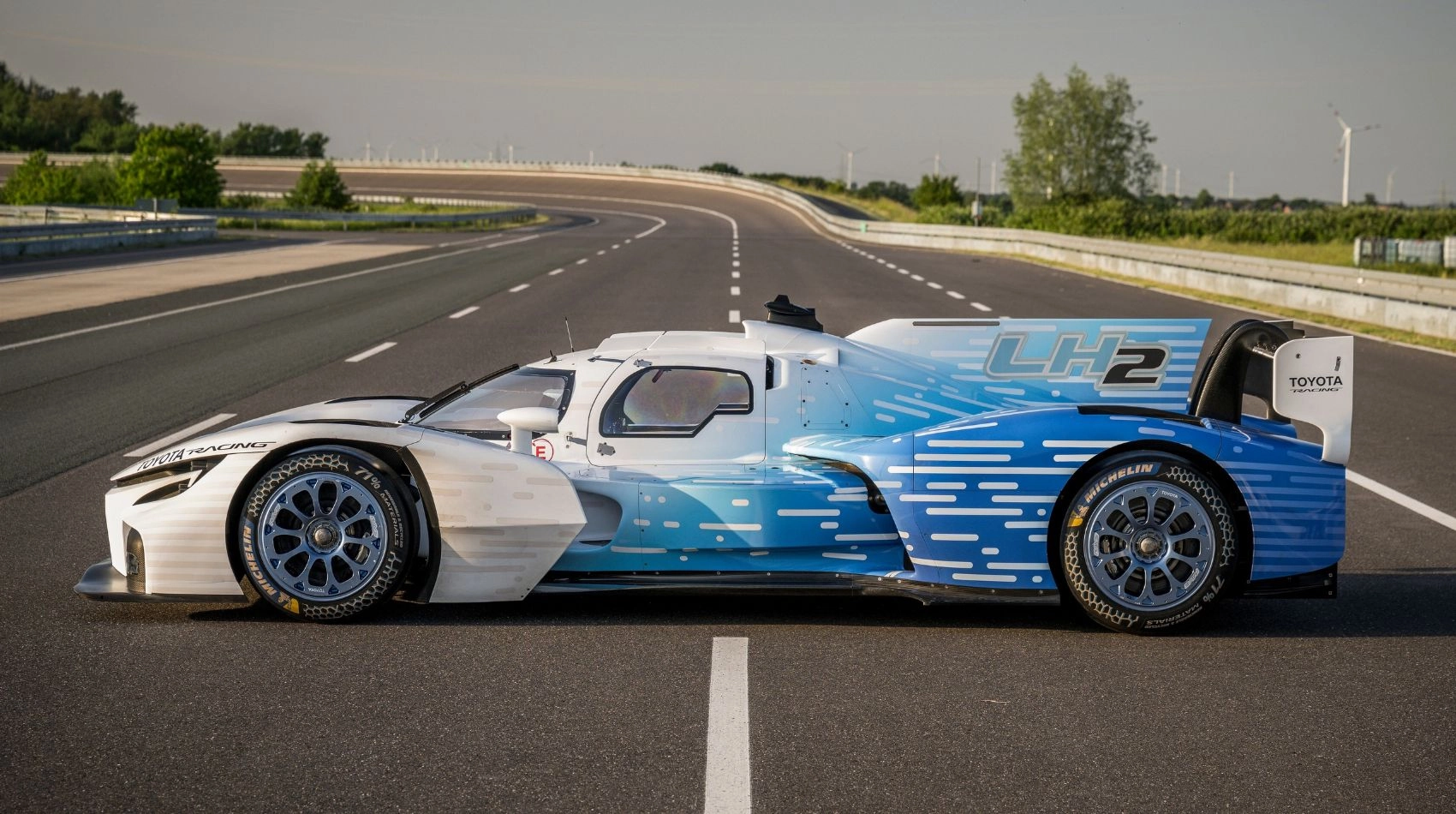
Toyota Gazoo Racing has taken a major step in its hydrogen development programme with a public demonstration of the TR LH2 Racing Prototype at upcoming 2026 24 Hours of Le Mans. The car represents the brand’s continued exploration of liquid hydrogen as a potential future fuel for endurance racing, building on years of experimentation with hydrogen-powered concepts and motorsport test vehicles.
The TR LH2 Racing Prototype is designed as a development platform rather than a conventional race entry. It is based on Toyota’s Hypercar architecture and continues the evolution of the GR H2 Racing Concept first revealed in 2023. The prototype has been developed to operate under real racing conditions while showcasing the potential of hydrogen combustion technology in high-performance motorsport.
At the core of the system is a liquid hydrogen fuel setup that powers a combustion engine developed specifically for hydrogen use. While technical specifications such as full output figures have not been disclosed, the focus of the project is not outright performance numbers but long-term technology validation and infrastructure development. The prototype is intended to demonstrate that hydrogen can be used in demanding environments such as endurance racing while maintaining the excitement and character associated with motorsport.
Toyota’s hydrogen programme has been progressing through multiple stages over the past several years, including hydrogen-powered internal combustion testing in domestic racing series and experimental rally projects. The TR LH2 Racing Prototype represents the next step in this progression, bringing the technology to one of the most iconic stages in global motorsport — the 24 Hours of Le Mans.
The demonstration run at Le Mans is part of Toyota’s broader strategy to evaluate alternative fuel technologies alongside its existing hybrid and electrified racing programmes. The company has stated that its goal is carbon neutrality through multiple technological pathways rather than a single solution. Hydrogen is seen as one of the key pillars in this strategy, alongside hybrid and fully electric systems.
Visually and mechanically, the TR LH2 prototype shares its foundation with Toyota’s top-tier endurance racing platform, allowing engineers to test hydrogen integration within a proven high-performance chassis environment. This approach enables Toyota to assess how hydrogen systems behave under sustained high-speed loads, long-distance running and race-like stress conditions.
Beyond the track, the programme also plays a role in advancing hydrogen infrastructure. Toyota has consistently emphasised that the success of hydrogen mobility depends not only on vehicle technology but also on fuel production, storage and distribution systems. Motorsport is being used as a development tool to accelerate progress in these areas by pushing the technology into real-world, high-demand scenarios.
The Le Mans demonstration also highlights Toyota’s long-standing association with innovation at endurance racing’s biggest stage. From hybrid technology breakthroughs in previous decades to current hydrogen experimentation, the brand continues to use the event as a platform to showcase future mobility solutions.
With the TR LH2 Racing Prototype, Toyota is signalling that hydrogen combustion still has a role to play in the future of performance motorsport. While the technology is still in its development phase, the Le Mans appearance marks an important milestone in proving its potential under extreme conditions.
The project reinforces Toyota’s multi-pathway approach to decarbonisation, where hydrogen, hybrid and electric technologies are developed in parallel to address different use cases within both motorsport and road mobility.