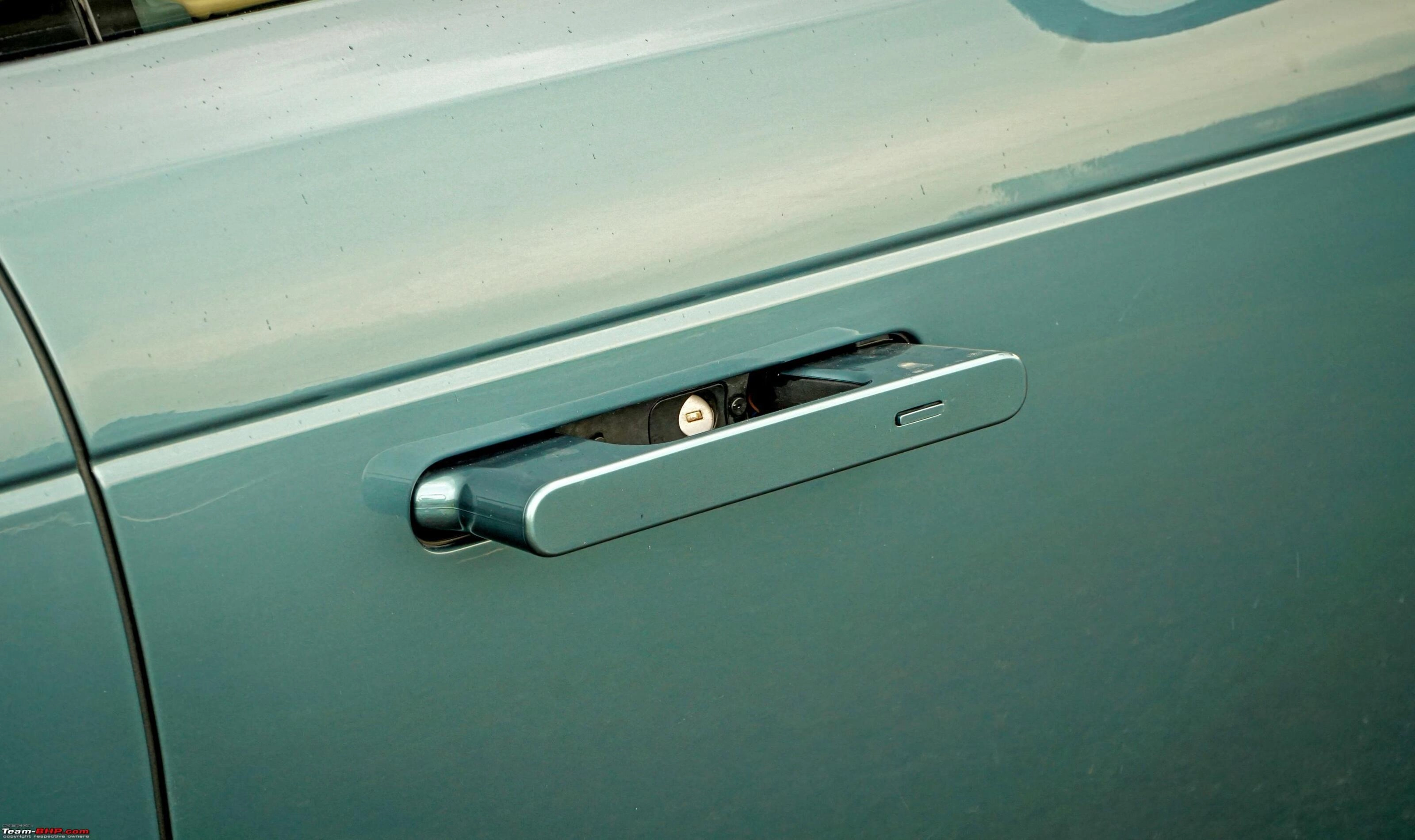
For years, car designers have been chasing one thing with near-obsession: cleaner lines. Flush surfaces. Seamless panels. Nothing is interrupting the bodywork. And in that pursuit, something as basic as a door handle has become a complicated piece of electronics.
China has now decided that enough is enough!
From January 1, 2027, the country is proposing to effectively clamp down on electric and fully flush door handles, citing safety concerns. Coming from the world’s largest car market and the largest producer of electric vehicles, that’s not a small statement. It’s a warning shot! And it raises an uncomfortable question: have designers pushed “cool” too far, at the expense of common sense?
Style Replacing Function
Electric and flush door handles didn’t become popular because they were safer. They became popular because they looked futuristic. Tesla made them mainstream. Others followed. Before long, almost every new EV and premium car wanted to look like a single sculpted block of metal.
There are now several flavours of this idea:
-
Push-to-pop mechanical handles
-
Fully retractable electronic handles
-
And in extreme cases, no handles at all, just sensors and software
Yes, these designs improve aerodynamics slightly. Yes, they reduce wind noise. But none of that matters much when a car is upside down, on fire, or without power.
And that’s exactly where China is drawing the line.
Why China Is Stepping In
China’s Ministry of Industry and Information Technology wants cars under 3.5 tonnes to have a proper, physical, human-usable door release, something you can grab, pull and open without electricity, software, or instructions. This matters more in China than anywhere else. Over half the new cars sold there are electric. The country produces more than 70 percent of the world’s EVs. Whatever China decides today, the rest of the industry usually feels tomorrow.
The Real Problem With Seamless Handles
The issue isn’t aesthetics. It’s failure points. In a serious crash, electrical systems are often the first to shut down. Wires snap. Batteries disconnect. Software locks up. And when that happens, electronic door latches don’t explain themselves. There have already been incidents where occupants could not be extracted quickly because doors wouldn’t open. In at least one case, that delay proved fatal. Firefighters and first responders have repeatedly raised the same concern: modern cars are becoming harder to get into when it matters most.
This isn’t anti-EV sentiment. It’s anti-overengineering.
Sometimes Old Tech Is Safer Tech
A mechanical door handle is crude. It’s not glamorous. But it works. It works when the battery is dead.
It works when the car is crushed.
It works when someone panicking just needs to get out.
China’s message is simple: a car door should open when you pull it. Every time.
Manufacturers will complain about redesign costs. About reworking platforms. About losing aerodynamic gains measured in decimal points. All fair concerns.
But if the trade-off is fewer trapped occupants and faster rescues, that’s a cost worth paying.
A Bigger Wake-Up Call For Designers
This isn’t just about door handles. It’s about an industry that’s increasingly designing cars for studios, screens, and spec sheets instead of real-world chaos that we live in.
Technology should add safety, not complicate escape routes. China’s proposal forces the industry to ask a question it probably should have asked earlier:
When design and safety collide, which one should blink first?
For once, China’s answer is clear. And it’s hard to argue with it, but I completely agree to it as well.


.webp)