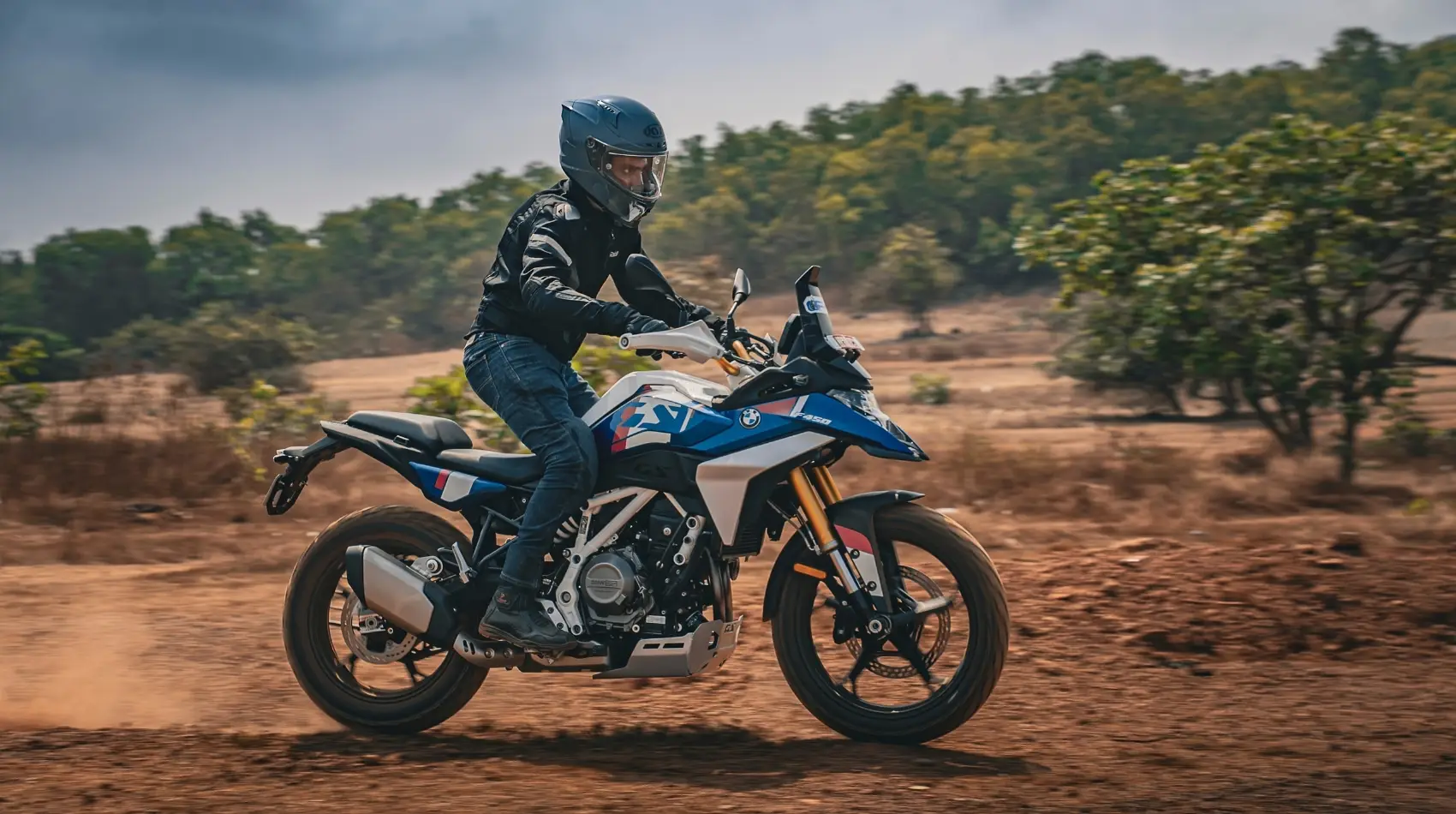
This one has been a long time coming. I’ve finally gotten my hands on the BMW F 450 GS, and honestly, it isn’t quite the bike I expected it to be. In some ways, it has impressed me more than I thought it would; in others, it has left me wanting a little more. But before I get into all of that, here are my first impressions of BMW Motorrad’s all-new adventure tourer.
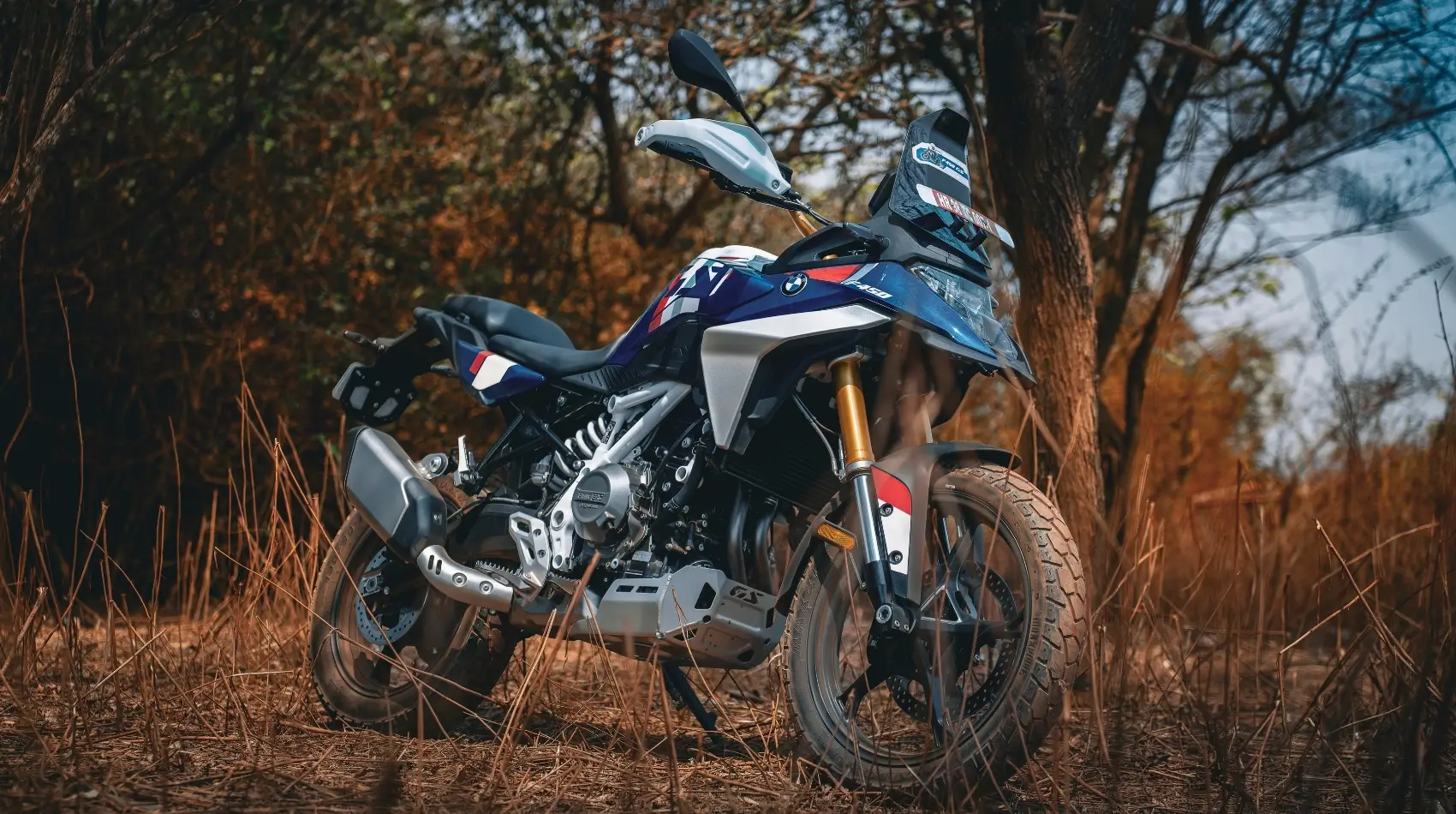
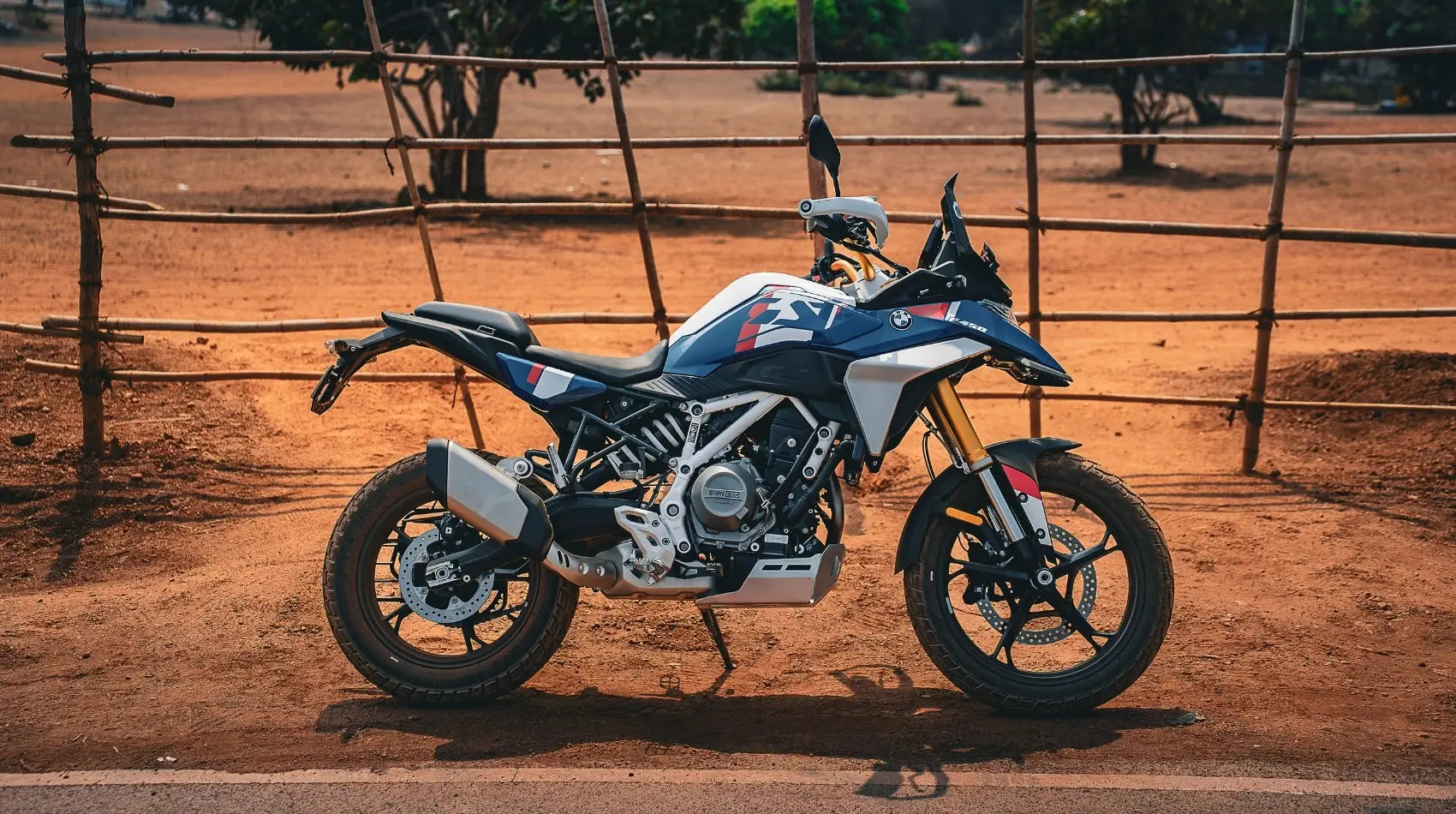
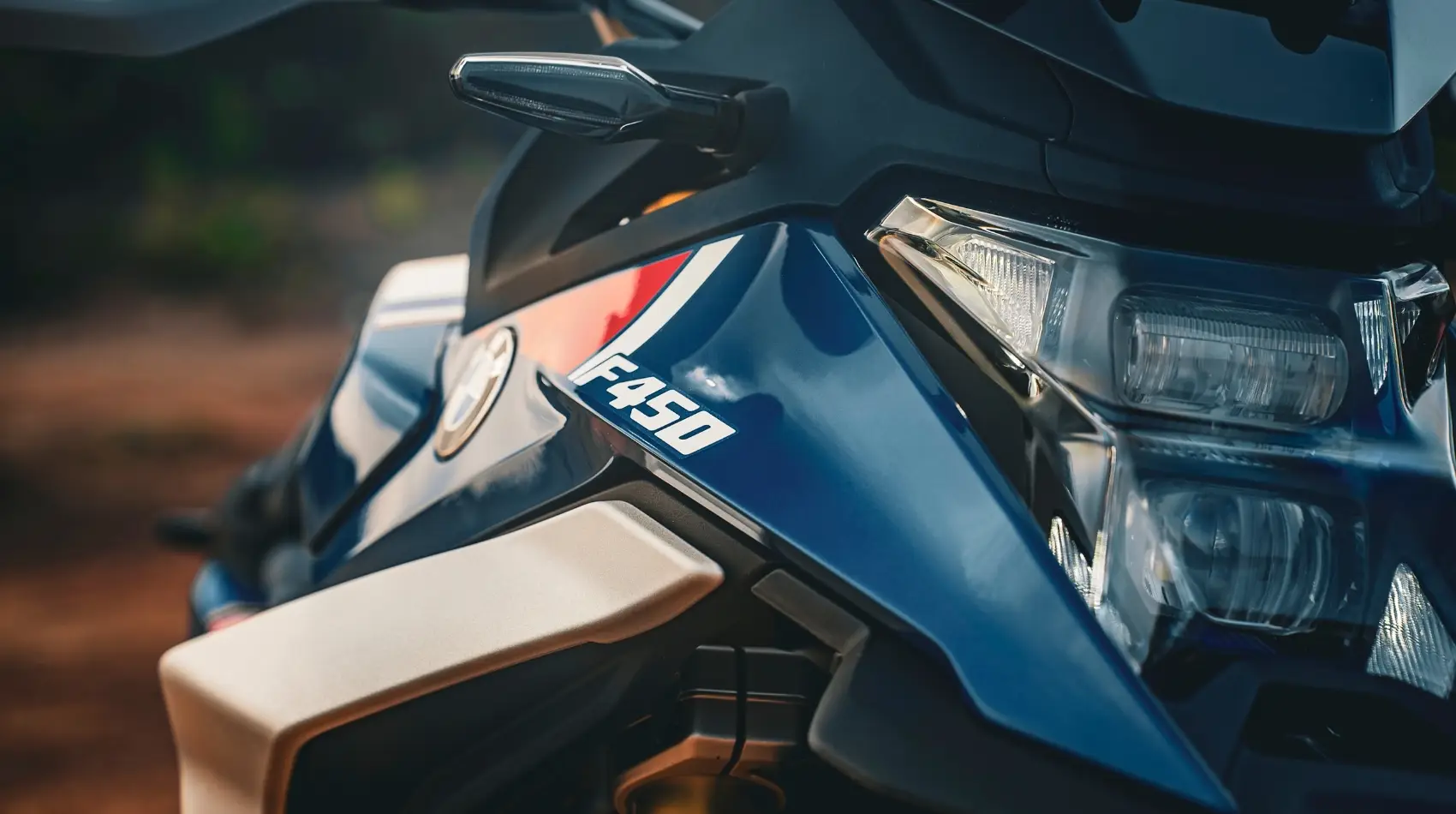
The F 450 GS — the ‘baby GS’ — absolutely nails its biggest trump card: presence. It looks fantastic. Borrowing heavily from the design language of the R 1300 GS, it genuinely feels like a scaled-down version of its bigger sibling from every angle. It’s sharp, purposeful and, despite being smaller in person than pictures suggest, it still carries a wonderfully imposing road presence. It has that unmistakable GS stance — the kind that makes people stop and take a second look.
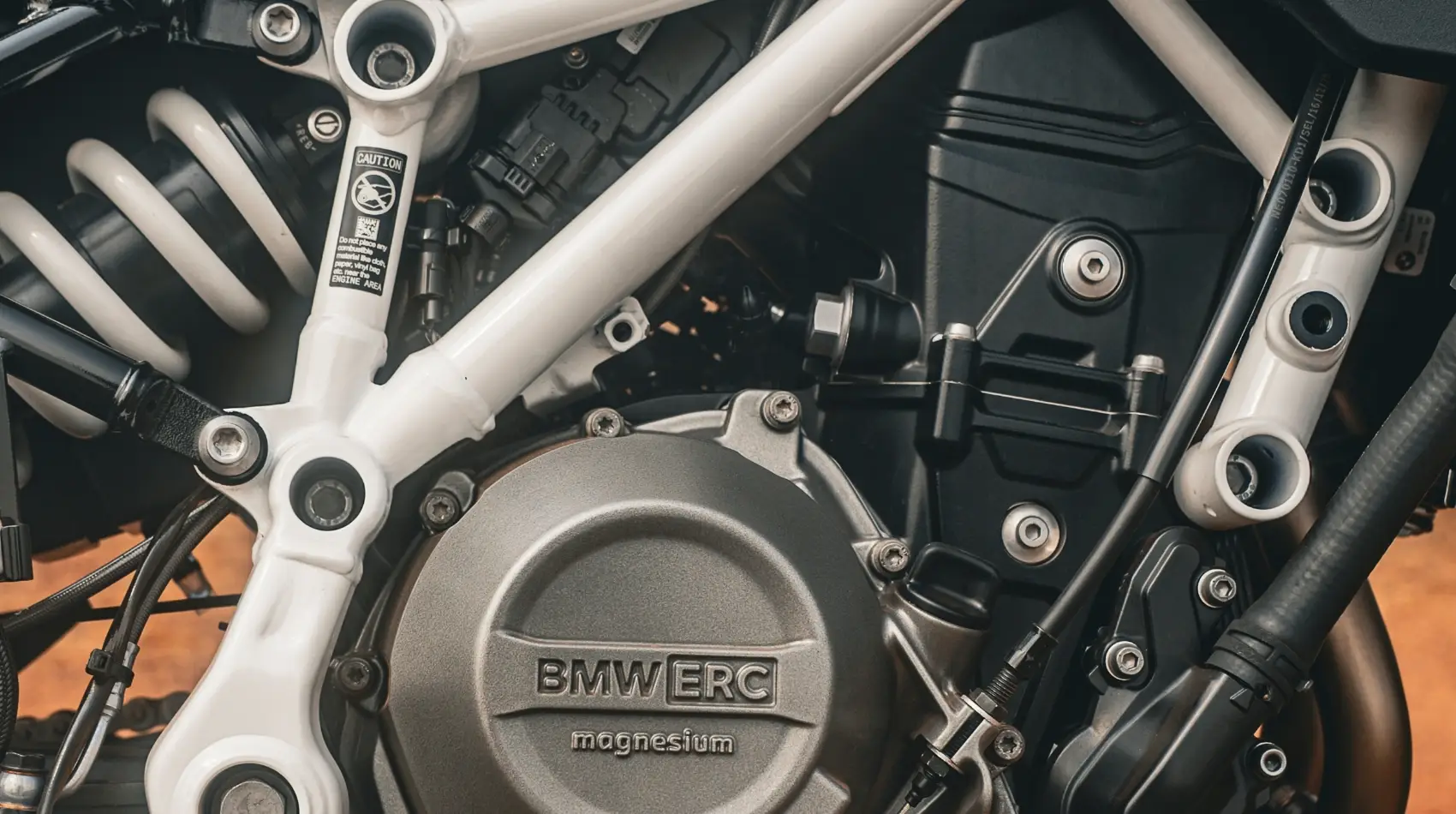
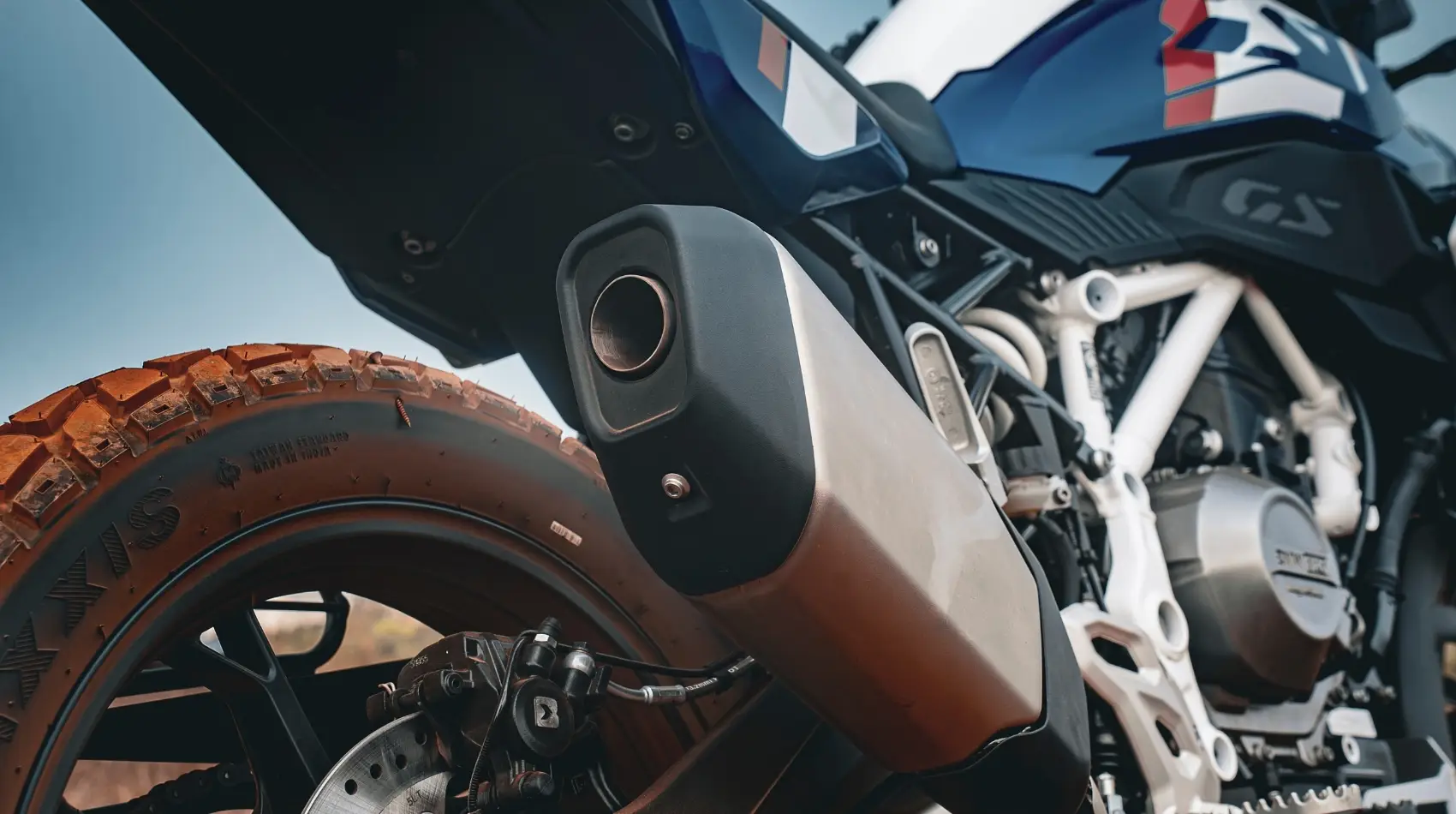
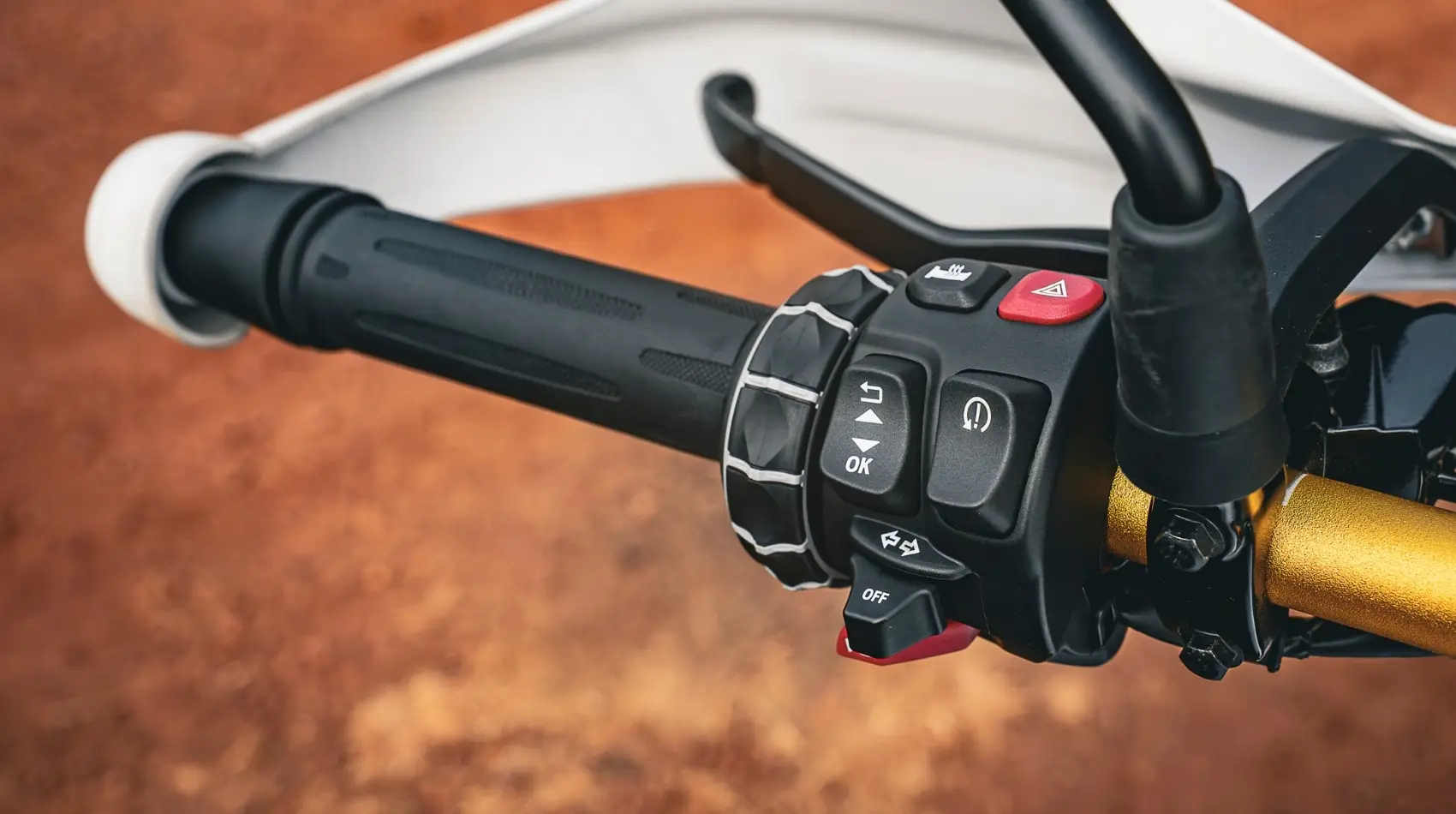
What really sets it apart, though, is that it manages to do something none of its ADV-touring rivals quite manage — it feels genuinely premium. The fit and finish are excellent, from the quality of the paintwork to the consistently tight panel gaps. The switchgear feels tactile and expensive, the bodywork feels solid, and thoughtful use of materials like magnesium alloy for the clutch and alternator covers, a hollow aluminium swingarm, plus golden USD forks only adds to that upmarket feel. It feels every bit like a BMW should — and it better, because prices start at ₹4.7 lakh, ex-showroom.
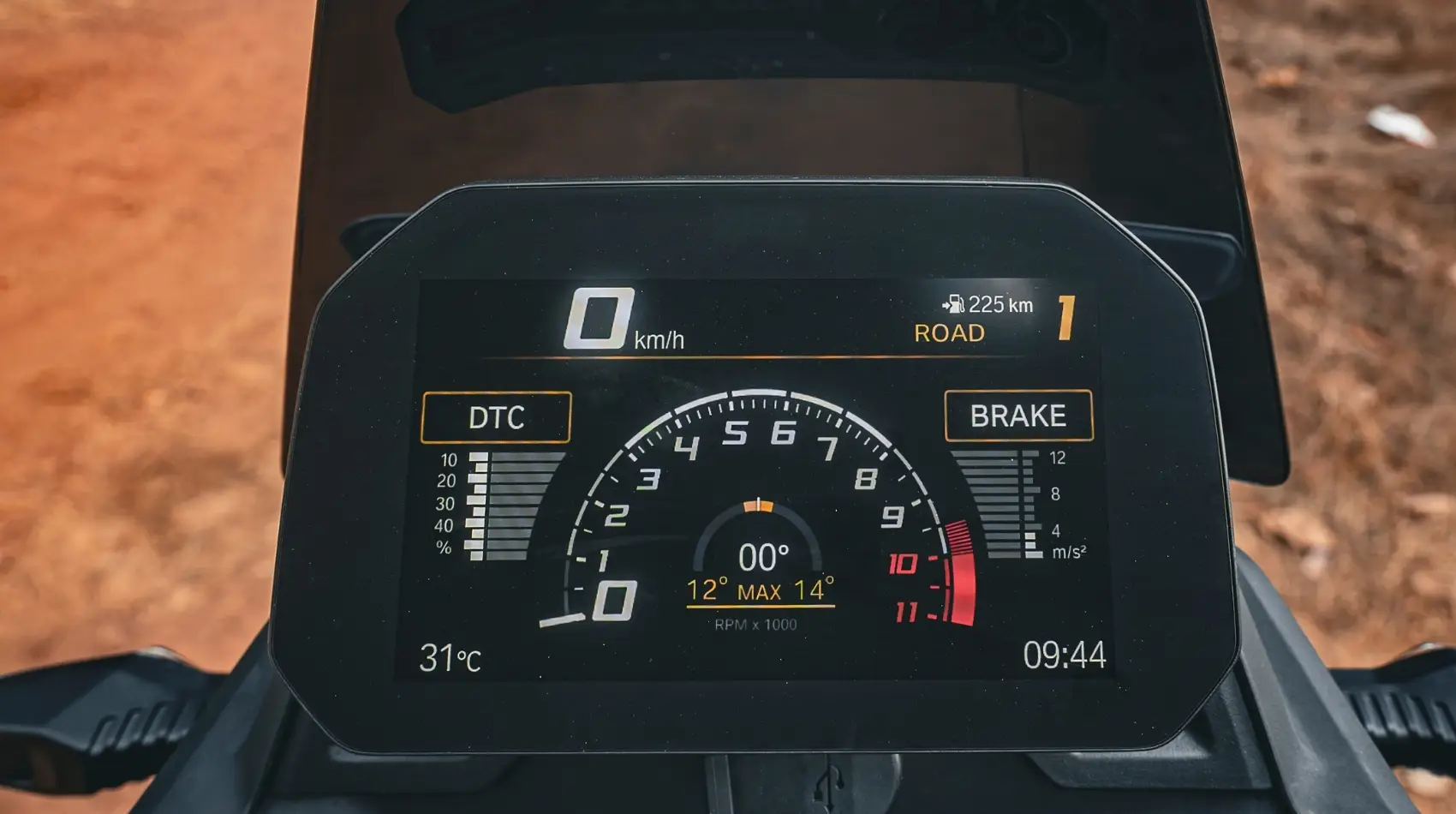
There are three variants on offer — Base, Exclusive and GS Trophy — priced at ₹4.7 lakh, ₹4.9 lakh and ₹5.3 lakh, respectively. What’s the difference between the three, you ask? Well, the Base model gets LED lighting all around, a Bluetooth-enabled 6.5-inch TFT screen, cornering ABS, traction control, three ride modes, adjustable levers, heated grips, a Type-C charging port and those rather lovely golden USD front forks.
Step up to the Exclusive variant, and it adds enduro foot pegs, black hand guards, an engine guard, an additional riding mode called Enduro Pro, a clear windscreen and a quickshifter. Then there’s the full-fat GS Trophy variant, which gets adjustable KYB suspension at both ends, BMW’s Easy Ride Clutch tech — more on that later — an aluminium engine guard, white hand guards, a white main frame and a tinted windscreen. The first two variants are available only in Cosmic Black, while the GS Trophy comes dressed in BMW’s signature Racing Blue Metallic shade. The bike only misses out on cruise control, which would’ve been a neat and helpful addition.
We expected prices to hover around the ₹5 lakh mark, and that’s exactly where this bike lands. Yes, it is pricier than most of its rivals, with only the Honda NX500 sitting around a lakh higher — and even that doesn’t feel as well-equipped or as premium. The F 450 GS has a lot going on, and once you dig deeper, the pricing — although introductory and likely to go up soon — doesn’t seem unreasonable at all.
The use of all those premium materials has also helped keep weight impressively low. At 178kg wet — the engine weighs only 46kg — for an adventure tourer with a parallel-twin engine and this much kit on board, that’s a seriously impressive number. And you feel it immediately. The GS feels light from the moment you take it off the stand. It’s easy to manoeuvre, feels wonderfully nimble, and never has that intimidating top-heavy feel larger ADVs often do.
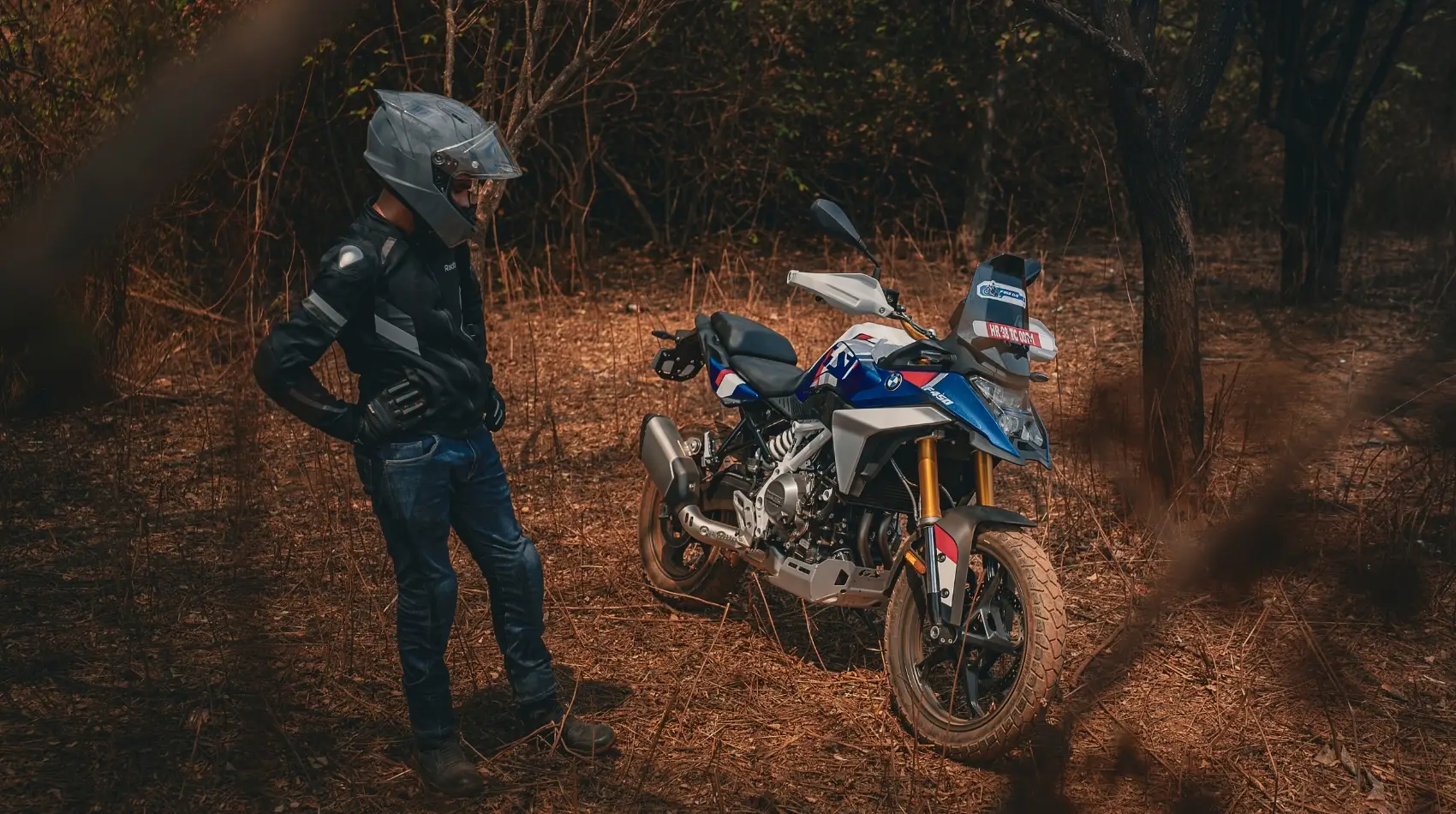
Now to the meat of the matter — the riding experience. I rode the top-spec GS Trophy variant, which comes equipped with the Easy Ride Clutch, and it made for a very interesting first ride. The standard seat height is 845mm, which could feel a bit tall for shorter riders. At 5’7”, I couldn’t quite flat-foot it completely, but because the bike is so light and manageable, it never felt like a real issue. That said, off-road, especially on uneven terrain or awkward inclines, shorter riders may have to work a little harder. The rider’s triangle is fairly neutral, with an ever-so-slightly forward-set but tall handlebar and forward-set footpegs.
Powering the baby GS is a 420cc liquid-cooled parallel-twin engine producing 47.3bhp at 8,750rpm and 43Nm of torque at 6,750rpm. The power figures give it the best-in-class power-to-weight ratio, and BMW claims that 80 per cent of the total torque is available from just 3,000rpm — and you can feel that the moment you open the throttle. It launches hard, has a strong and usable mid-range, and while it doesn’t chase the redline with the same manic urgency as a KTM single, it gathers speed quickly and feels properly quick once you’re higher up the rev range.
I was, however, expecting the engine to be a little more refined. It does feel slightly vibey. The vibrations begin to build once you start pushing harder and become quite noticeable past the 4,500rpm mark, especially through the tank and footpegs. It also doesn’t sound quite as exciting as you’d hope. There isn’t much of that deep, bassy note you’d expect from a twin-cylinder motor, and overall, it feels a little less characterful in the sound department than anticipated. Both aren’t deal-breakers at all, though, and it is definitely more refined than the single-cylinder engines that almost all of its rivals are equipped with. Throttle calibration is spot on, and the way the power is delivered is also butter smooth.
The mill is mated to a six-speed gearbox, which gets a slipper clutch and a quickshifter on the two top variants. But more importantly, the GS Trophy variant gets the Easy Ride Clutch. This is essentially a centrifugal clutch which automatically engages and disengages, removing the need for you to use the clutch lever at all — save for when you have to start the bike. Think of it as a clutchless manual setup — you still shift through the gears yourself, but the bike handles all the clutch operation for you.
This system has its share of pros and cons — and with that, I think it should’ve been optional, not standard on the top-end variant. Starting with the pros: it makes riding the bike the easiest affair — as simple as a conventional scooter with a CVT — and you get used to it very quickly. That, coupled with the quickshifter, means you barely need to use the clutch at all on this bike. The system comes into play after 2,700rpm, and that’s when the bike begins to roll, which means the gearbox can feel and sound a little like a CVT when you’re crawling through bumper-to-bumper traffic in first gear. It allows you to come to a complete standstill without having to pull the clutch, and while that feels slightly counterintuitive on a motorcycle, it genuinely makes life much easier in the city.
You do, however, need to be in the right gear when setting off. Yes, the bike will pull away from a standstill even in higher gears, but this is still a mechanical system, and doing that repeatedly will only strain it unnecessarily and wear the clutch faster. That said, you can still use the lever normally and even pop wheelies like you would on a traditional manual bike. The quickshifter itself is excellent too — smooth, precise and properly seamless. Together, the whole setup makes the F 450 GS incredibly easy to ride, both on and off the road, and the best part is that you simply cannot stall it.
One thing that does stand out as a drawback is how the bike behaves on an incline. Even if it’s left in gear with the engine switched off, it can still roll backwards, which means you have to be quite mindful while parking on slopes or uneven ground. It becomes even more noticeable off-road — if you stop halfway up a steep climb, managing the bike can get a bit awkward since there’s nothing helping you hold position. A simple parking brake or a hill-hold function would have been genuinely useful here.
Where the bike truly shines, though, is in the way it handles and rides. It runs on a 19-inch front wheel and a 17-inch rear, both wrapped in Maxxis Maxxplore all-terrain tyres. Suspension duties on the GS Trophy variant are handled by 43mm golden upside-down front forks, adjustable for compression and rebound, while the rear monoshock gets adjustable damping. Both ends offer 180mm of travel.
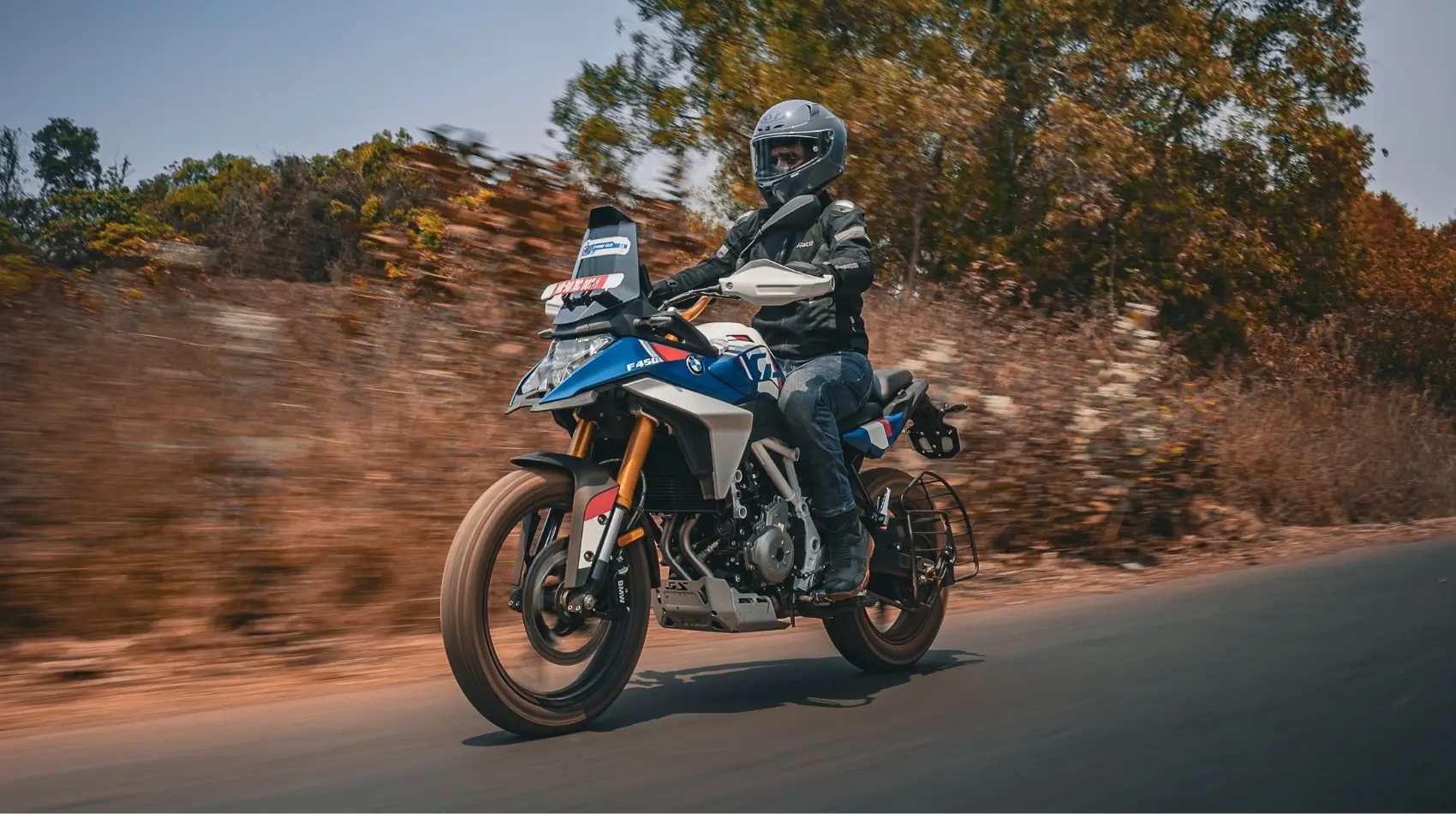
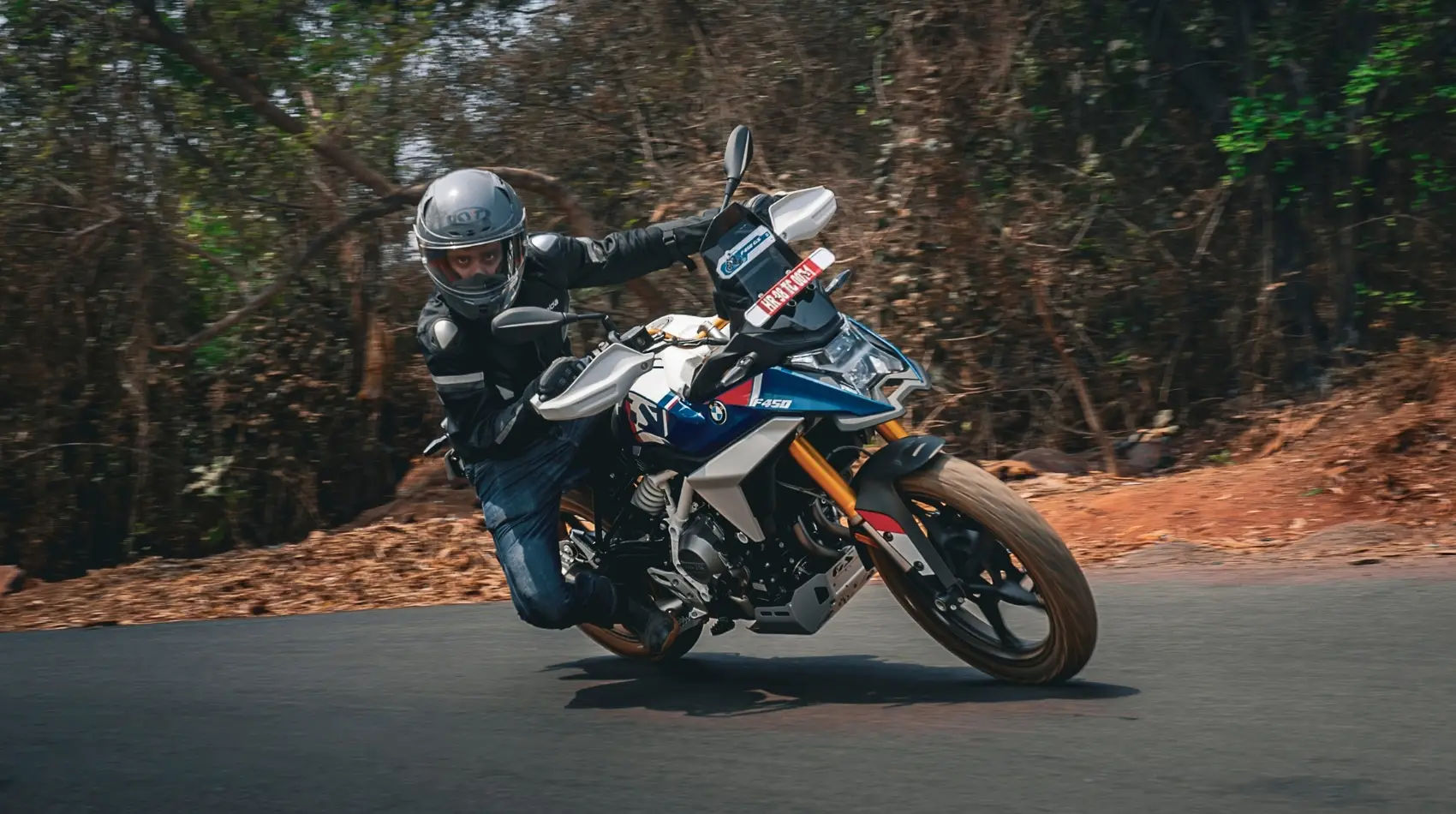
In the stock settings, the front end absorbs bumps really well, while the rear feels just a touch firm. It isn’t quite as plush as a Himalayan 450 — or even an Apache RTX — but it still does a commendable job of smoothing out broken roads. The upside is that this setup makes the bike feel excellent on smooth roads and surprisingly capable in corners, adding confidence and agility to the handling.
With 220mm of ground clearance and neutral ergonomics that make standing up on the pegs easy, it feels very natural to ride off the tarmac as well. In short, the baby GS handles rough terrain well, although it isn’t as hardcore or dirt-focused as some of its rivals. The trade-off, however, is a motorcycle that feels easier, more comfortable and far more enjoyable to live with on the road — which, for many riders, may matter a lot more.
The BMW F 450 GS feels like a motorcycle that has been designed with a very clear brief — to make adventure touring approachable, premium and genuinely easy to live with. And for the most part, it succeeds brilliantly. It looks like a proper GS, carries the road presence to match and, more importantly, feels every bit like a BMW should. The quality, the finish and the overall sense of solidity give it an edge that very few rivals in this segment can match.
It is also surprisingly easy to ride. The low weight, friendly ergonomics and manageable power delivery make it far less intimidating than many middleweight ADVs tend to be. The Easy Ride Clutch, while not without its compromises, makes everyday commuting and even light off-roading feel almost effortless. Add to that strong highway manners, excellent handling and enough capability to tackle rough roads without complaint, and you have a very well-rounded package.
Yes, I do wish the engine felt a little more refined and had a bit more character, and features like cruise control or hill-hold would have made an already strong package even better. I’d also like to spend more time with the manual clutch version, because I suspect that might offer a slightly sharper and more engaging riding experience for enthusiasts who prefer a more traditional setup.
As for the pricing, ₹4.7 lakh to ₹5.3 lakh, ex-showroom, does feel expensive at first glance — especially when most of its rivals undercut it quite comfortably. But once you spend time with the bike, the premium starts to make sense. The quality of materials, the finish, the technology, the parallel-twin engine and the overall polish give it a sense of occasion that cheaper alternatives simply don’t. It feels like a motorcycle built to justify that badge on the tank. And that, perhaps, is the bigger point: the F 450 GS is not trying to be the cheapest option in the segment — it is trying to be the most complete one.
But even with those caveats, the bigger picture remains clear — the F 450 GS gets the fundamentals absolutely right. It strikes a smart balance between everyday usability and genuine adventure capability, without becoming too extreme in either direction. It focuses on being the motorcycle you would actually want to ride every single day. And perhaps that is its biggest strength. It makes the idea of owning a GS feel more accessible, less intimidating and far more realistic for a wider audience. It may wear the ‘baby GS’ tag, but out on the road, it feels every bit like it belongs in the family.
Engine: 420cc, parallel-twin, liquid-cooled
Power: 47.3bhp
Torque: 43.3Nm