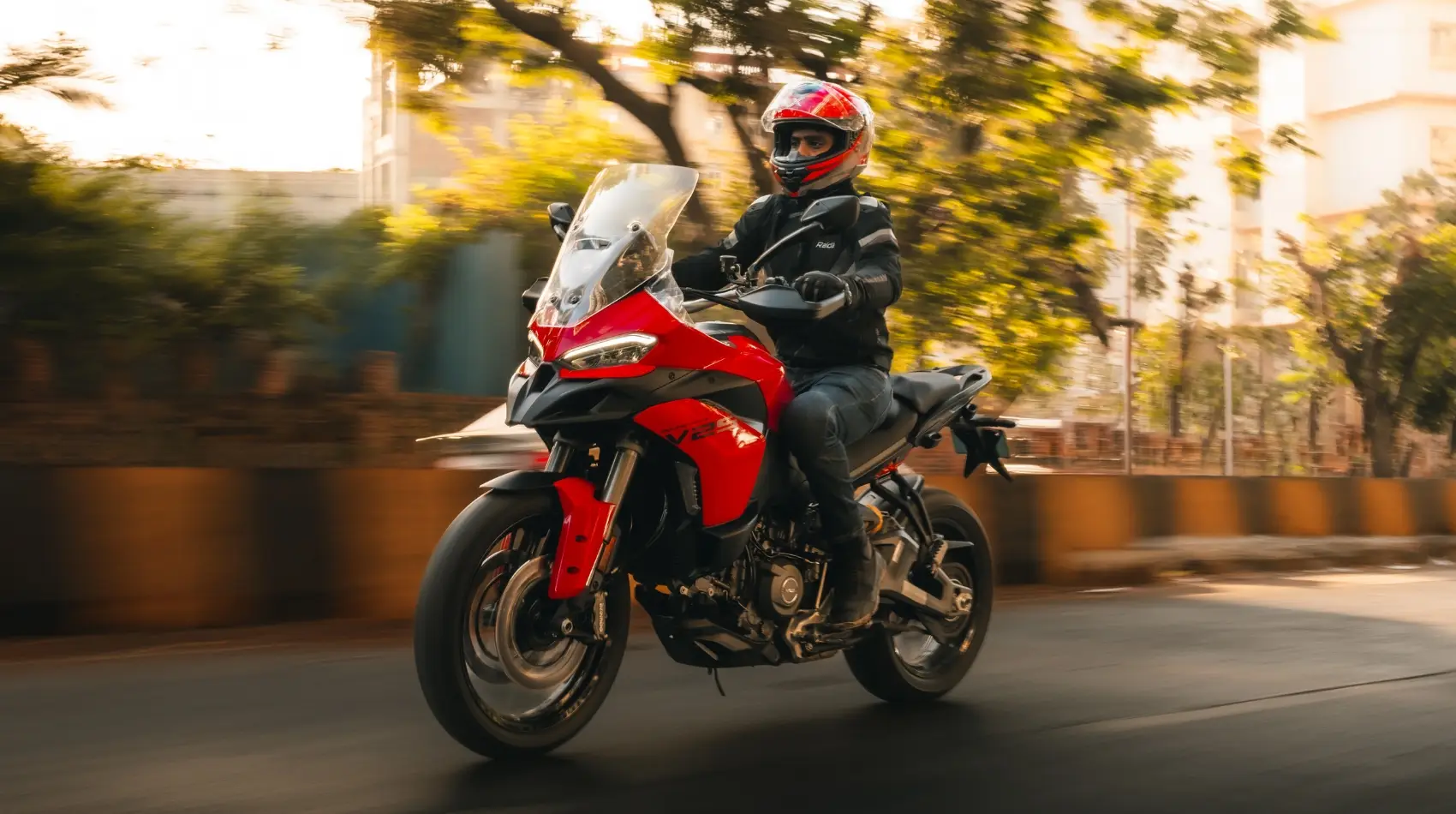
At around ₹22 lakh on the road, the Ducati Multistrada V2 S is every bit as expensive as the Triumph Tiger 1200 and sits just about three and a half lakh shy of the mighty BMW R 1300 GS. So, this ‘middleweight’ adventure tourer finds itself priced right alongside the big guns in the game. But let me tell you one thing – at this level, price alone is hardly the deciding factor.
These motorcycles are not just about capability, tech lists, or performance; they are about what they feel like, what they demand of you, and what they give back in return. And that naturally raises the question: who is the V2 S really for, and should someone ready to spend this kind of money actually take the plunge, or do away with the bigger bikes?
Right away, it is worth stating this: buying the Multistrada V2 S is far more an emotional decision than a rational one. ₹22 lakh for a middleweight, you ask? The price begins to make a bit more sense when you consider the fact that this is a Ducati. Yes, it might be the smallest Multistrada, but that is merely a technicality – because out in the real world, this bike punches well above its weight, and how!
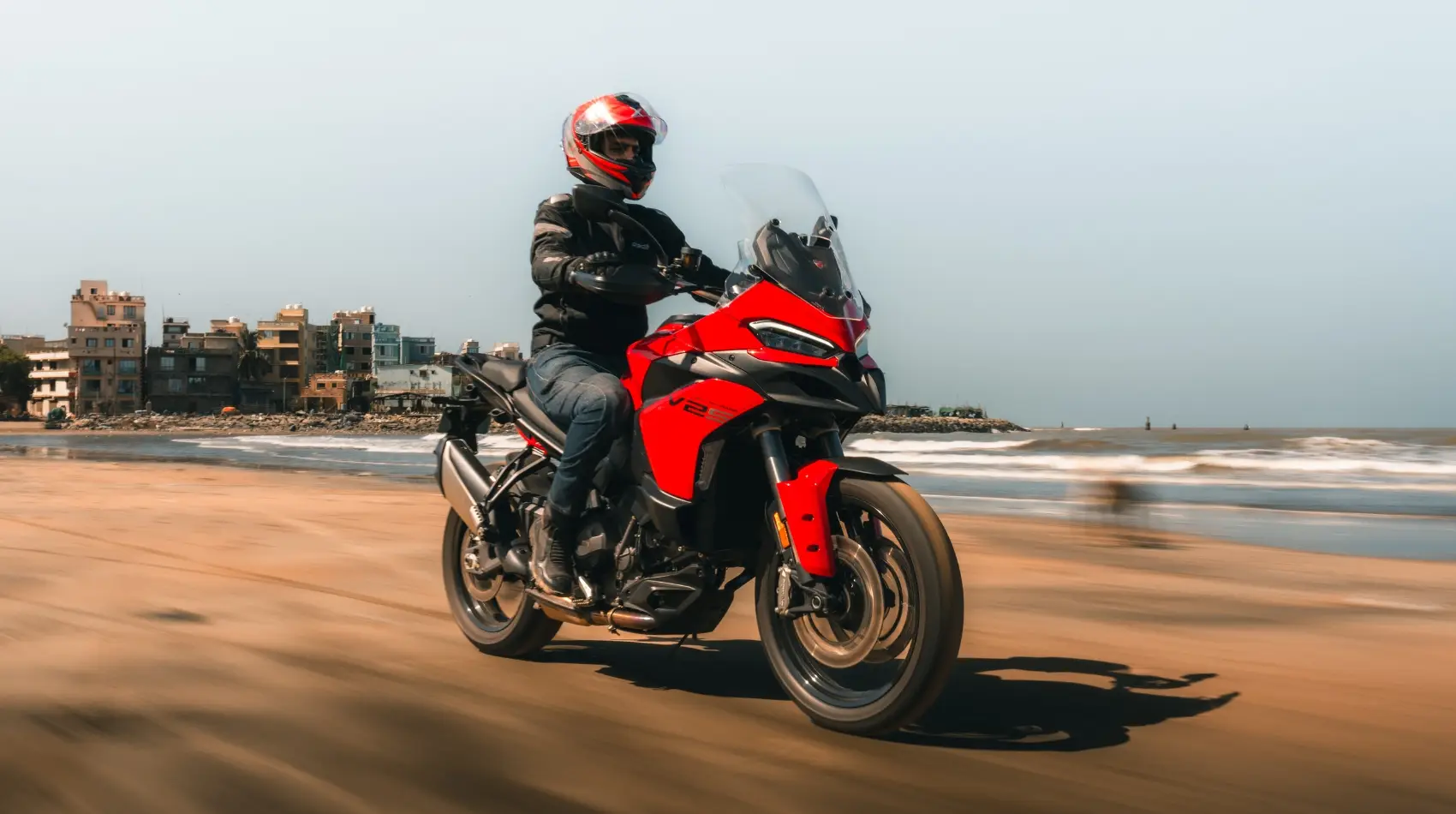
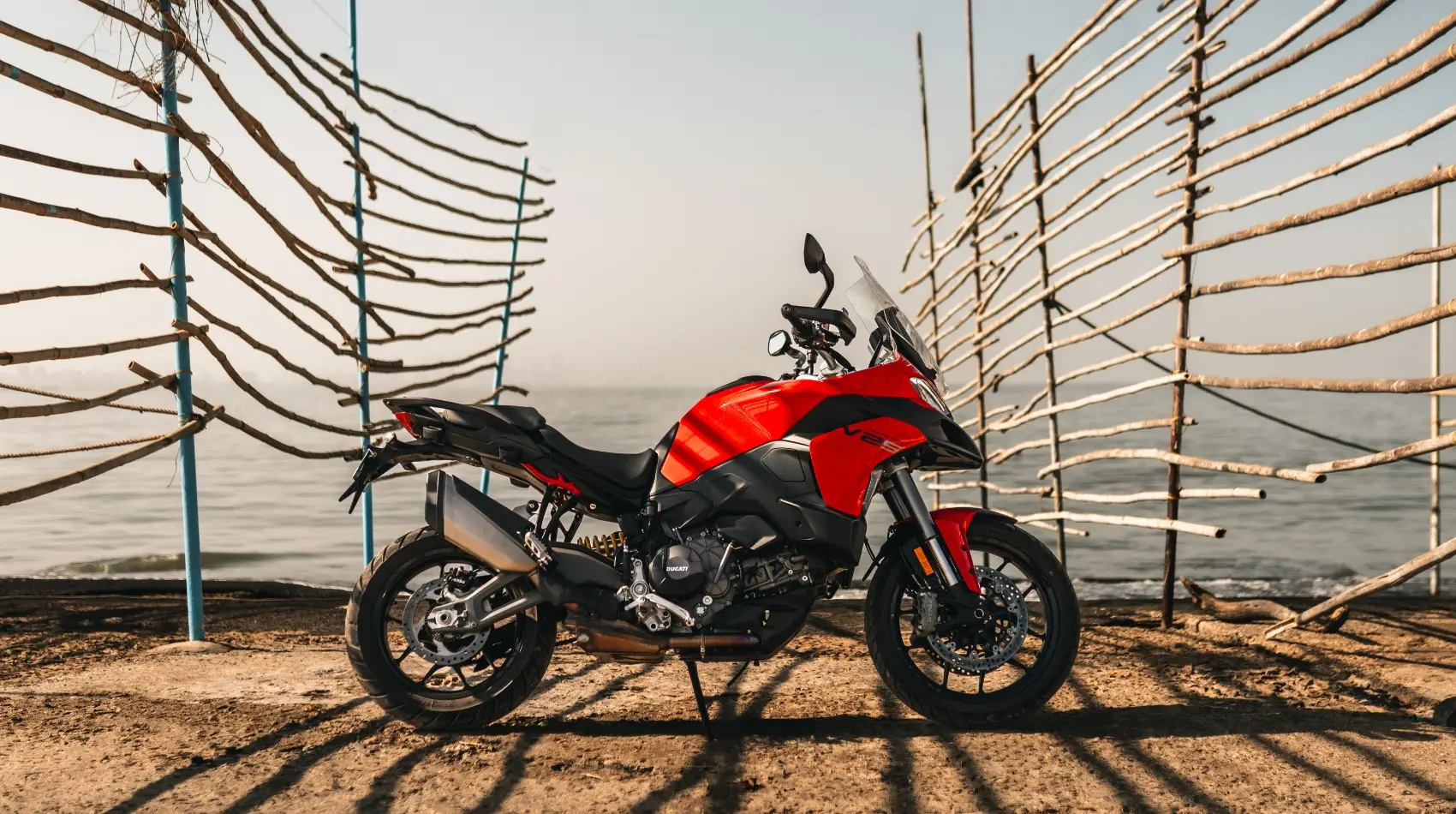
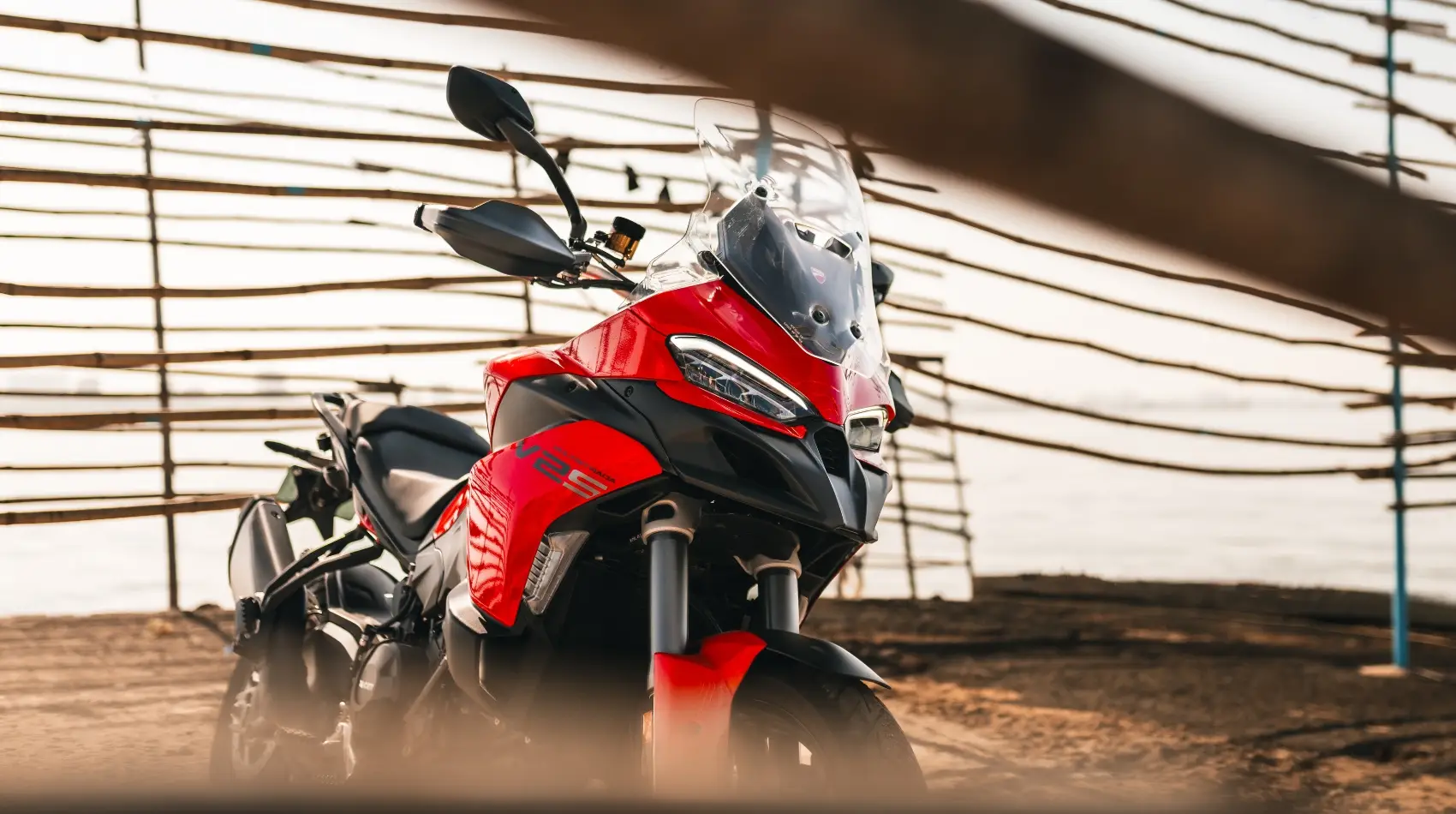
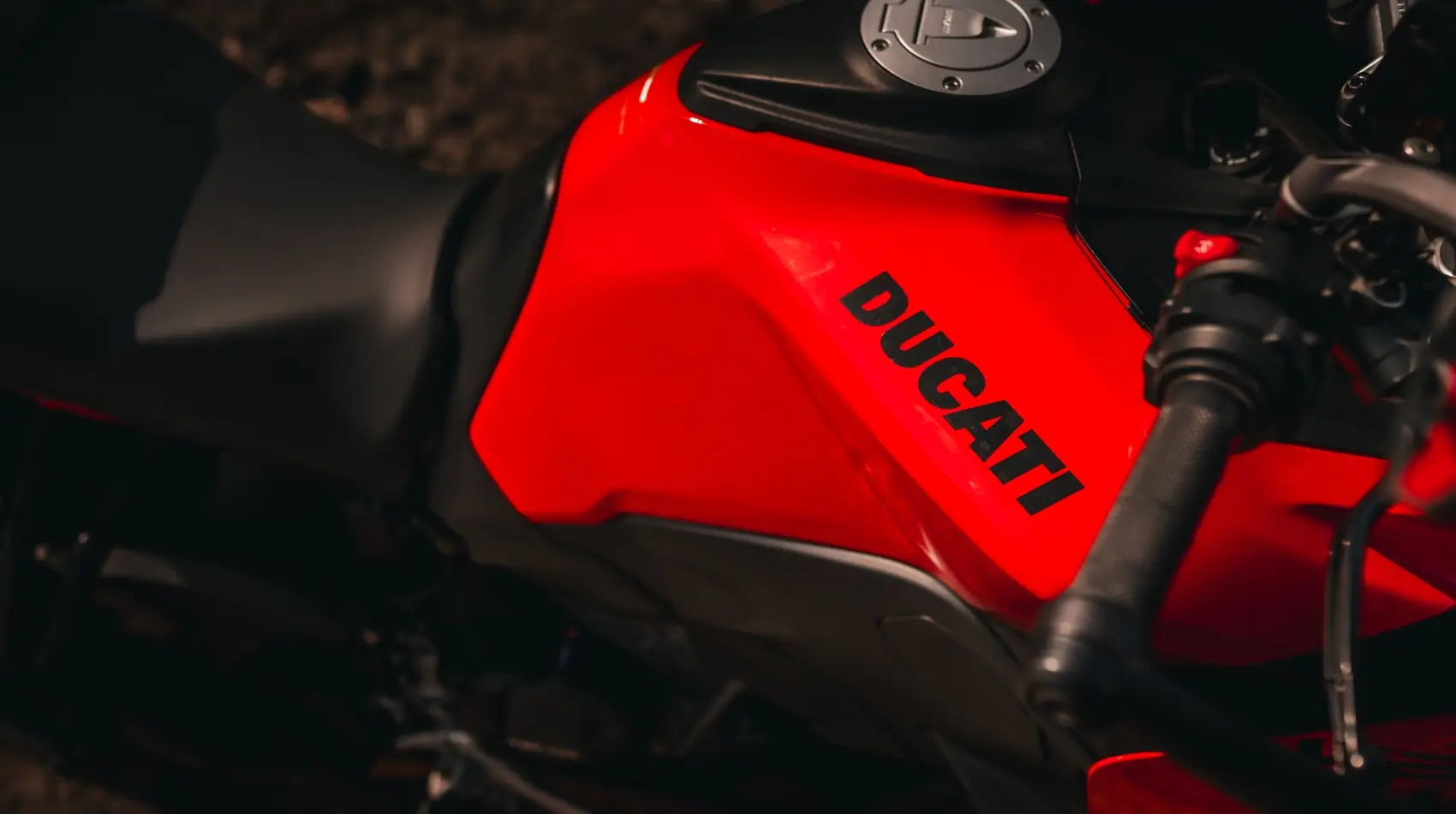
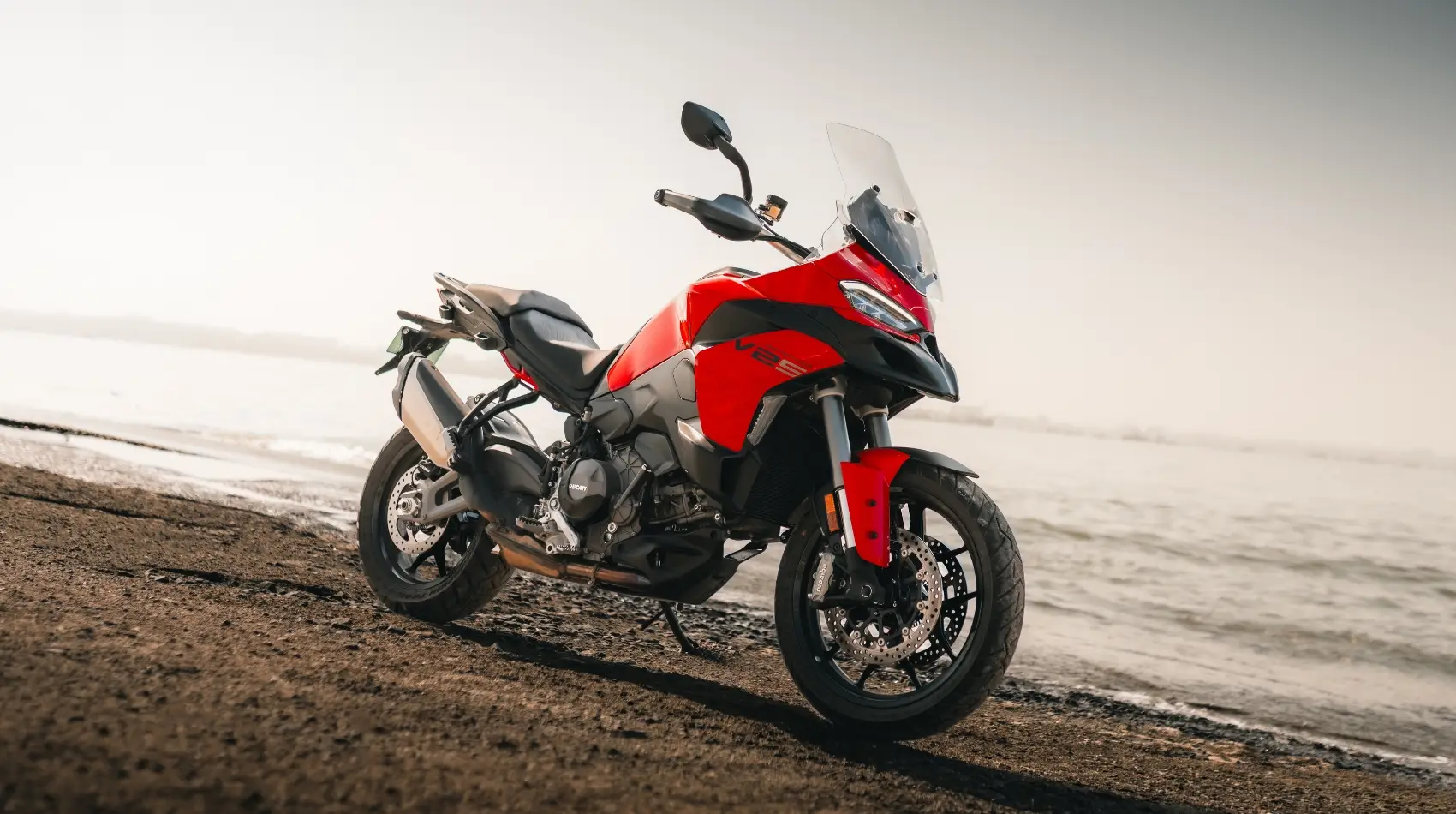
Let us start with presence, because the Multistrada is genuinely striking. The lead designer of the V2, Akshay Pardeshi, along with his team, has done a commendable job. While it may not have the sheer bulk of its V4 siblings, the V2 is still one of the larger middleweights out there, and that translates into serious road presence. It is a proper crowd-puller, and for good reason. You get an upright stance, sharp design and bodywork. Styling, of course, is subjective, but the Multistrada V2 strikes a fine balance between looking aggressive and elegant. And that Jekyll-and-Hyde duality seems to run as a recurring theme through the bike – it is something you will notice in more ways than one. For a bike of its kind, it is every bit as beautiful as a Ducati can be – and that is saying something.
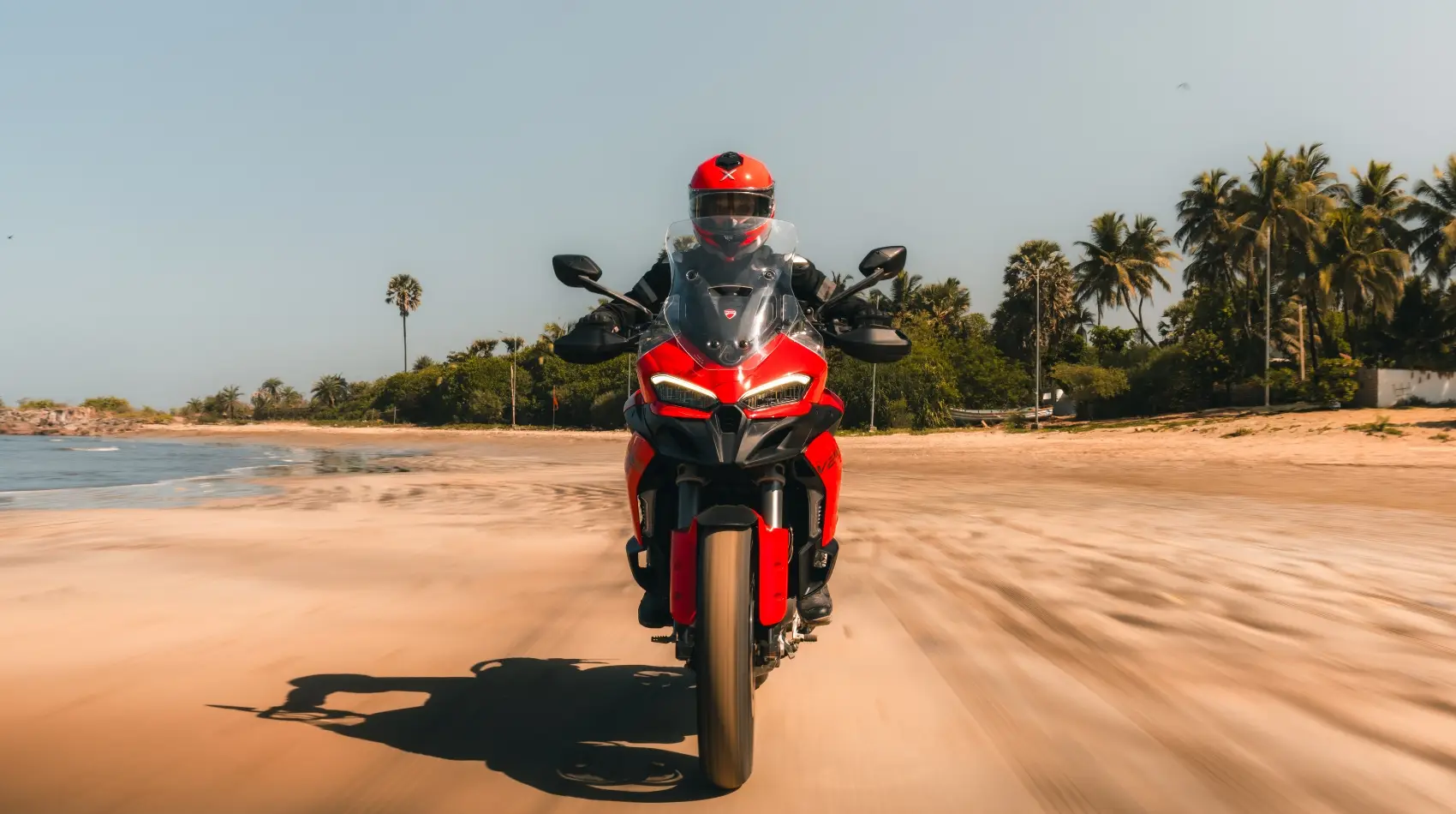
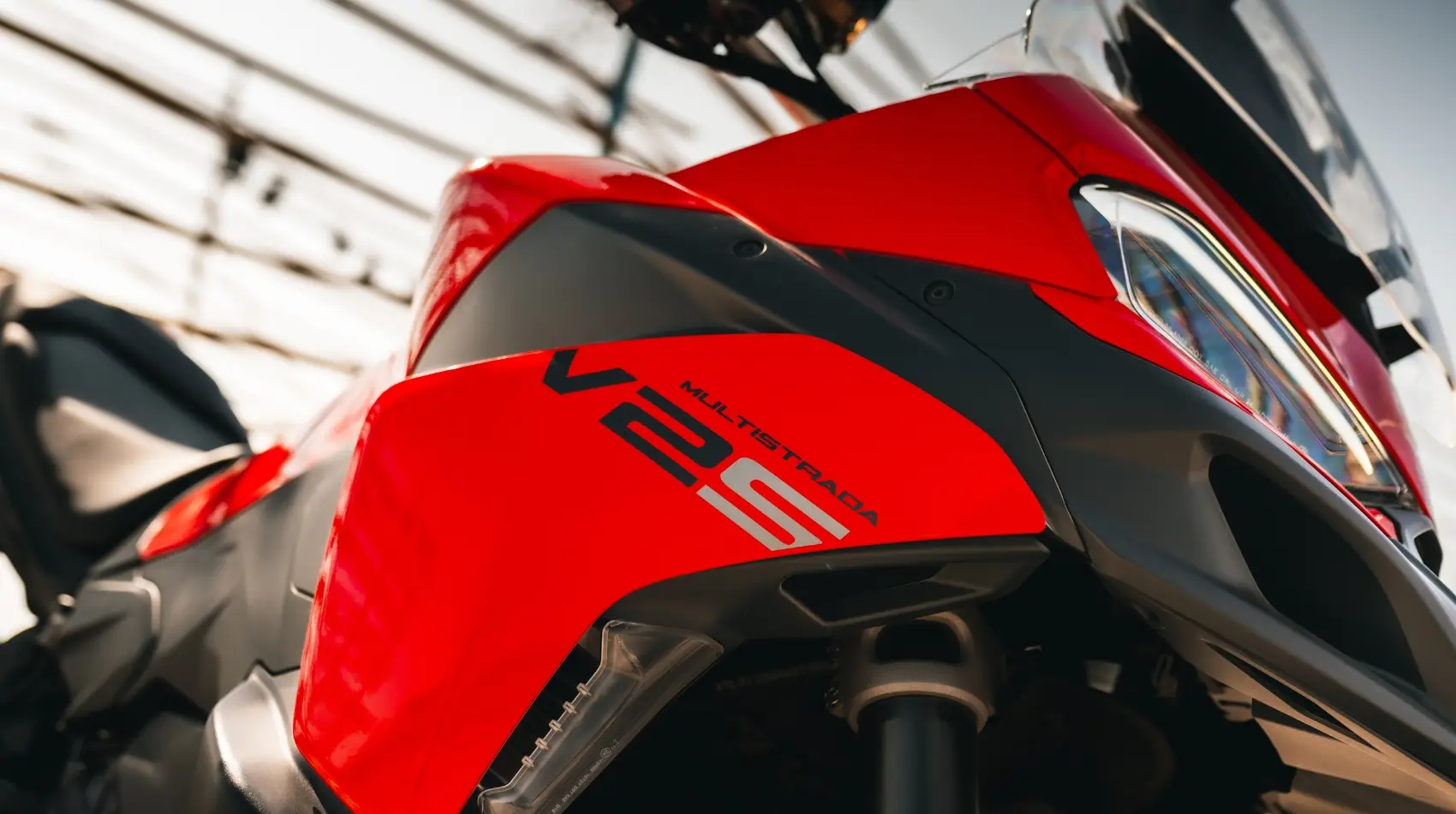
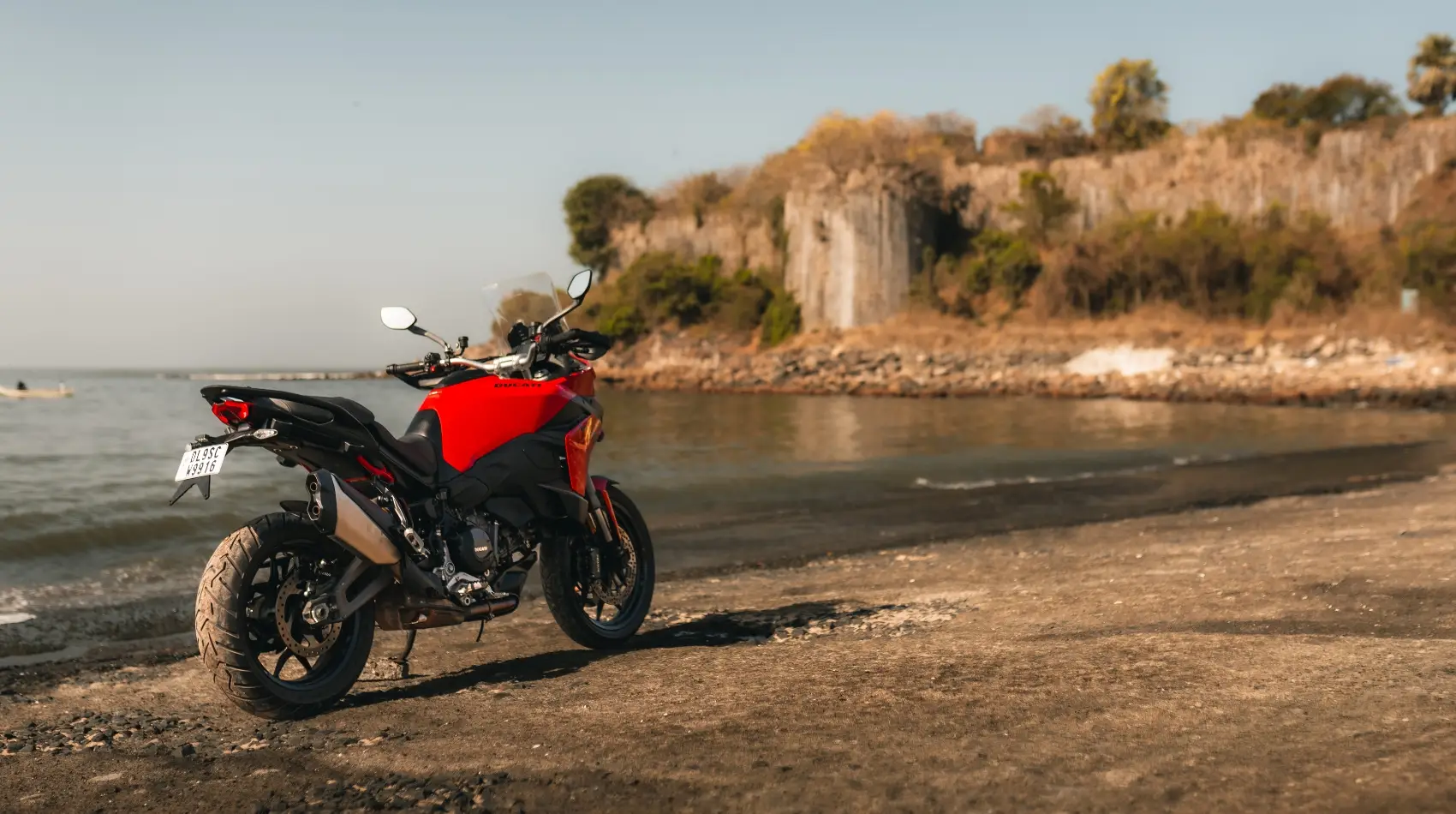
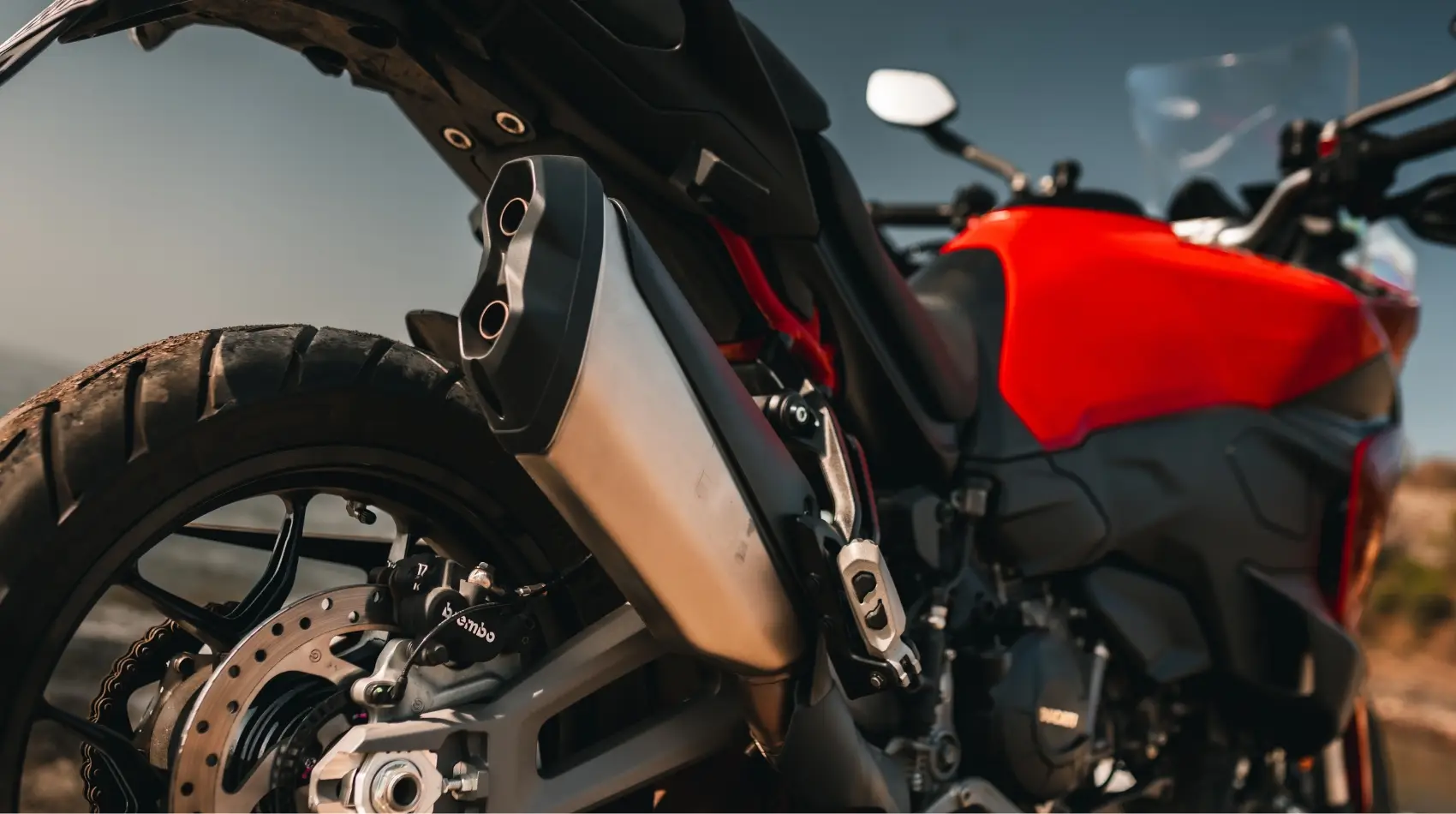
A few of my favourite elements on the Multistrada include the iconic beak, which has been subtly tweaked to give it that signature yet fresh, almost ‘angry bird’ look; the headlights, which echo the design seen on the new Panigale; and the slender yet chunky upswept exhaust, which absolutely looks ace. It is one of the best looking adventure-tourers of our times, period.
Build quality is impressive, with high-quality plastics and materials used throughout. That said, the beak on my test bike did begin to wiggle after just 2,500km of being thrashed by performance-hungry auto journalists.
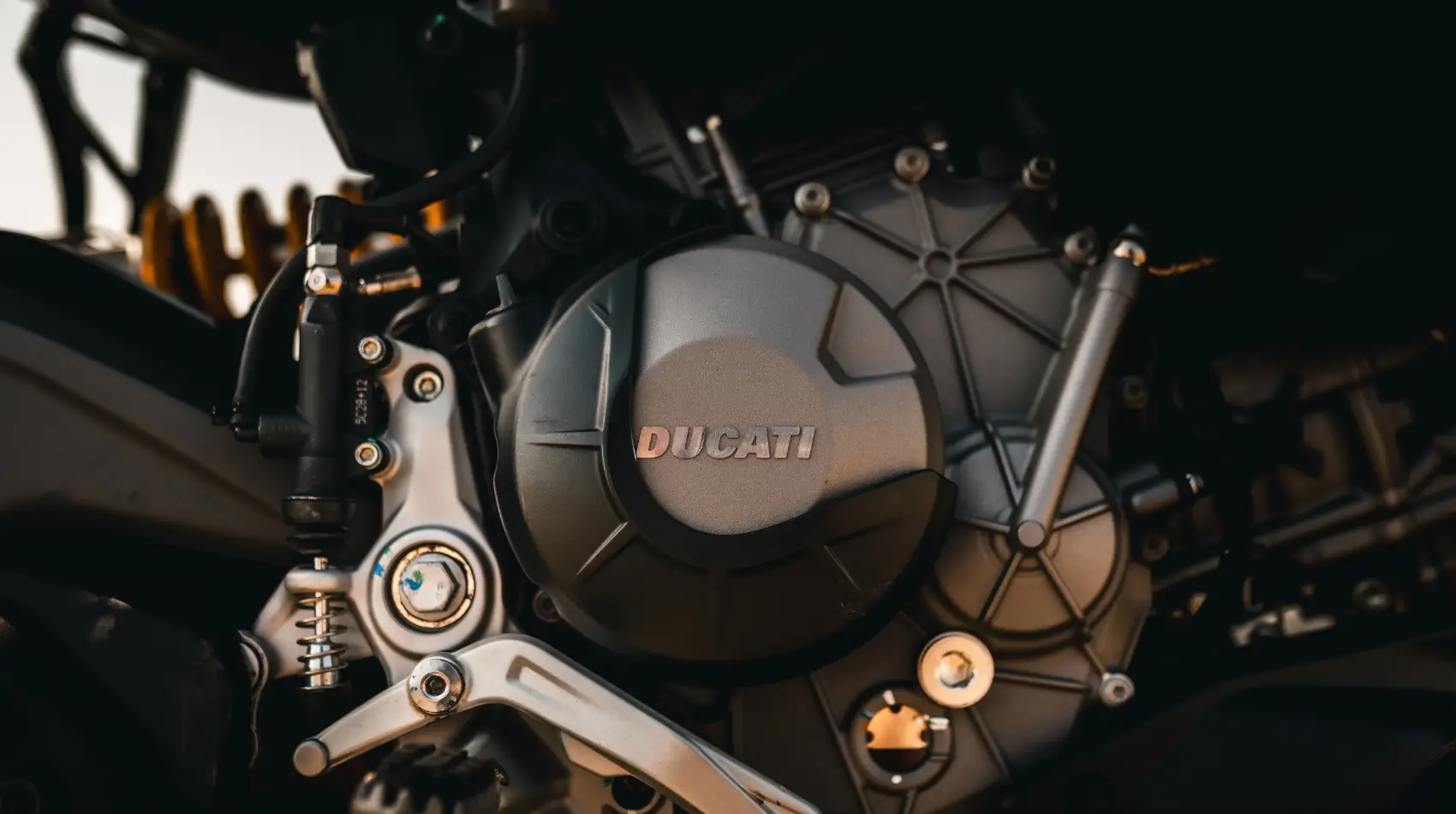
But the meat of the matter with this bike lies in the way it performs, handles, and rides. Let us get the specs out of the way first. Powering it is Ducati’s new 890cc, 90-degree, liquid-cooled V2 mill, which weighs just 54.4kg – that is 5.8kg lighter than the outgoing (on the Multistrada V2) Testastretta engine. This motor also does duty on the Panigale, Streetfighter, and Hypermotard. While it produces similar power figures, it is now Euro 5+ compliant and boasts a 45,000km service interval–a 50 per cent increase over its predecessor, which is something Indian buyers will certainly appreciate.
But enough of the numbers – what is it like to ride? Thumb the starter and, within a couple of cranks, the engine comes to life with a rich, throaty rumble. It sounds better than before–less clanky and mechanical–and has a raspy top-end shriek. It is, without doubt, one of the better-sounding two-cylinder motorcycles out there, and that only adds to the experience when you are pushing on.
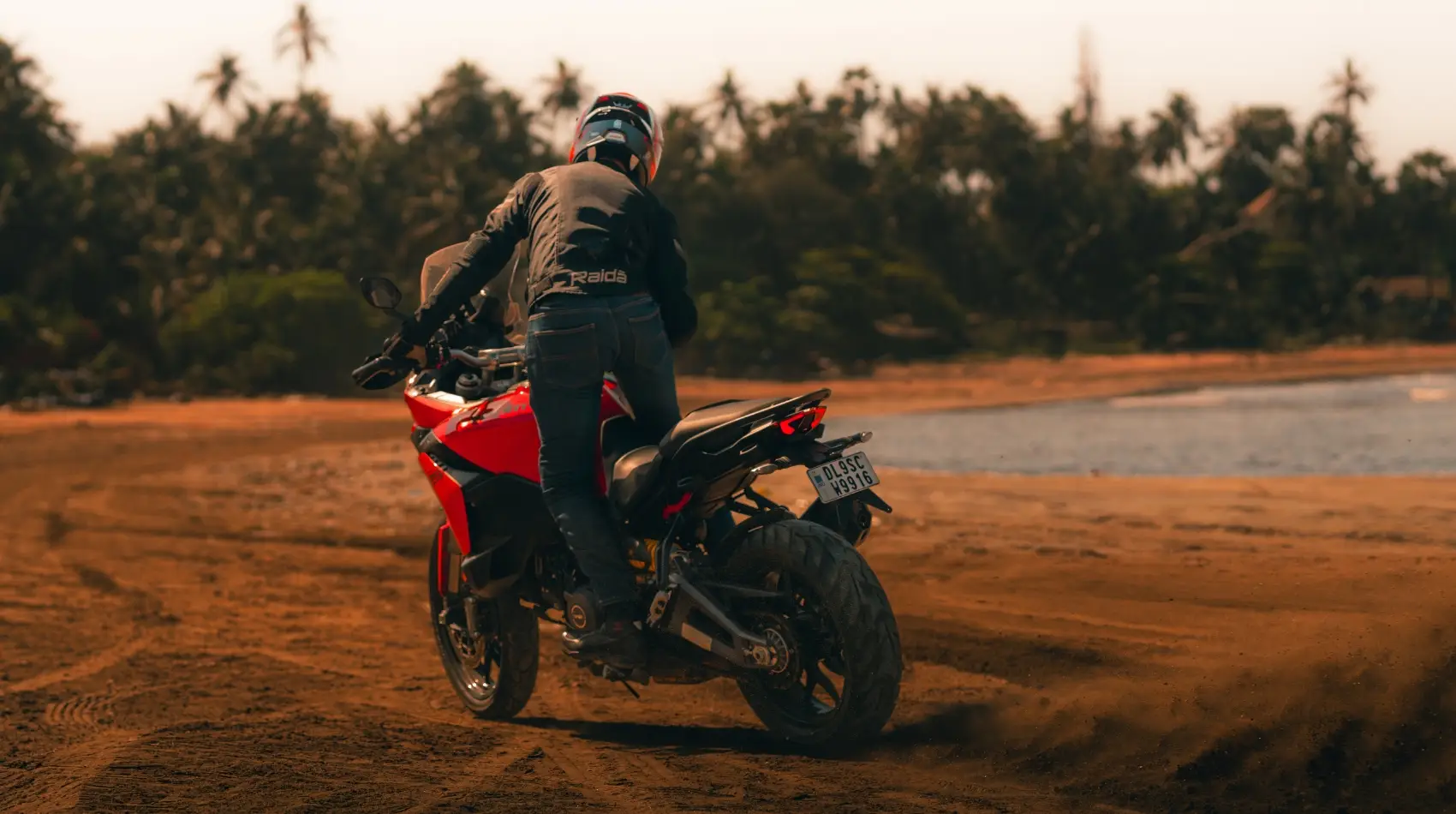
Get it off the line and you immediately notice how well balanced it is. With a 202kg dry weight, it is a full 18kg lighter than its predecessor, and that is evident in almost every scenario. Despite being a tall motorcycle with a 19-litre fuel tank (one litre smaller than before), the V2 S does not feel top-heavy. It is easy to manoeuvre at low speeds and hides its weight remarkably well. The wide handlebar offers plenty of leverage, making it surprisingly manageable even in tight traffic.
Underpinning the bike is a 3kg lighter aluminium monocoque frame. The S variant commands roughly ₹2 lakh more than the standard V2, but it justifies the premium with Ducati’s Skyhook Evo suspension. This includes a fully adjustable monoshock with electronic adjustment, along with 45mm front forks that can also be tuned electronically for compression and rebound. The bike comes equipped with Ducati’s bi-directional Quickshifter 2.0 as standard, along with a comprehensive suite of electronic aids – cornering ABS, traction control, wheelie control, and engine brake control.
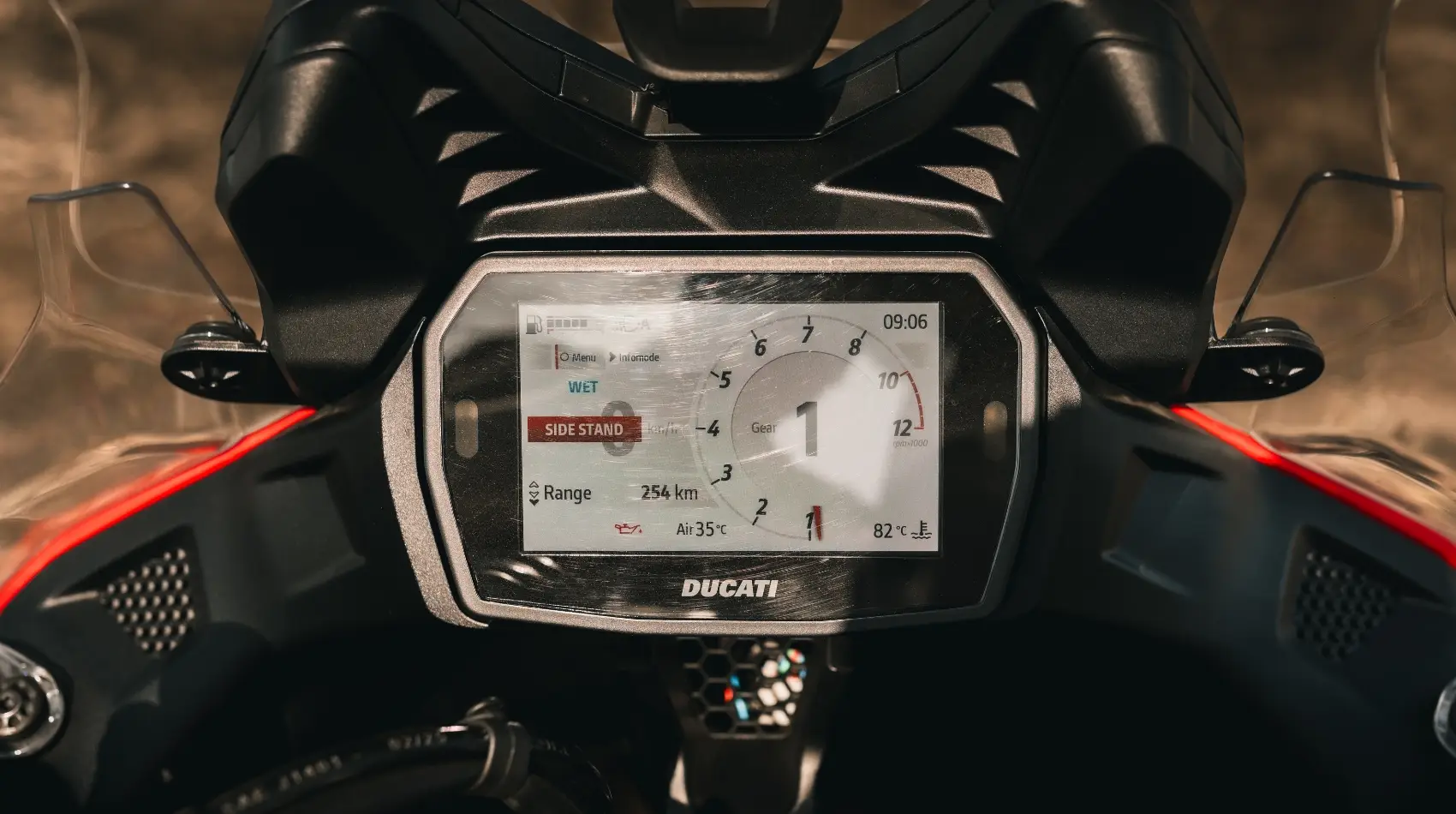
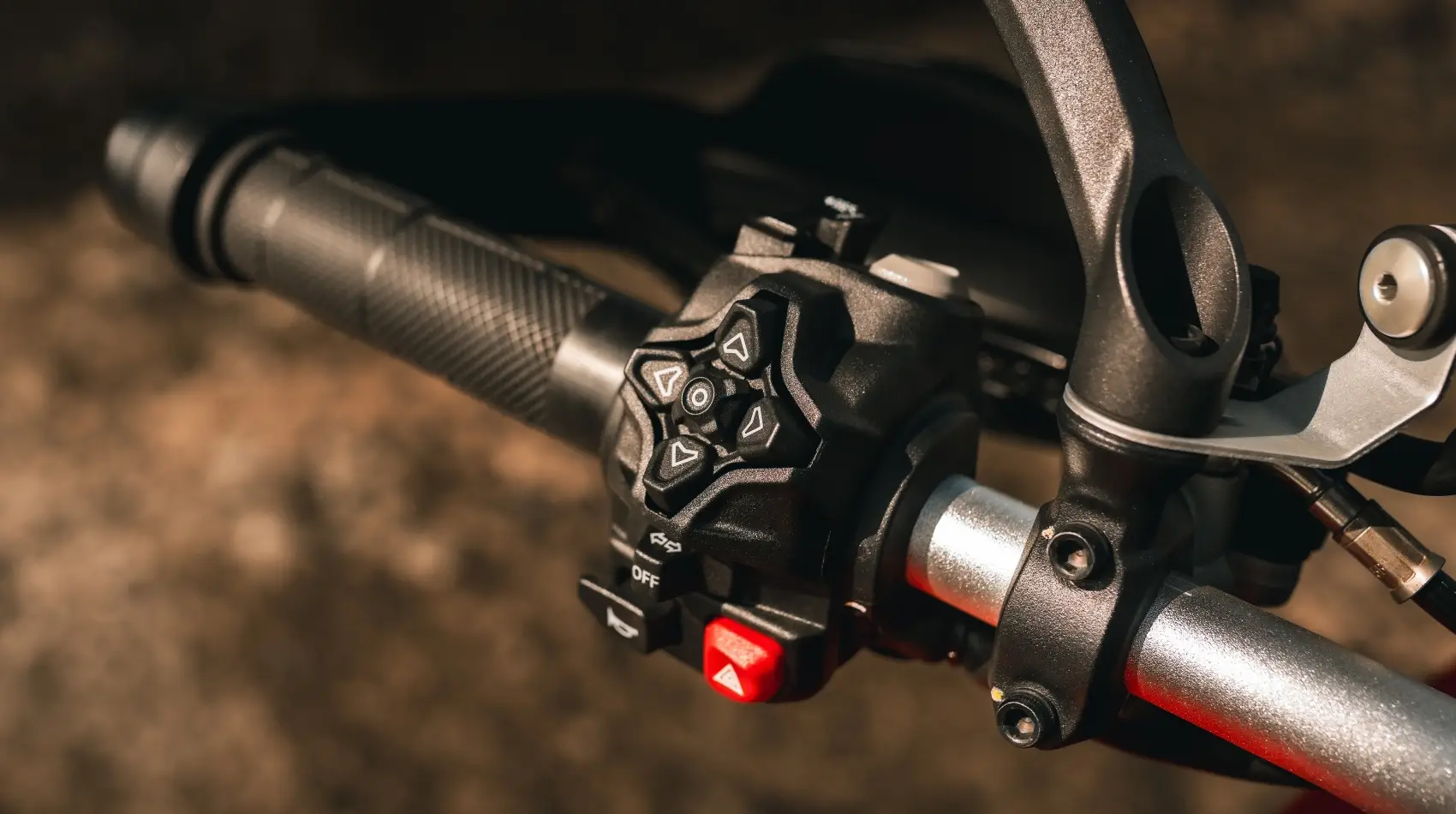
There are five riding modes – Sport, Touring, Enduro, Wet, and Urban. The first two deliver the full 114bhp, while the latter three are restricted to 94bhp. All modes are customisable, both in terms of power delivery and suspension settings (Dynamic, Comfort, Off-road, and Low Grip), and this flexibility goes a long way in justifying the extra spend on the V2 S. The bike rides on a 19-inch front and 17-inch rear wheel setup, shod with Pirelli Scorpion Trail tyres, and Ducati has also managed to shave off 2kg with these new wheels.
On the ergonomics front, the V2 S offers an upright and neutral riding position that should suit a wide range of riders, whether short or tall. In Urban mode, with the suspension set to Comfort, the ride quality is plush. The bike does an excellent job of ironing out the imperfections of Indian roads. Even at my 60kg weight, the Multistrada felt exceptionally comfortable, and over the five days I spent with it, this was my default setup for tackling Mumbai’s streets.
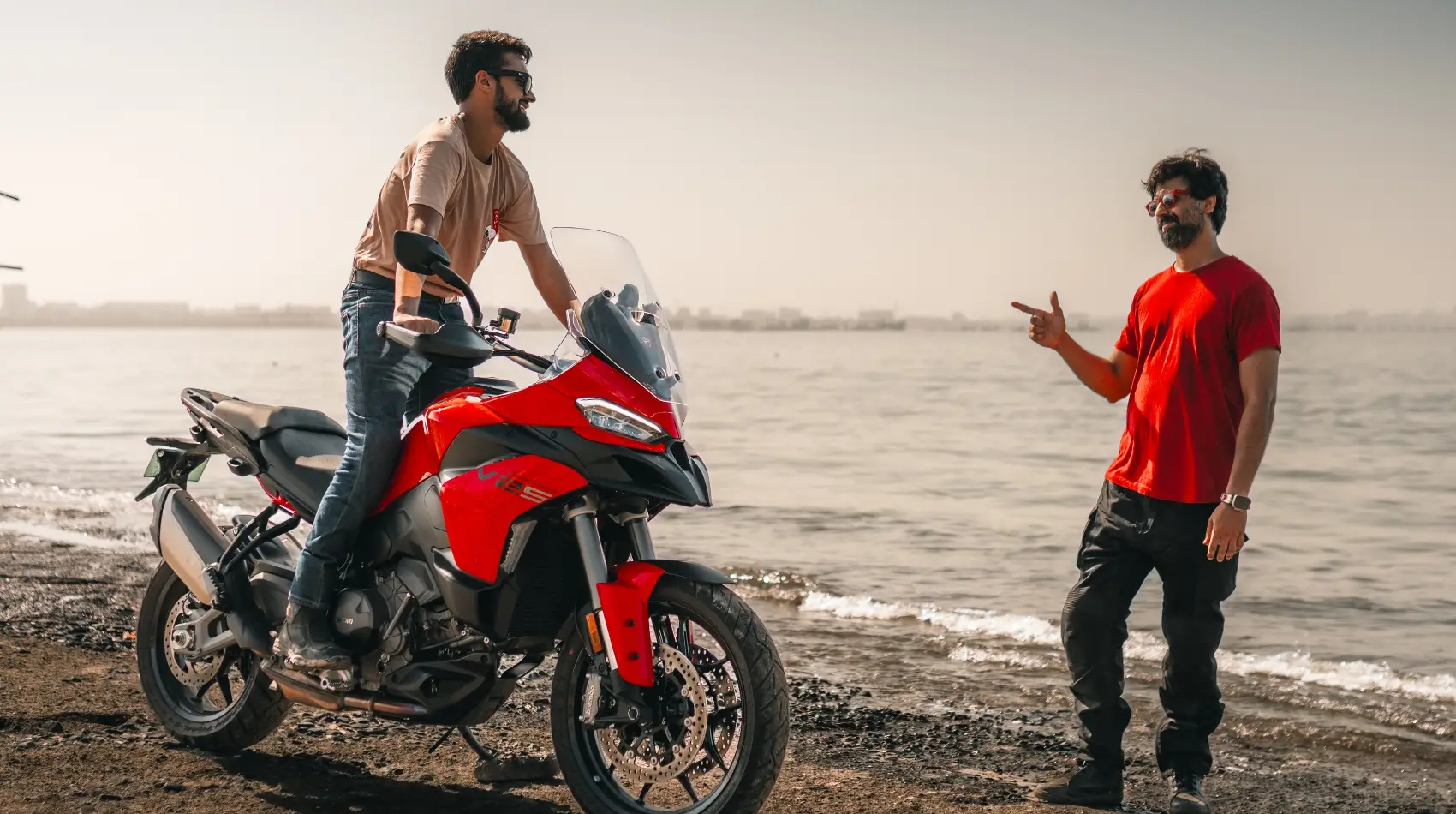
At higher speeds, the suspension deals with undulations effortlessly, and the one-touch up or down windscreen does a good job of keeping the buffeting in check. The bike also lowers itself by 8mm in Urban mode, which will benefit shorter riders. The seat height stands at 850mm, but thanks to its sculpted design, I – at 5 feet 7 inches – could flat-foot it with ease. Ducati also offers lower seats as optional extras, while the standard seat itself can be adjusted down to 830mm using a simple, tool-free mechanism.
Switch to a more dynamic setting and the ride becomes noticeably firmer, though never uncomfortable. What could be improved, however, is seat comfort. While it offers good support, it is on the firmer side, which becomes apparent over longer stints. A softer, better-cushioned seat would make a noticeable difference.
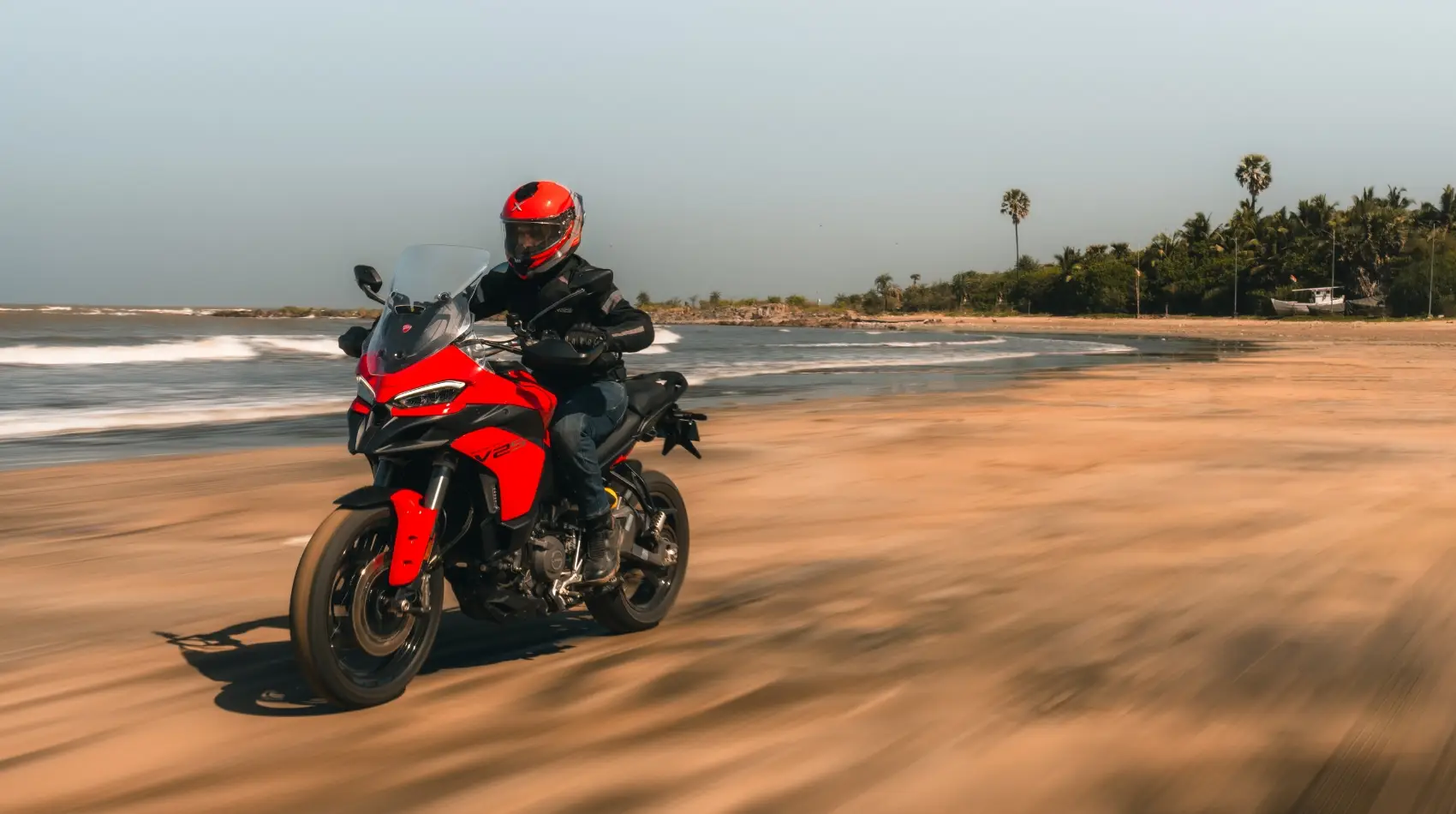
Where the Multistrada has traditionally excelled – often ahead of its rivals – is in handling, and the V2 S is no exception. It feels nimble and composed, even when pushed hard, and tips into corners with surprising eagerness for a bike of its size. Complementing this is the engine’s character: a smooth, linear low end that quickly builds into a punchy mid-range and an addictive top end.
The engine is paired with a slick six-speed gearbox that suits its nature well, with shorter lower gears for brisk acceleration and taller upper gears that let you ride the torque. That said, it is not the most tractable motor–it does not enjoy being lugged in higher gears at low speeds. The quickshifter works seamlessly at higher speeds, though it can feel a touch clunky at slower ones.
Braking duties are handled by twin semi-floating 320mm front discs, gripped by radially mounted Brembo four-piston calipers, along with a 265mm rear disc. The setup is superb – progressive, communicative, and resistant to fade even under hard use. Top marks there.
As with most modern Ducatis, the electronics work quietly in the background, offering support without feeling intrusive. They can also be adjusted on the fly, which is particularly useful when riding enthusiastically. All of this makes the V2 S one of the most engaging middleweight adventure bikes to carve corners on.
It is not without its flaws, though. The bike does not take kindly to bumper-to-bumper traffic, and the V2 engine demands adequate airflow. In heavy traffic, temperatures can climb past 110 degrees within 8 to 10 minutes. The clutch, too, becomes noticeably heavy – bordering on tiring – making long traffic jams a real chore. In such conditions, you will likely want to pull over and let the bike cool down, just as I had to.
The Ducati Multistrada V2 S, then, may not have the brute force of its bigger siblings, but what it offers instead is a more manageable, accessible, and genuinely usable experience. Yes, it is expensive. Yes, it has its quirks. And yes, there are objectively “better value” motorcycles out there.
But very few bikes in this segment manage to be a capable adventure-tourer while also disguising their size so well on the move — and none deliver that unmistakable Ducati character in quite the same way. It offers the kind of performance and handling that can genuinely put a grin on your face. It is also far more versatile than you might expect and, while it comes with its fair share of compromises, it brings something far rarer to the table: personality.
So, if you are buying with your head, there are safer bets. But if you are buying with your heart… you have probably already made up your mind. Because the Multistrada V2 S does not try to win the spec-sheet war — it simply wins you over.
Price: ₹18.8 lakh (ex-showroom)
Engine: 890cc, V2, liquid-cooled
Power: 114bhp
Torque: 92.1Nm