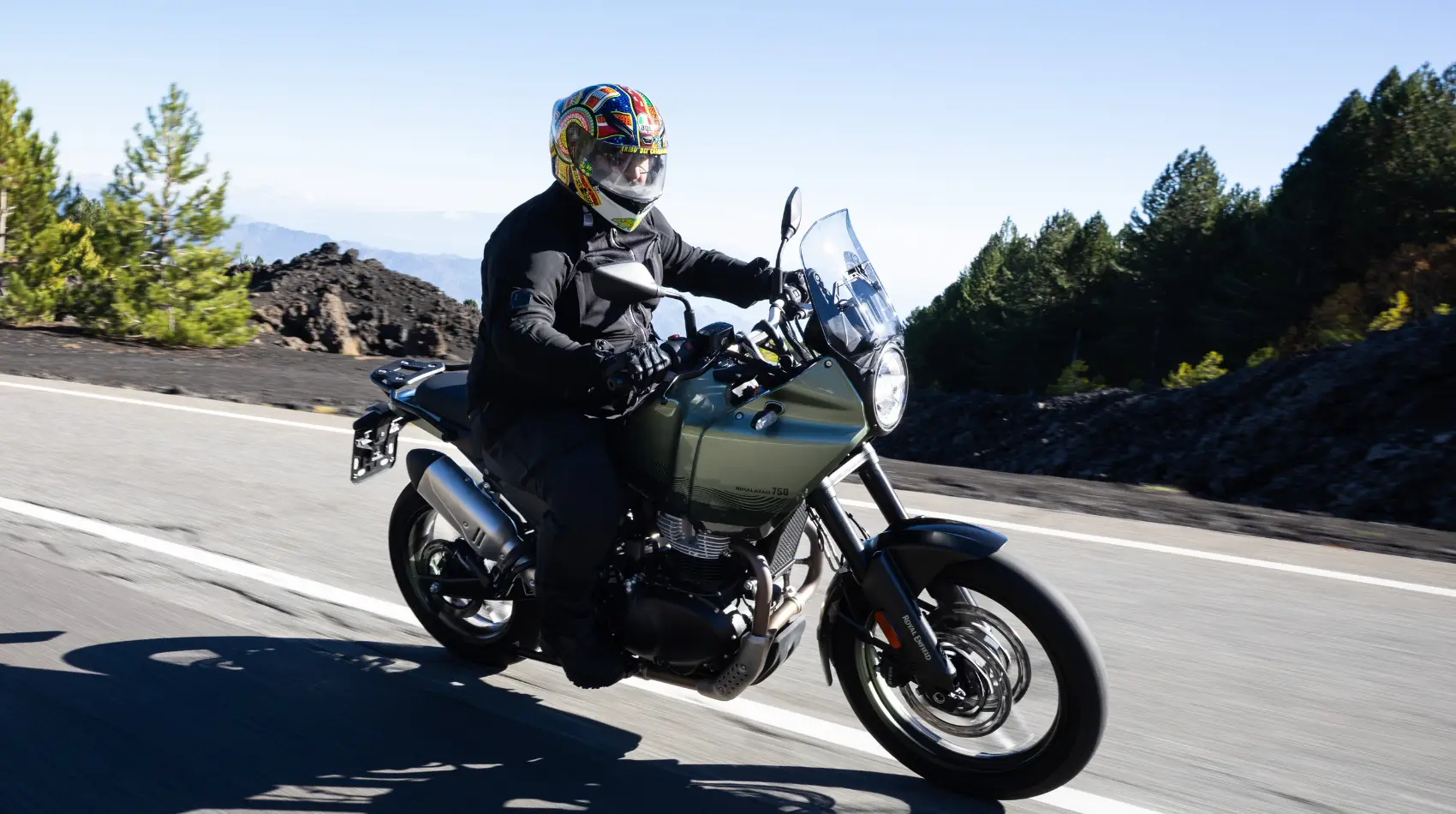
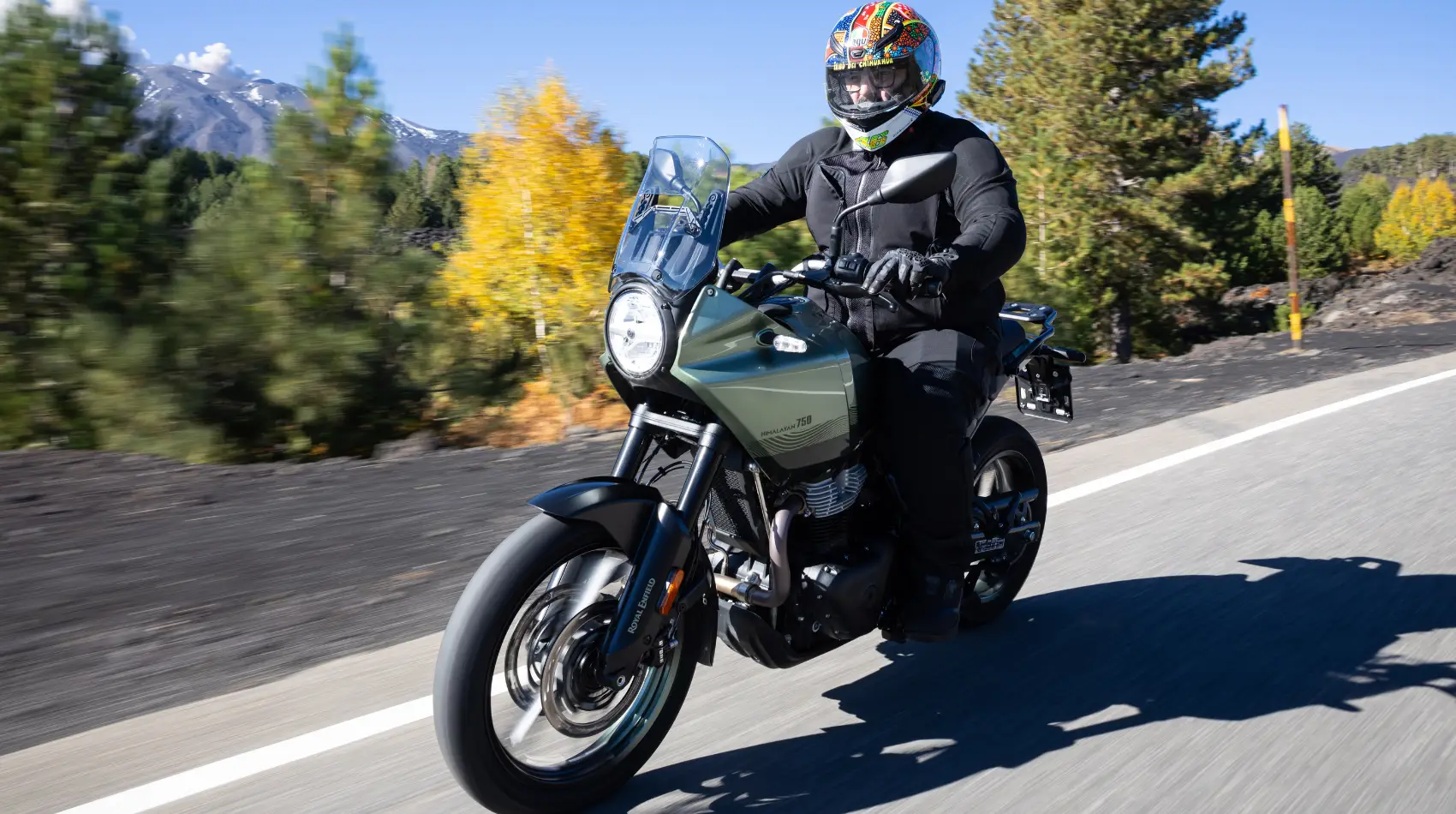
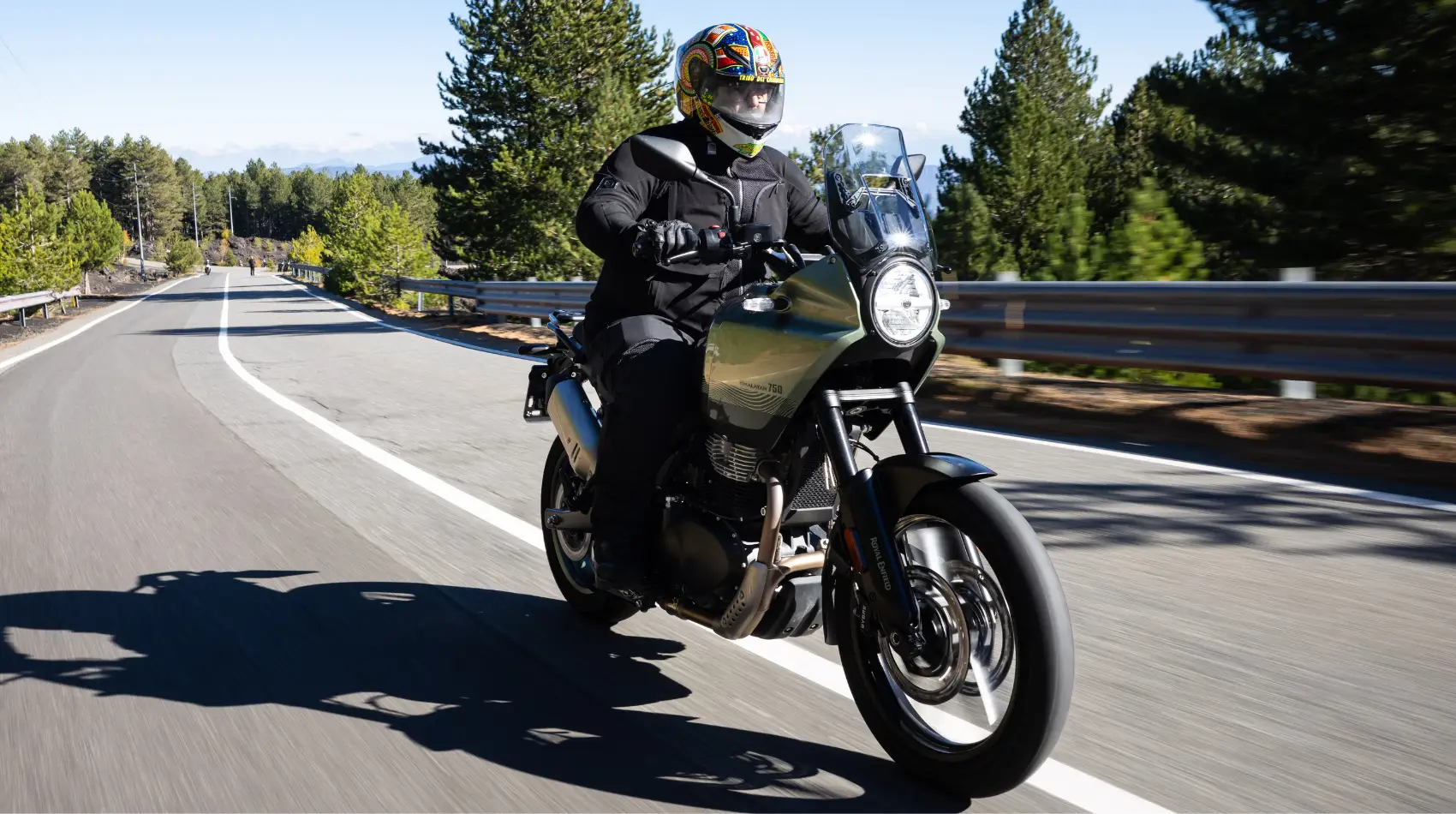
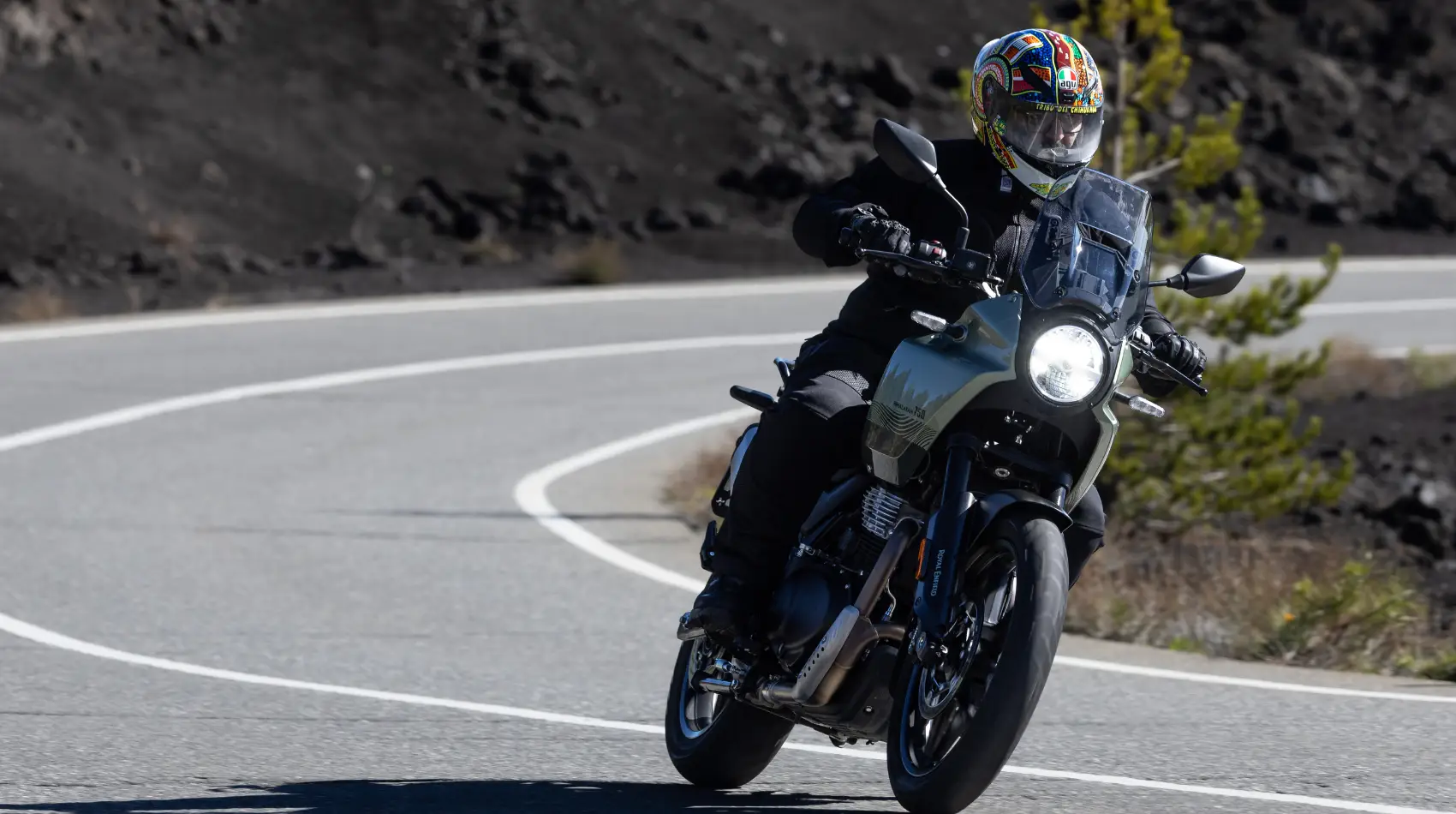
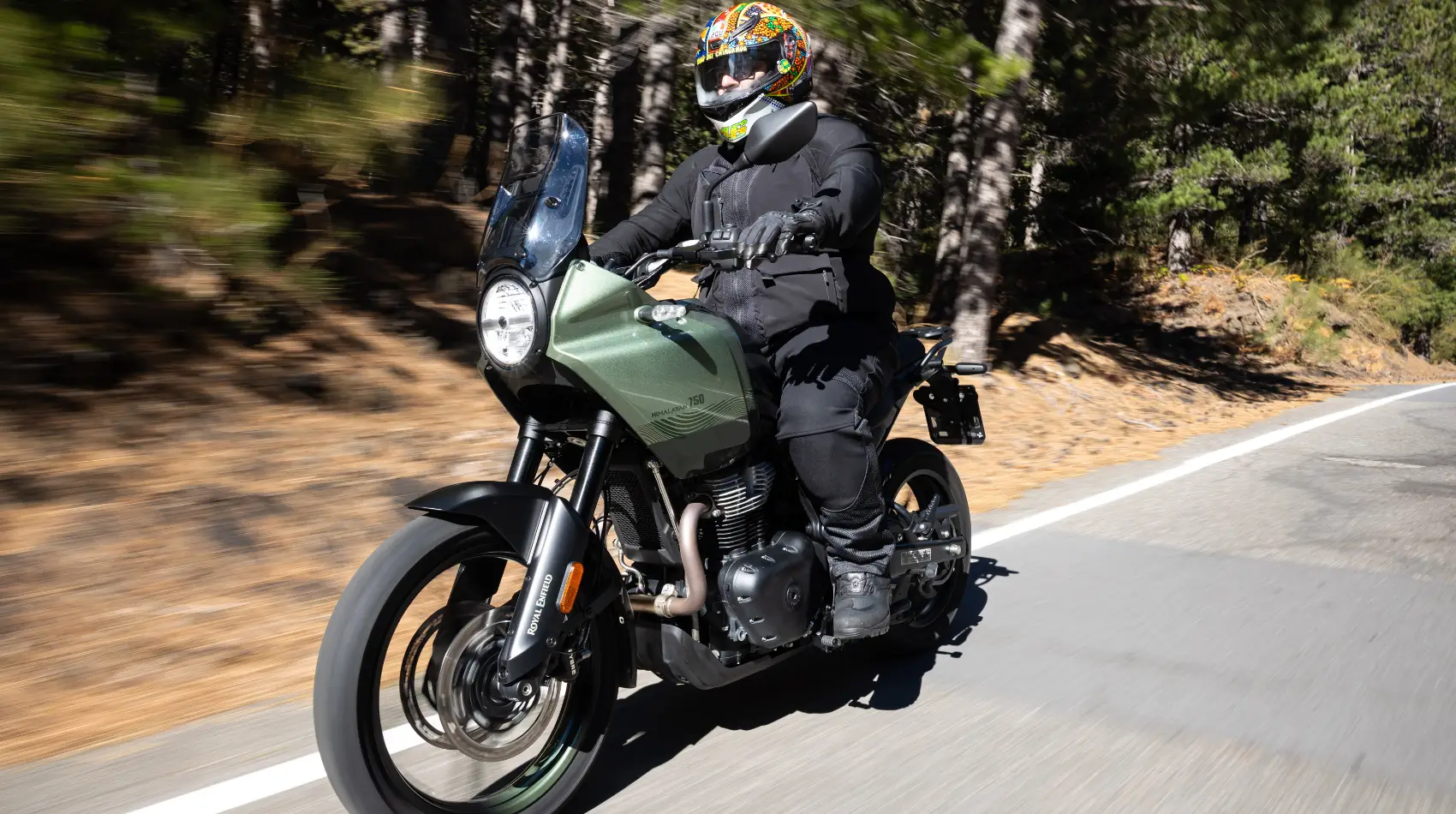
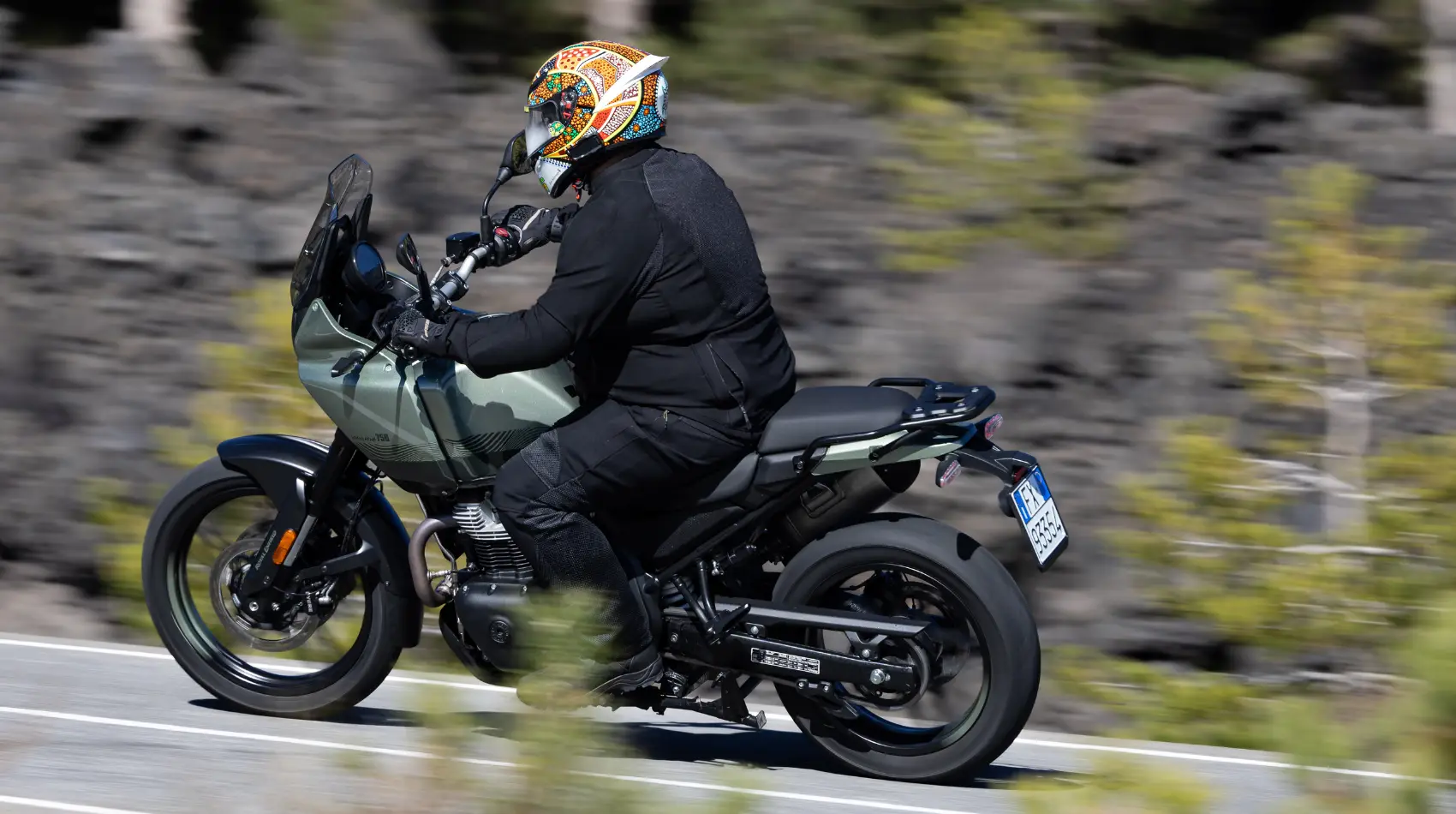
You're going to see a lot of reviews of the new Royal Enfield Himalayan 750. Reviews that will tell you everything about its technical specifications, power-to-weight ratio, suspension travel, off-road capabilities and whether you can scrape your elbows around corners while pretending to be Marc Márquez.
This isn't one of those reviews.
You see, it's been about 15 years since I last reviewed a motorcycle properly. Not because I dislike motorcycles, but because I absolutely love cars. Four wheels have always trumped two in my world, and given the choice between driving a nice car and riding a nice motorcycle, I'd pick the car every single time.
But I'm also approaching 40. And while I already have a nice little sports car in my garage, the early symptoms of a midlife crisis are beginning to make themselves apparent. So when Royal Enfield invited me to Sicily to ride its new Himalayan 750, I thought, why not? What's the worst that could happen?
There is however, a slight problem with not having ridden a motorcycle seriously in over a decade. You tend to give away all your riding gear. Which is precisely what I'd done.
My motorcycle adventures in recent years have largely involved riding around Mumbai wearing jeans, a T-shirt and a helmet. But Sicily required proper equipment, and finding riding gear when you weigh approximately 135 kilograms is considerably harder than you might imagine. After visiting multiple stores across Mumbai, I finally found one that had equipment in my size. Unfortunately, having precisely one option also meant having absolutely no bargaining power.
By the time I'd purchased a jacket, riding pants, boots and gloves, I'd spent enough money to buy a cheap second-hand car. But safety IS paramount. At least I looked like a proper motorcyclist. Whether I could ride like one was another matter entirely.
One of the biggest complaints I've heard about the Himalayan 750 is that it looks like a motorcycle from the 1980s. And my response is simple. What's wrong with that? Retro-modern design is one of the most appealing automotive and motorcycle design trends today. Royal Enfield understands this better than almost anybody else, and the Himalayan 750 gets the proportions absolutely right.
People have complained about the round headlamp, suggesting it should have been square or perhaps even a twin-headlamp arrangement. But Royal Enfield's identity is rooted in classic motorcycling. And classic motorcycles have round headlamps.
It's not rocket science. What matters is integrating modern technology into that familiar shape. The LED headlamp and daytime running lights accomplish precisely that, although proper nighttime performance will need evaluating separately. I also have a potentially controversial opinion. The Himalayan 750 looks better with alloy wheels. Yes, I know. Somewhere, a hardcore adventure motorcyclist has just spat out his coffee. But the whole point of retro-modern styling is balancing old-school aesthetics with contemporary design. The alloys do exactly that, without looking like something borrowed from a 1990s superbike.
The digital instrumentation is another pleasant surprise. It's modern, configurable and offers an impressive degree of personalisation. There is maps integration, media integration, TPMS too and five riding modes, with additional customisation available, allowing you to tailor the motorcycle to your preferences rather than simply accepting whatever an engineer decided was best. And that matters enormously to somebody like me.
I started riding in the wet-weather mode, with the electronic safety systems offering their highest levels of intervention. Not because it was raining, but because I wanted every possible electronic guardian angel looking over my shoulder. As my confidence improved, I experimented with the road and sportier settings. The motorcycle became more responsive, but never intimidating.
And here's something I want to emphasise. If you're relatively inexperienced, don't let somebody else dictate how quickly you should ride or what terrain you should tackle.
There's always that one friend who says, ‘come on bro, nothing will happen’. Ignore him. Know your abilities. Understand your limitations. And never mistake peer pressure for riding skill. Which brings me to the Himalayan's off-road capabilities.
I didn't test them. There. I've said it.
I'm not going to pretend to be an expert adventure rider just because somebody handed me the keys to an adventure motorcycle. Other journalists will tell you how brilliantly it tackles rocks, gravel and muddy inclines. I was perfectly happy keeping both wheels on the road and both knees intact.
For context, I've been riding Royal Enfield's Bear 650 recently, which makes comparing the two motorcycles particularly interesting. I've always liked the sound of Royal Enfield's 650cc parallel-twin engine. What I've never particularly loved is its refinement. There's a degree of vibration and mechanical harshness that enthusiasts might describe as character. I describe it as insufficient refinement.
The Himalayan's new 750cc engine is a substantial improvement. I could spend the next several paragraphs discussing the engineering changes, internal components and technical advancements, but there's a very good chance you'd stop reading.
So here's the simplified version. Is it smoother? Yes. More refined? Yes. Does it deliver better power and torque? Yes. Is the power delivery more usable, particularly lower down the rev range? Absolutely.
It feels like an engine developed for actual riding rather than winning arguments about specifications. And, importantly, it doesn't frighten you. 55hp and 63Nm of torque might not be numbers you will win any game of top trumps with, but trust me, it moves!
The power arrives progressively, predictably and without any unnecessary drama. For somebody graduating from a 200cc or 250cc motorcycle, the Himalayan 750 feels remarkably approachable, provided they respect its weight and performance.
Modern electronics have made larger motorcycles far more manageable than they once were. You don't necessarily need to climb every single rung of the displacement ladder before considering something bigger.
Now let me tell you about two koi fish. Recently, I rode my Bear 650 approximately 600 metres from my house to an aquarium shop. I'd ordered two rather beautiful koi, and the shopkeeper had packed them into a large plastic bag filled with water. I hung the bag from the handlebar and headed home.
Unfortunately, the bag brushed against the hot engine casing a few times, melting the plastic and sending water dripping onto the road. Thankfully, I was close enough to get home before my expensive new aquatic friends experienced an extremely unfortunate ending. The fish survived.
Now, the reason I'm telling you this is that the Himalayan 750 felt noticeably cooler to ride. Admittedly, Sicily's ambient temperatures of approximately 22 to 25 degrees Celsius were considerably lower than Mumbai's low-thirties temperatures. So this isn't a scientific comparison. But even allowing for that, the Himalayan's heat management impressed me.
There was very little uncomfortable heat directed towards the more sensitive regions of my anatomy. Which, considering my rapidly approaching 40th birthday, is excellent news for future generations. Not that I want any MORE than the one, but one should still preserve….
The Himalayan 750 weighs approximately 224 kilograms. That's substantial, particularly when you're trying to push it backwards up a slight incline. But something remarkable happens once you start moving. At barely 5 or 10kmph, that weight seems to disappear. The motorcycle feels balanced, manageable and surprisingly easy to manoeuvre. It's only when you're stationary that the kilograms remind you they're still there.
Which brings me to a brilliant idea. Why don't manufacturers fit heavier motorcycles with tiny electric motors to assist with reversing or low-speed parking manoeuvres? Imagine a small hub motor helping you push a 220-kilogram motorcycle backwards up an incline. Hardcore motorcyclists will probably tell me to grow a pair and do it myself. But why? Technology exists to make life easier. We should use it. Royal Enfield, BMW, Honda, whoever is listening, you can have that idea for free. No royalties necessary.
Getting fast is one thing, stopping faster is more important. Braking setup is excellent too. Twin front discs and a single rear disc deliver reassuring stopping power, with predictable response and only modest front-end dive. For somebody returning to larger motorcycles after years away, that confidence is invaluable.
The suspension, however, is one area where I'd have liked slightly more compliance. It's not uncomfortable, but it feels a little firmer than I expected from a motorcycle designed for covering long distances. Over imperfect roads, it's perfectly acceptable. Encounter a sudden pothole at speed, however, and I suspect you'd feel it rather more than you'd like.
But, the suspension offers adjustability, and Royal Enfield's engineers explained that a softer setup is possible. I didn't experiment with those adjustments, so my impressions are based entirely on the settings we rode. Also, I can tell you for a fact that you should leave suspension setup to people who actually understand balance and not fidget with it on your own. Trust me, i say this from past experience!
The exhaust note is another highlight. The standard motorcycle sounds pleasingly purposeful without being unnecessarily loud or obnoxious. There's also a Royal Enfield x Arrow exhaust option, although it isn't expected to be officially available in India. I'm sure somebody will eventually import one. And with Royal Enfield written on the exhaust, perhaps you could convince an unsuspecting policeman that the exhaust on it is ‘stock sir’. Just dont make another instagram reel out of it. Or maybe, do! Do what you love.
Could someone like me actually tour on this? This is where the Himalayan 750 genuinely surprised me. Historically, my motorcycle rides have rarely exceeded 100 or 150 kilometres in a day. Not because I physically couldn't ride farther, but because I simply didn't want to. Yet riding through Sicily, something changed. After every stint of approximately an hour and a half, we'd stop for coffee and cannoli, overlooking picturesque Italian villages that looked like they'd been lifted straight from The Godfather.
And every time we stopped, I realised I could happily keep riding. The standard seat is comfortable, the riding position feels natural and the adjustable windscreen offers welcome protection from the wind. Royal Enfield also offers alternative seat options for shorter and taller riders, allowing the ergonomics to be tailored further. For the first time in years, I found myself genuinely considering an eight-hour or even ten-hour motorcycle journey.
Not because I had to. Because I wanted to.
I've ridden almost everything Royal Enfield has produced over the years, even if motorcycles haven't been my professional speciality for a long time. And I genuinely believe the Himalayan 750 is the best motorcycle the company has ever engineered.
It's refined, comfortable, confidence-inspiring, beautifully styled and surprisingly accessible. At an anticipated price of approximately ₹4.8–5 lakh ex-showroom, subject to official confirmation, it also represents an extraordinary statement about what Indian motorcycle engineering and manufacturing can achieve.
Can it compete with established international manufacturers? Absolutely.
Would I buy one? Now that's the interesting question.
I'm still a car guy. I'll probably always be a car guy. Given the choice, I'll still instinctively reach for the keys to something with four wheels.
But if I ever decide to disappear for a few days, ride into the mountains, drink coffee in tiny villages and temporarily forget about everything waiting for me back home, I know exactly which motorcycle I'd want beneath me. This one.
Maybe this midlife crisis thing isn't such a bad idea after all.