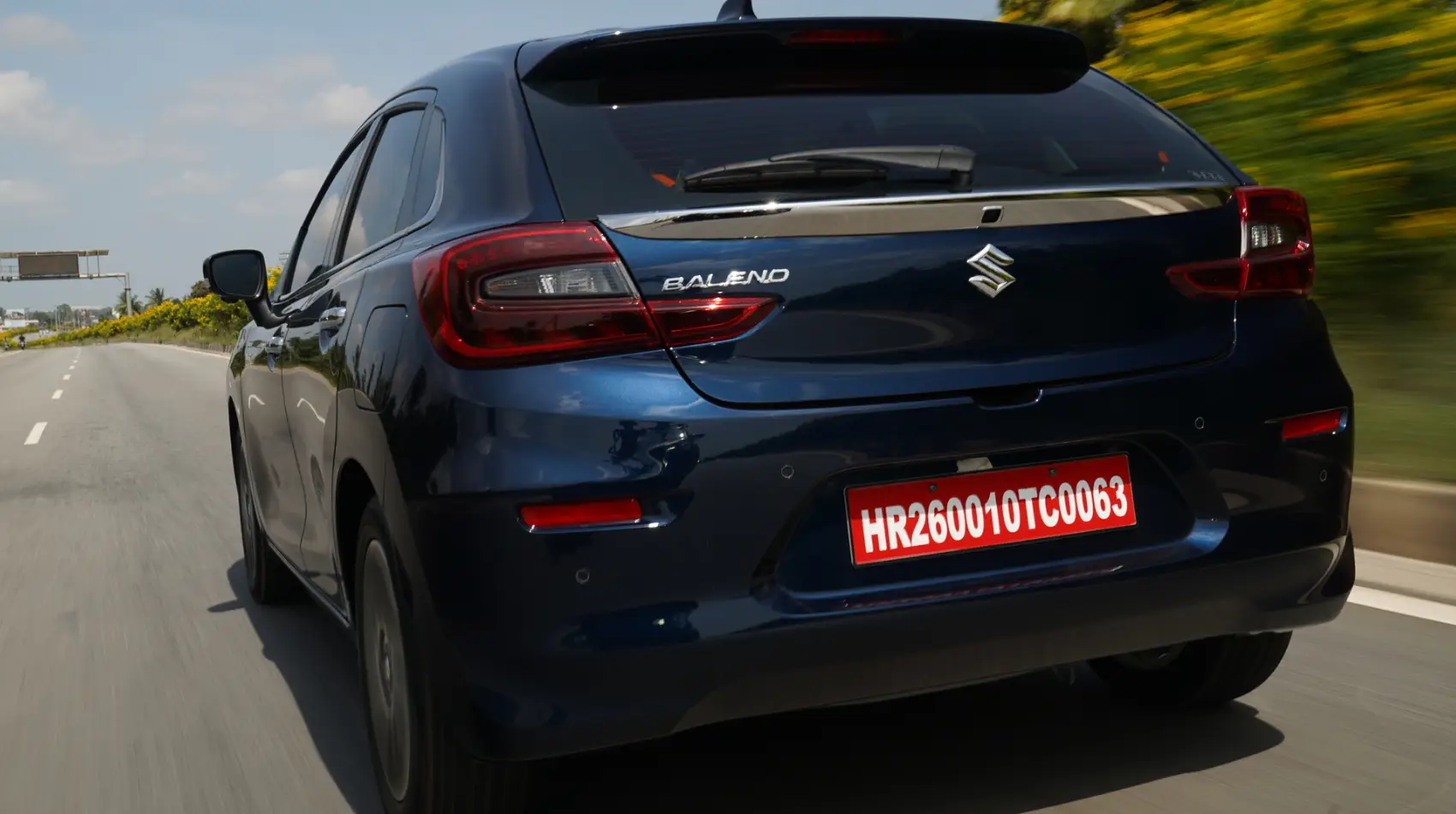
The Baleno is popular. They are everywhere. It is the most successful premium hatchback the country has ever seen, and for good reason. It is priced well, drives well, has enough space in the back and front for most families, has a frugal engine, looks good and is loaded with features if you buy the top-spec version. It is one of those cars that simply makes complete sense. It fits into Bombay parking spaces, does not drink like an American aircraft carrier sailor on shore leave in Thailand, is backed by a service network that probably includes a workshop near Umling La, and will do almost everything a normal family needs a car to do.
But the second-generation Baleno has been around since 2022, and Maruti Suzuki has now given it an update. There are a few meaningful changes, but visually, it has kept almost everything exactly the same and concentrated most of its energy on the face.
They have, quite literally, taken the word facelift far too seriously.
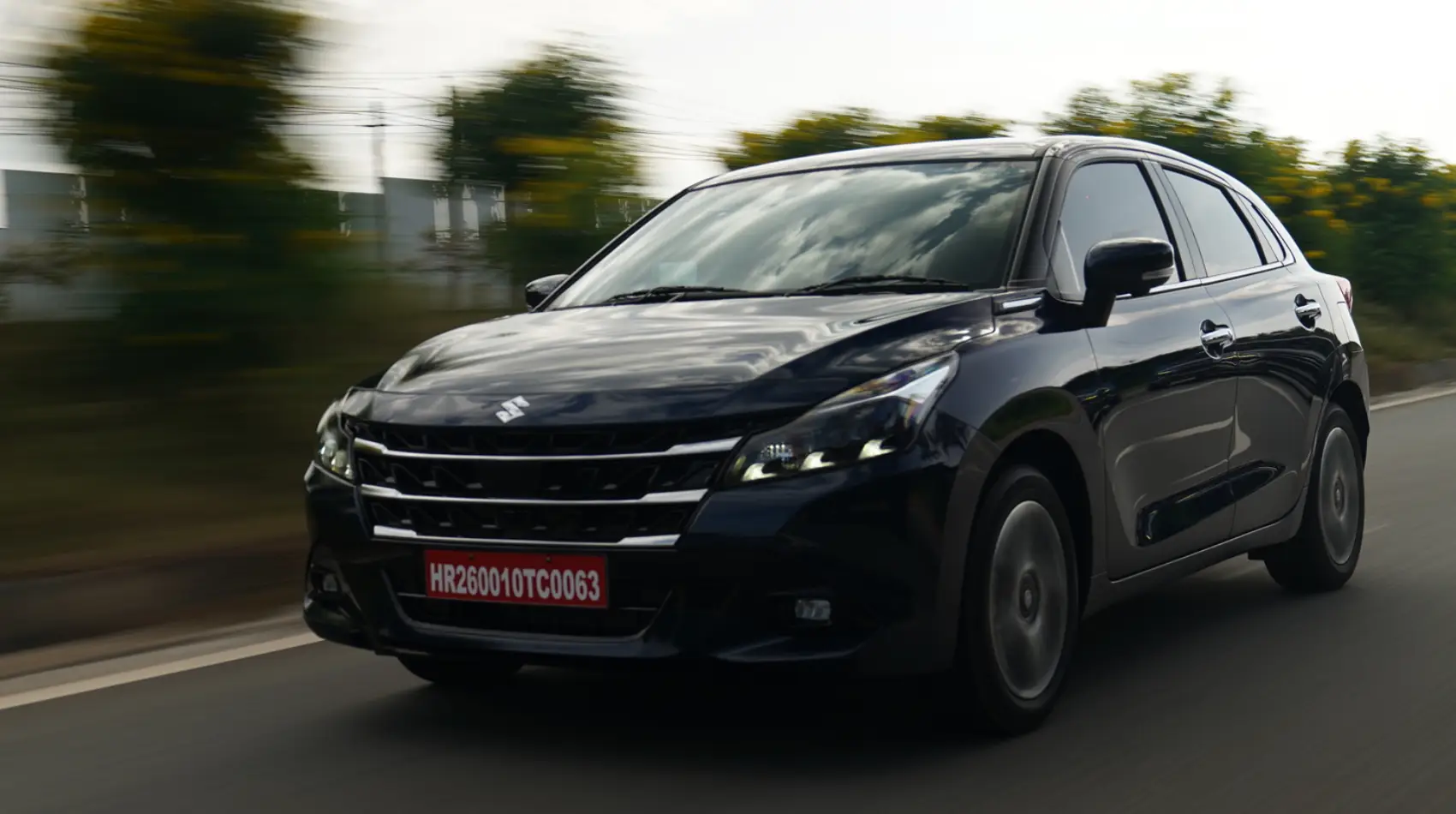
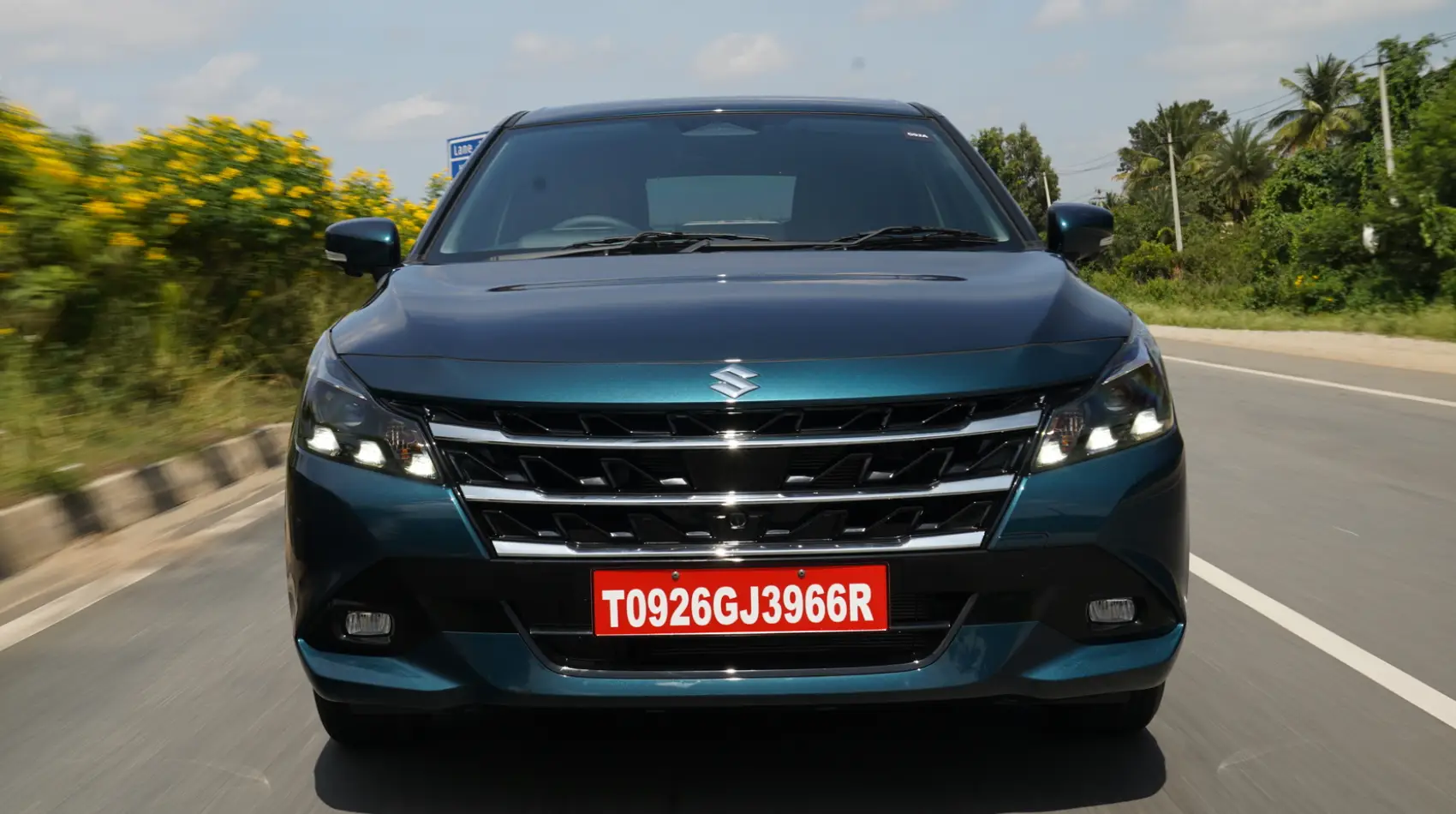
The front bumper and grille are new, and that is where your eyes immediately go. Unfortunately, they may then want to go somewhere else. The sleek, recognisable V-shaped grille of the outgoing Baleno has disappeared. In its place is an enormous new grille that looks about three times the size of the old one. I would call it a monstrosity, and not in the affectionate, so-ugly-it-is-cute way either.
Frankly, I have not seen a single Instagram comment saying it looks good, and I am not a fan of it myself. The whole thing feels incoherent. It looks less like something designed by one of India’s biggest carmakers and more like an aftermarket bumper someone ordered at 2am after spending too much time on a modification forum. If an owner had done this to a perfectly normal Baleno, the internet would have had a field day putting it in a weird-and-wacky-modifications thread.
There may be a practical reason for it. The new range-topping variant gets Level 2 ADAS, and the radar and camera hardware needed somewhere to live. A giant grille was clearly the answer. But knowing why something exists does not automatically make it attractive.
There are a couple of other exterior changes too, although you will need someone standing beside the car and pointing them out. The front fender gets a chrome garnish that looks like a stuck-on dealer accessory. Oddly, it is not merely stuck on: the fender itself has been changed for it. Maruti has spent actual money on a new panel stamping for something that looks like it came with double-sided tape. That money might have been better spent elsewhere.
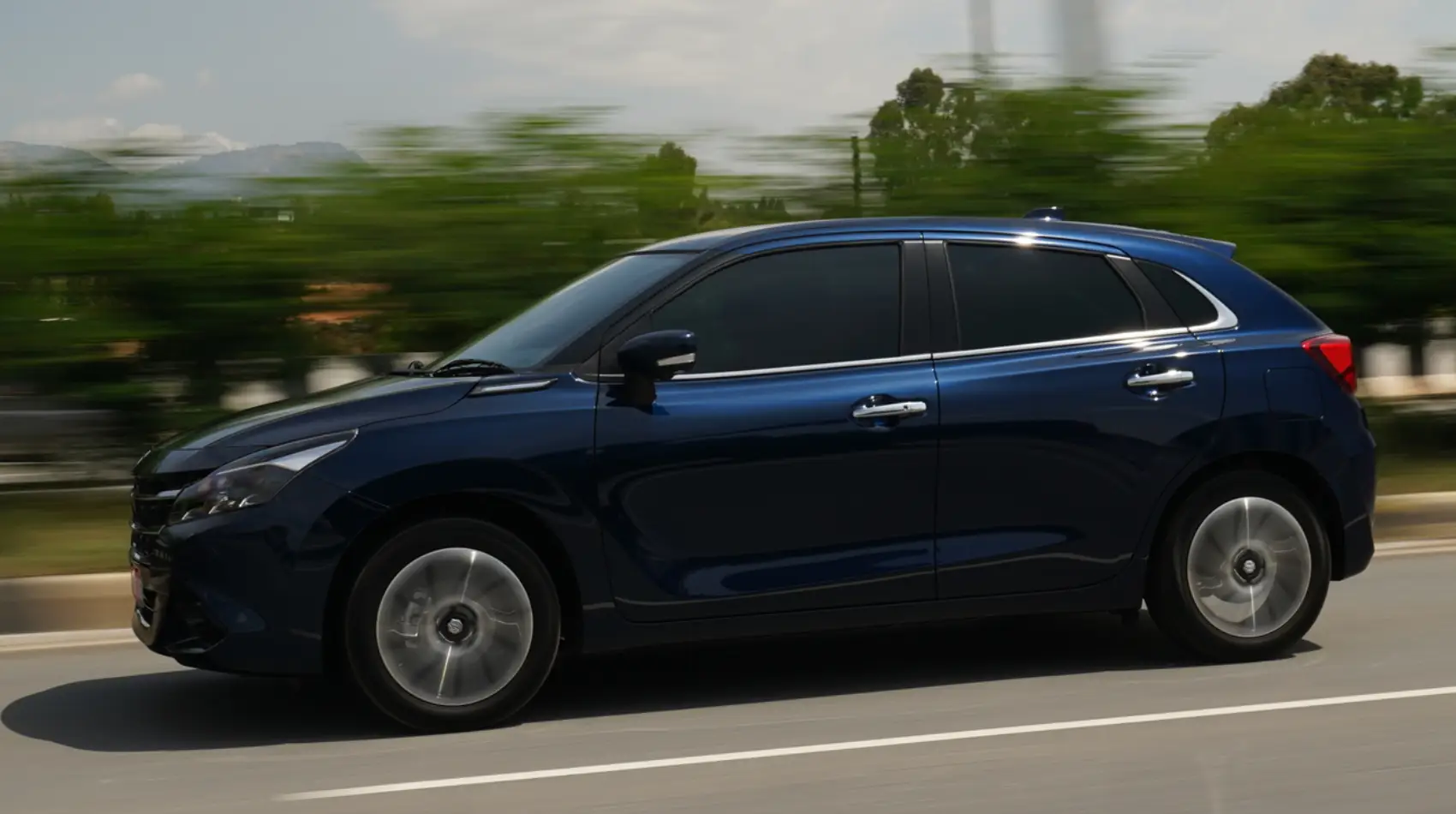
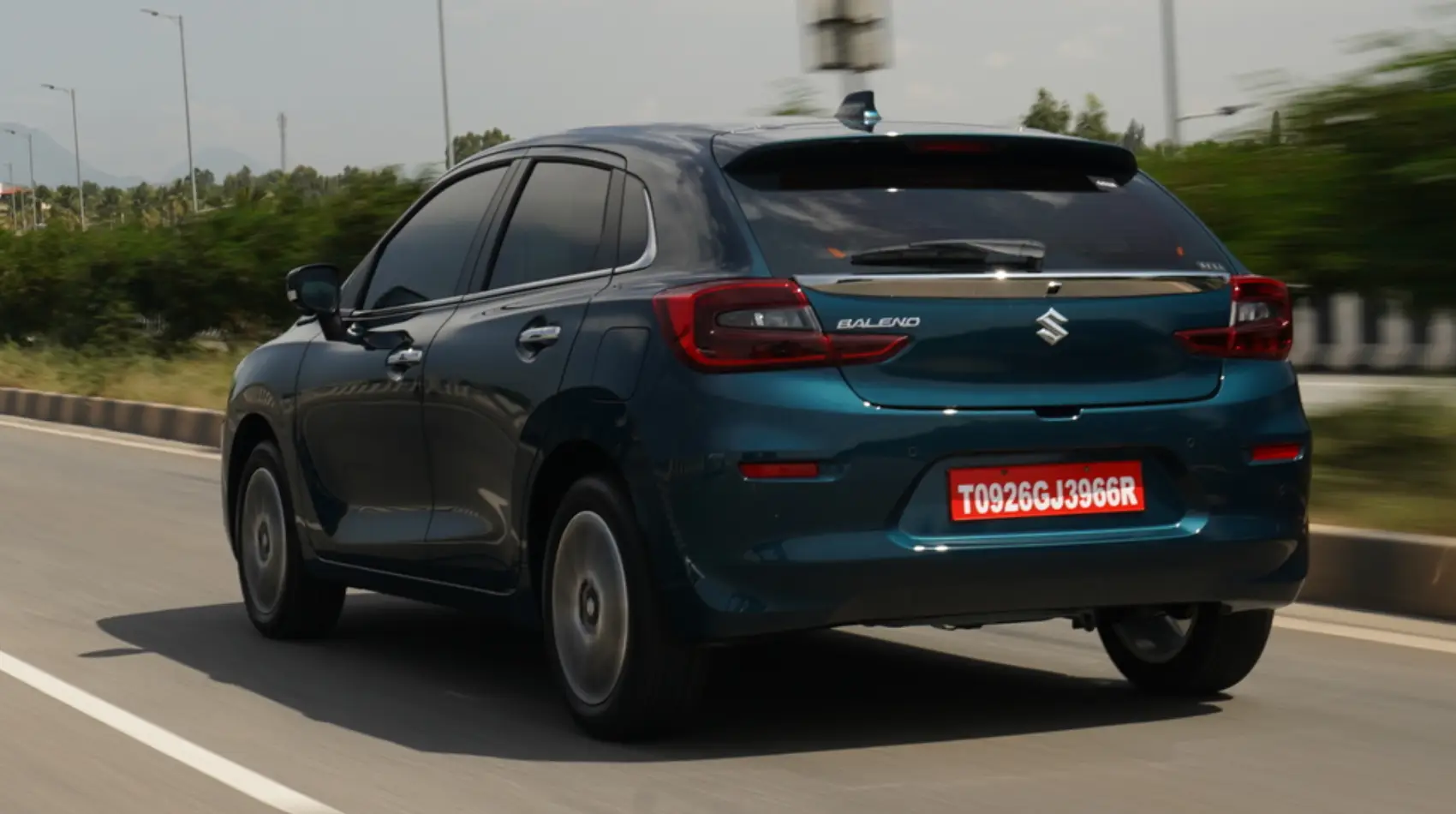
At the back, there is now a shark-fin antenna. Otherwise, the silhouette, tail-lamps and familiar 16-inch wheel-and-tyre package remain largely as before. The broader changes you normally expect from a facelift simply have not happened, which makes the new nose look even more disconnected from the rest of the car.
The changes inside are more welcome, led by one of my favourite features in any Indian car: ventilated seats. The Baleno finally gets ventilated front seats, a first for the segment. Neither the Hyundai i20 nor the Tata Altroz offers them, and I have always maintained that seat ventilation is not some frivolous luxury in India. It is far more useful than half the electronic gimmicks manufacturers use to decorate a brochure.
These are suction-type seats and they work properly. Air is pulled through both the backrest and the squab, cooling your back and bottom rather than merely creating a faint breeze around your shoulders. Several more expensive cars only ventilate the backrest, so Maruti deserves credit for doing both surfaces here.
They are noisy, though. With the music off and both seats running flat out, the cabin sounds like the radio has lost its station. Put on a podcast or some music and you will barely notice it, but in an otherwise quiet cabin it can get mildly annoying. Still, I would rather have effective, slightly noisy ventilation than a silent system that does absolutely nothing.
The seats get revised upholstery, while the audio system is now a Clarion-branded six-speaker setup. It sounds a little crisper than before, perhaps, but without a proper subwoofer there is still not much bass. Calling it a major upgrade would be generous. Slightly better is still better, though.
The rest of the cabin is familiar. You still get the large and rather crisp touchscreen, wireless Apple CarPlay and Android Auto, head-up display, 360-degree camera, automatic climate control and rear AC vents. Maruti could have fitted the digital instrument cluster from the new Brezza, especially on the top model, but the existing dials are crisp, clear and easy to read. There is still something nice about proper needles. That said, the one GIANT miss on the Baleno is the fact that it still uses a standard old-school USB slot and not a modern USB-C. Come on Maruti, seriously?!
The other big change is under the bonnet. The K12 four-cylinder engine that we all know and love is gone. In its place is the 1.2-litre Z12E from the Swift and Dzire, and it has only three cylinders.
It makes 83PS and 112Nm. Both figures are lower than the old four-cylinder’s, which sounds like progress achieved by subtraction. But in the real world, it is less dramatic. The Baleno does not feel meaningfully underpowered in normal driving. It gets away cleanly, keeps up with traffic and has enough performance for the job it is meant to do.
It is a little buzzier than the old four-cylinder, particularly when driven harder, but driven normally most buyers will not care. I can say that with some confidence because I own a pre-facelift example of this same generation with the old 1.2-litre four-cylinder engine.
The payoff is fuel economy. Maruti claims 23.8kmpl for the manual and 24.77kmpl for the AMT, improvements of 6.4% and 7.9% respectively. Those gains matter, particularly now that E20 petrol has already hurt real-world efficiency on plenty of cars.
What I wish Maruti had done was retire the AMT and use a proper torque-converter automatic. Yes, it would cost more and lose a little efficiency, but it would make the Baleno so much smoother in traffic. A simple Maruti petrol engine paired with a torque converter would be capable of surviving a nuclear war. Instead, the AMT remains affordable and proven, but still asks you to work around that pause between shifts.
Thankfully, the chassis remains sweet. The Baleno is light, playful and easy to place. It changes direction neatly, the steering is light and the suspension works well in the city. It is not a hot hatch, but there is enough agility here to remind you why hatchbacks can be more fun than similarly priced pseudo-SUVs.
The top spec variant we are driving here gets the new Level 2 ADAS suite, including adaptive cruise control, lane-keep assist, lane-departure warning, forward-collision warning and emergency braking. The lane-keep assistance works surprisingly well, and there is a button on the steering wheel to turn it off when Indian lane markings, or the lack of them, make it unnecessary.
This is not a brand-new car, so expecting Maruti to move heaven and earth would be unreasonable. More importantly, everything that made the Baleno successful remains. It is roomy, efficient, easy to drive, well-equipped and backed by an ownership ecosystem few rivals can match.
It is still a thoroughly likeable car. Apart from the face. That really is a face only a mother could love. But polarising styling will not send Baleno sales off a cliff. Plenty of buyers will either like it, learn to tolerate it, or simply care more about 24kmpl, ventilated seats and hassle-free ownership than whether the front bumper looks like an aftermarket accident.
And that brings me to a recent trip to Umling La. I had driven a Defender up there, crossed rough trails and arrived feeling suitably pleased with myself. Then three men in shorts pulled up behind us in a Baleno, as if they had simply popped out to buy milk.
That moment explains the Baleno better than any brochure ever could. These cars go almost everywhere most owners will ever want to go, do almost everything they will ever ask of them and cost many lakhs less than the machines we pretend are necessary for such journeys.
The Baleno works because the masses do not need theatre. They need a sensible car that gets them from A to B with space, technology, efficiency and very little drama. This facelift still does all of that. It just introduces rather too much drama at the front.
With a new i20 around the corner, the Baleno’s crown may soon face a stronger challenge. For now, though, the king of premium hatchbacks remains on its throne, even if somebody has fitted it with a truly Bane mask.