The GLC goes electric. But can it still feel like a GLC?
8/10
For
Retains the familiar practicality and character of the GLC
Against
Not as engaging to drive as some rivals
The GLC goes electric. But can it still feel like a GLC?
There is something slightly surreal about driving the new Mercedes-Benz GLC electric around Stuttgart. This is Mercedes territory, the place where the three-pointed star has been designing, engineering and building cars for generations. And now, on its home turf, one of its most important SUVs has quietly crossed a rather significant line. The GLC has gone electric.
But Mercedes has not approached this as a science project. This is not an EQ experiment wearing a familiar badge. The GLC 400 4MATIC with EQ Technology is designed to be a proper GLC first and an electric vehicle second. That distinction matters, because the biggest challenge facing this car may not be BMW’s new iX3 or Audi’s Q6 e-tron. It may be the petrol GLC sitting in the showroom next to it.
If you’re already buying a GLC, chances are you aren’t necessarily looking for an electric car. You’re looking for a GLC. You want the comfort, the sense of occasion, the practicality and the badge, but perhaps you still want the reassurance of an engine. Mercedes therefore has a fairly complicated sales pitch: convincing existing GLC customers that they don’t have to give up the car they know simply because they want to go electric.And after driving it in Stuttgart, I think Mercedes has understood that brief rather well.
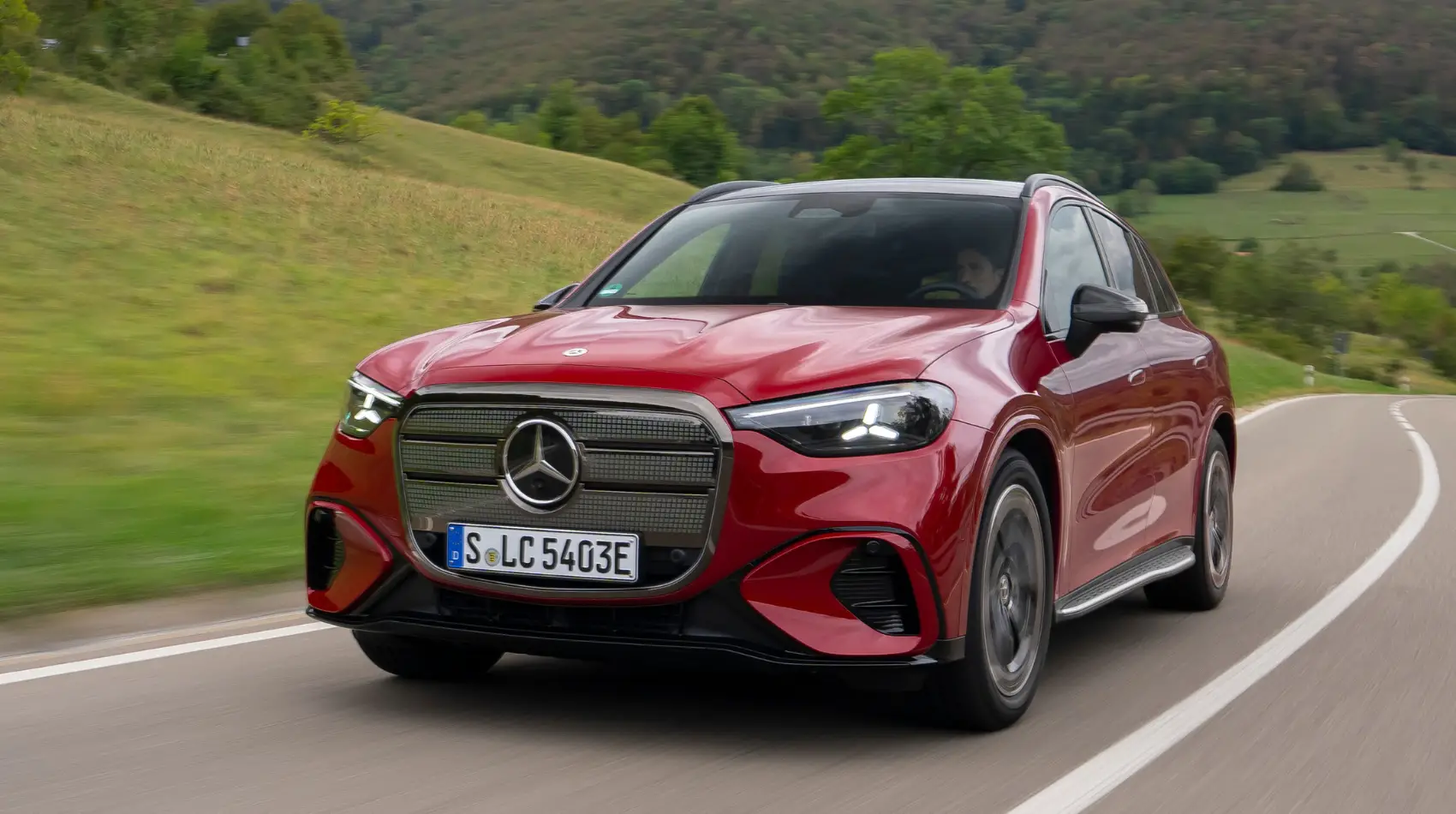
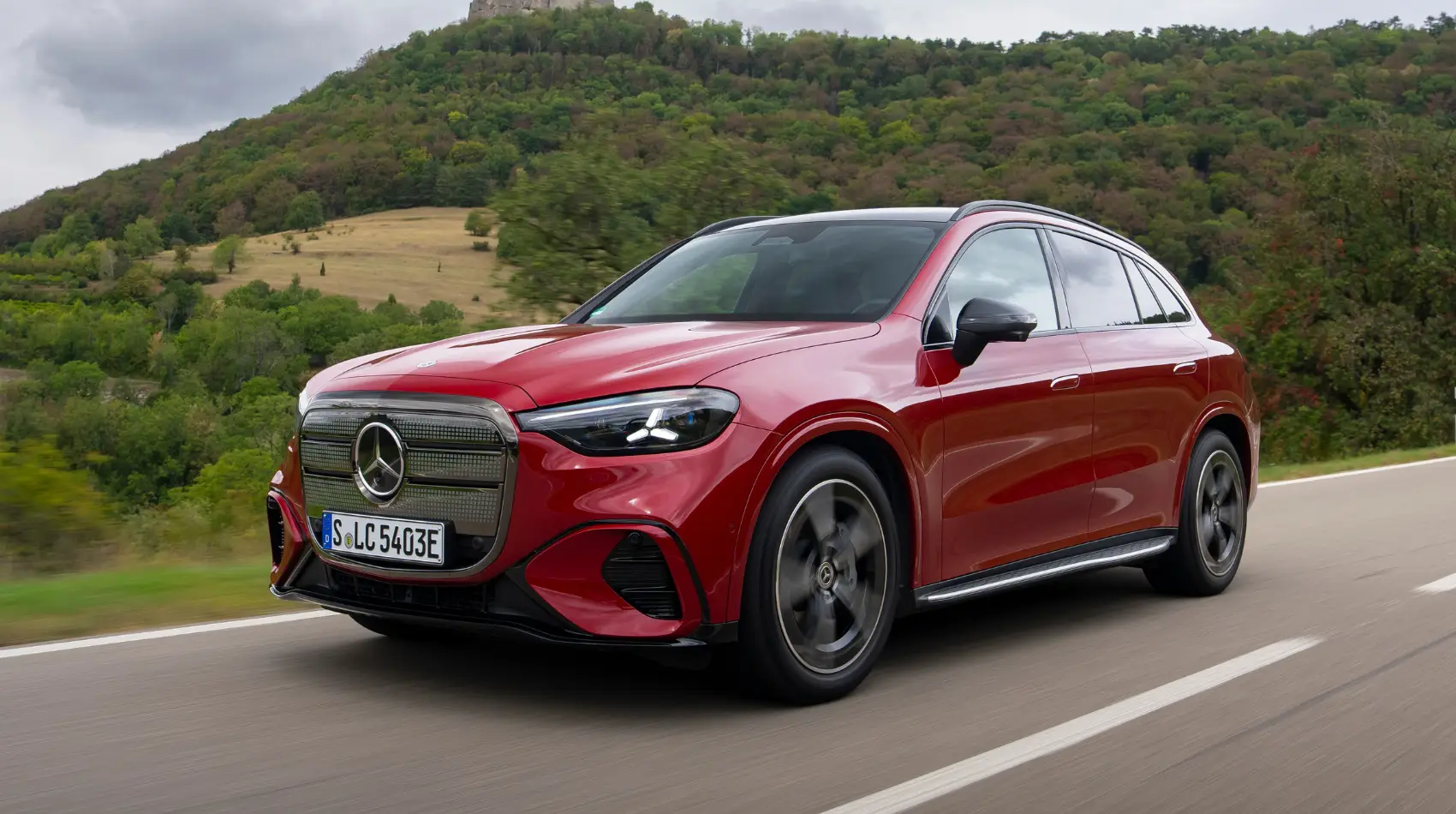
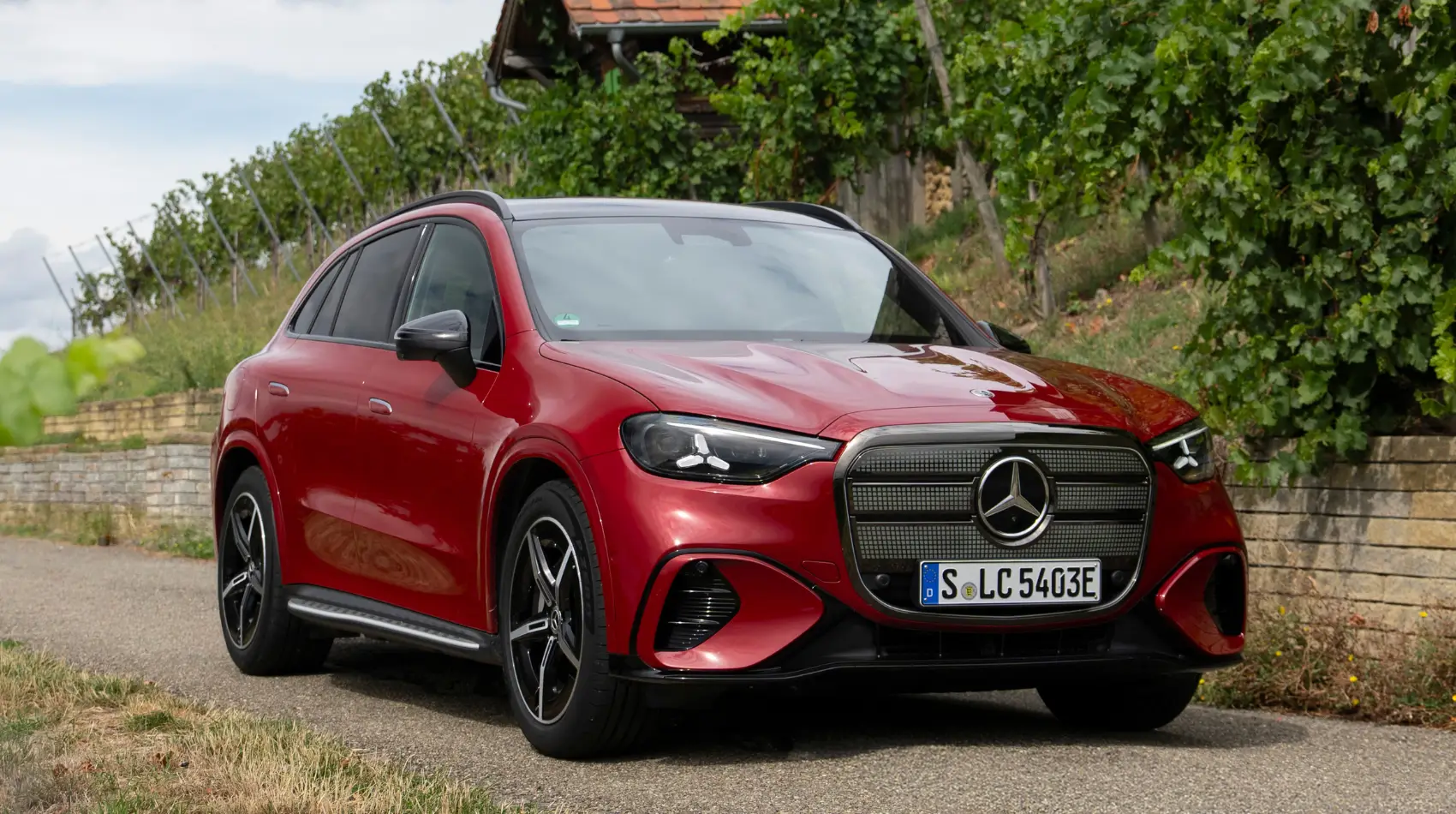
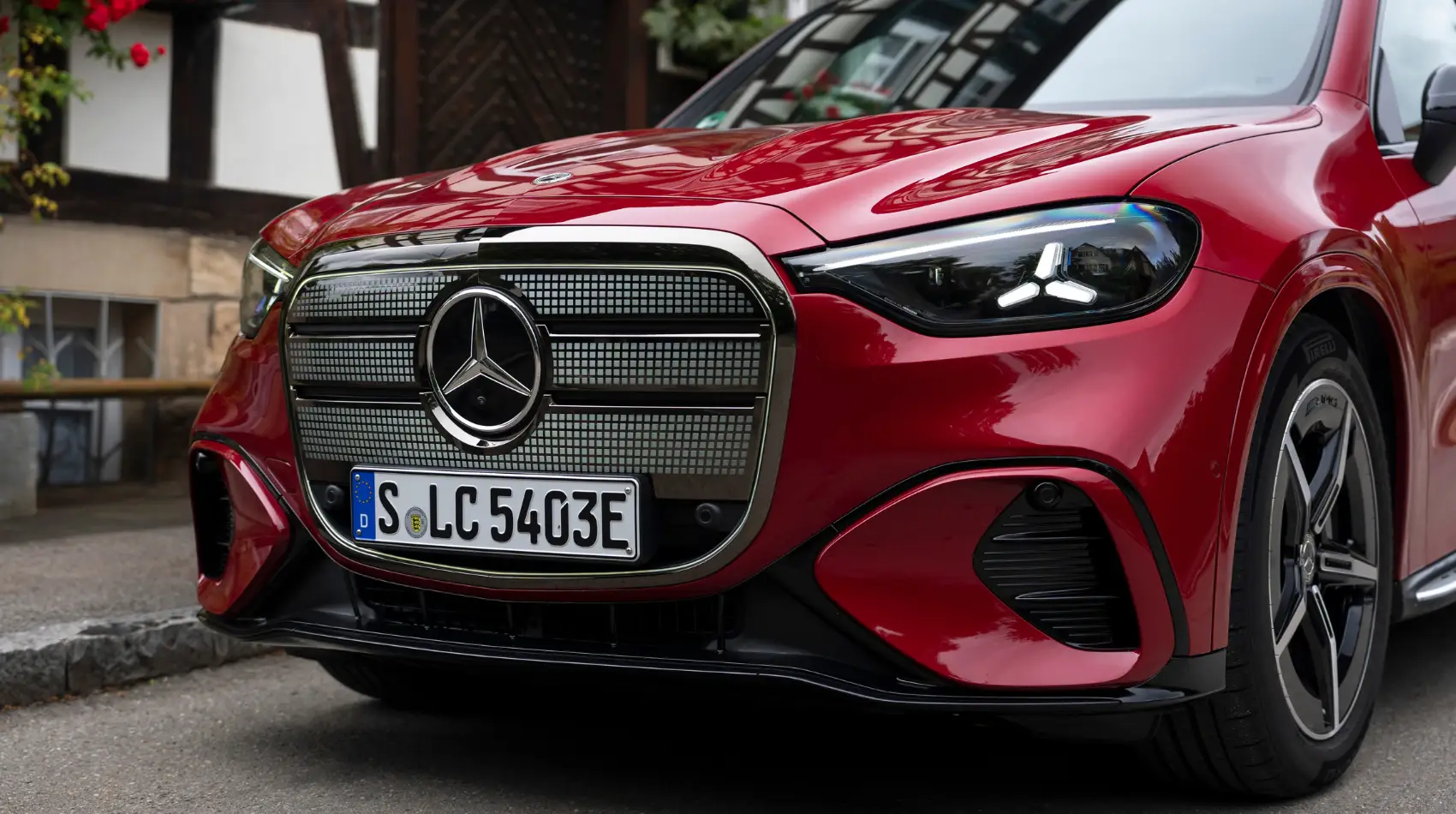
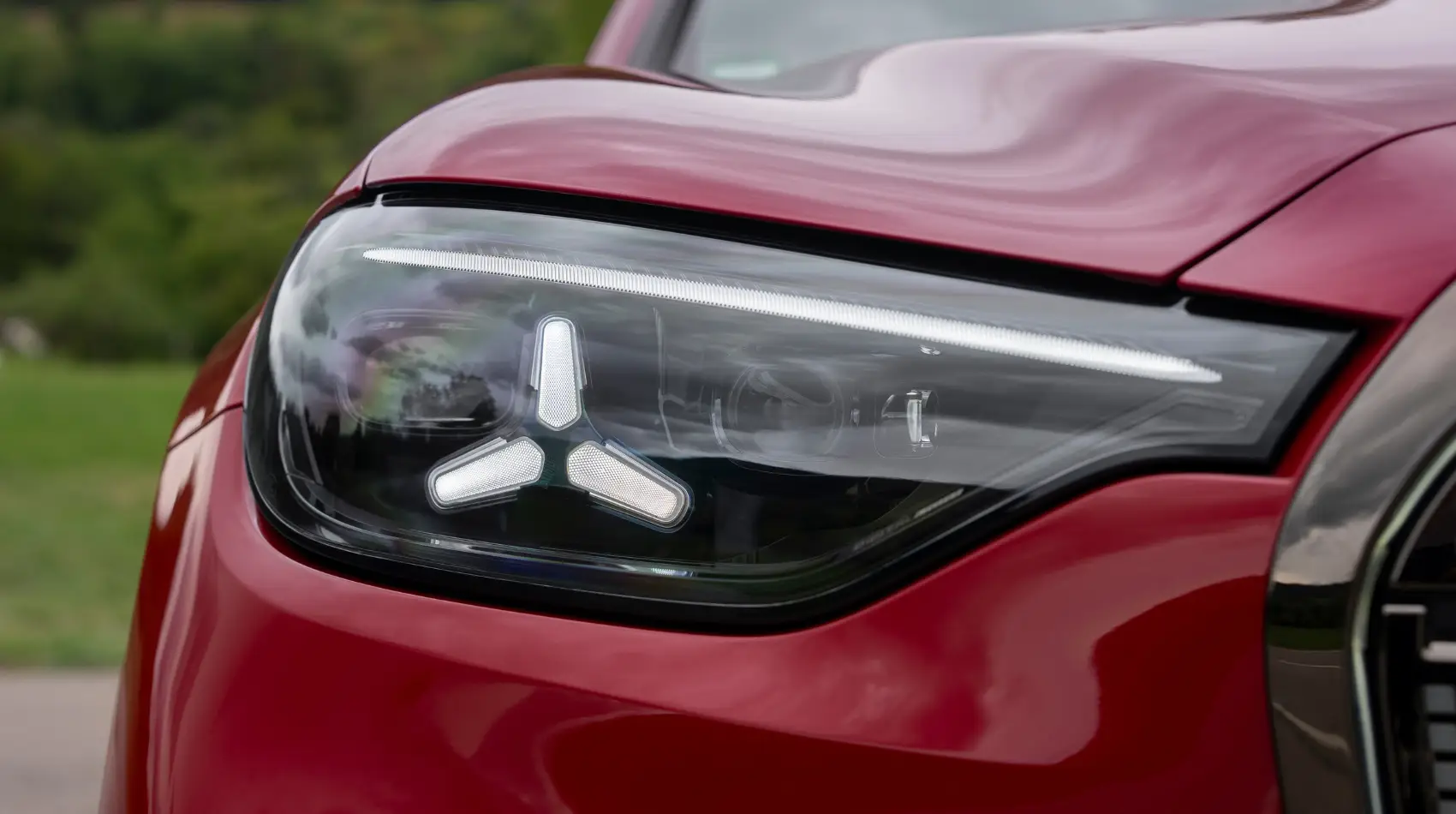
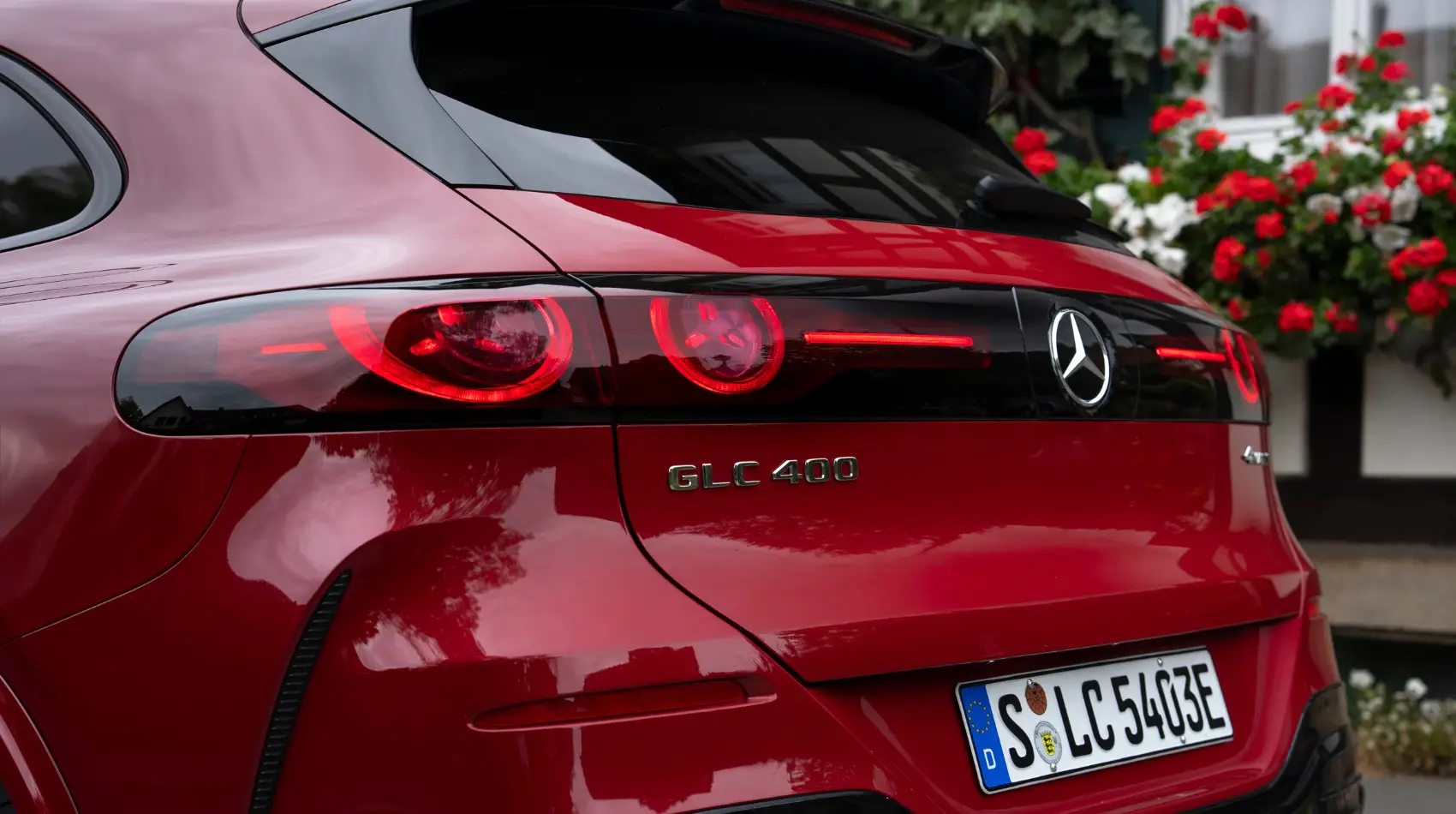
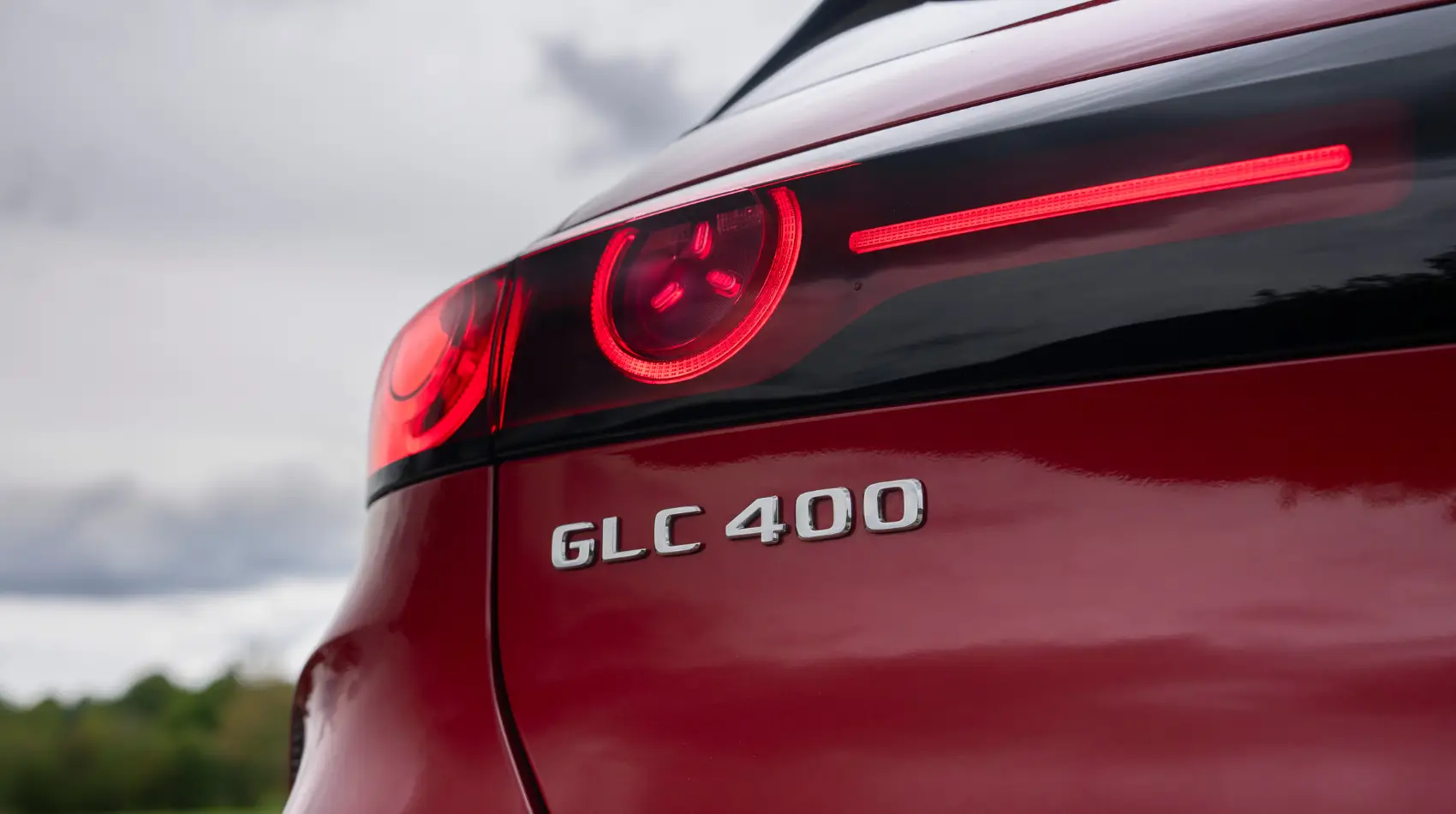
The first thing you notice is that this is a very different-looking GLC. The traditional Mercedes grille has effectively become a piece of jewellery. There are 942 individually backlit dots sitting within the front panel, giving the car a distinctive illuminated face. It is quite theatrical, particularly at night, although whether you think it is elegant or slightly too much will depend on your tolerance for automotive light shows.
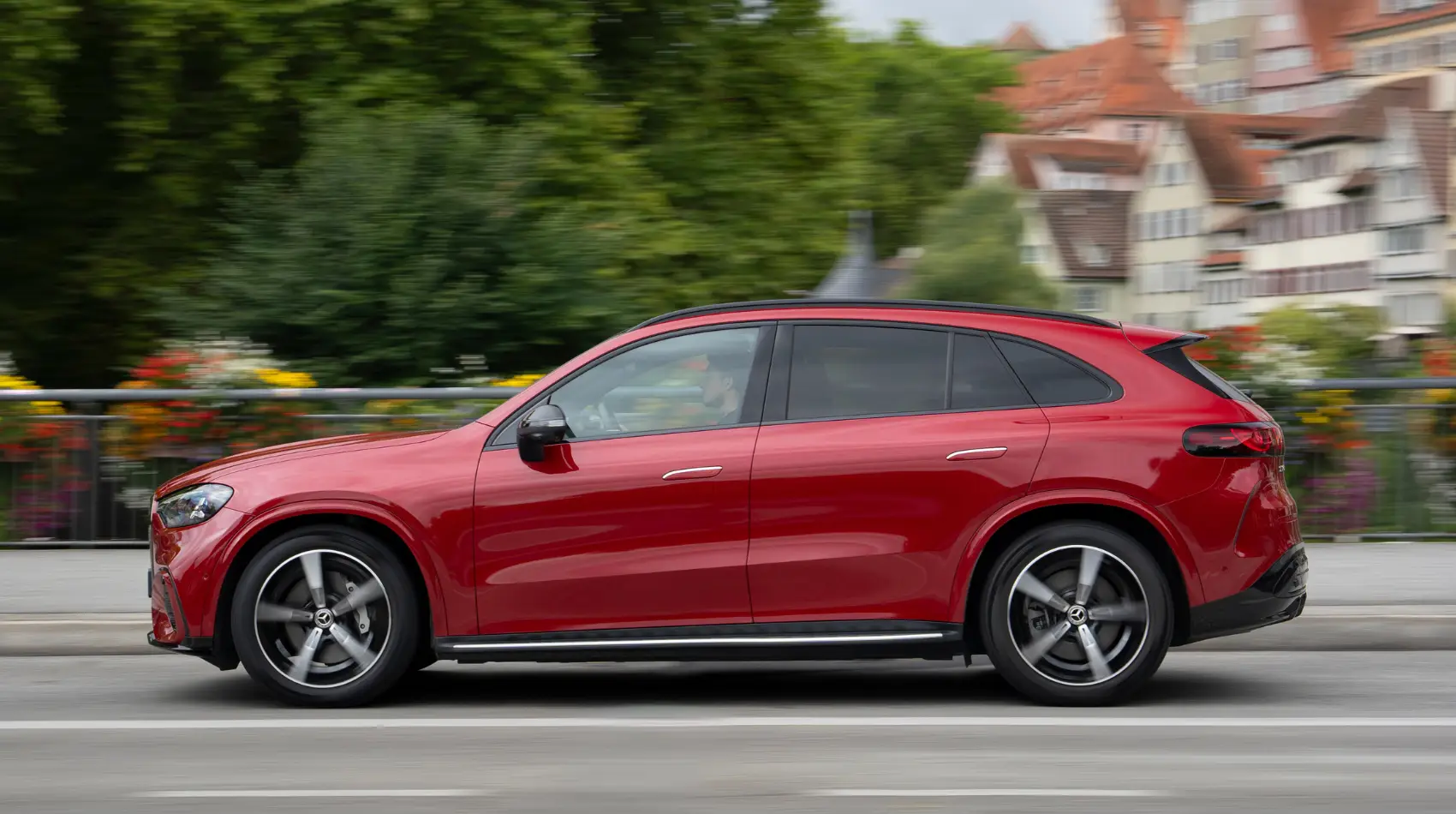
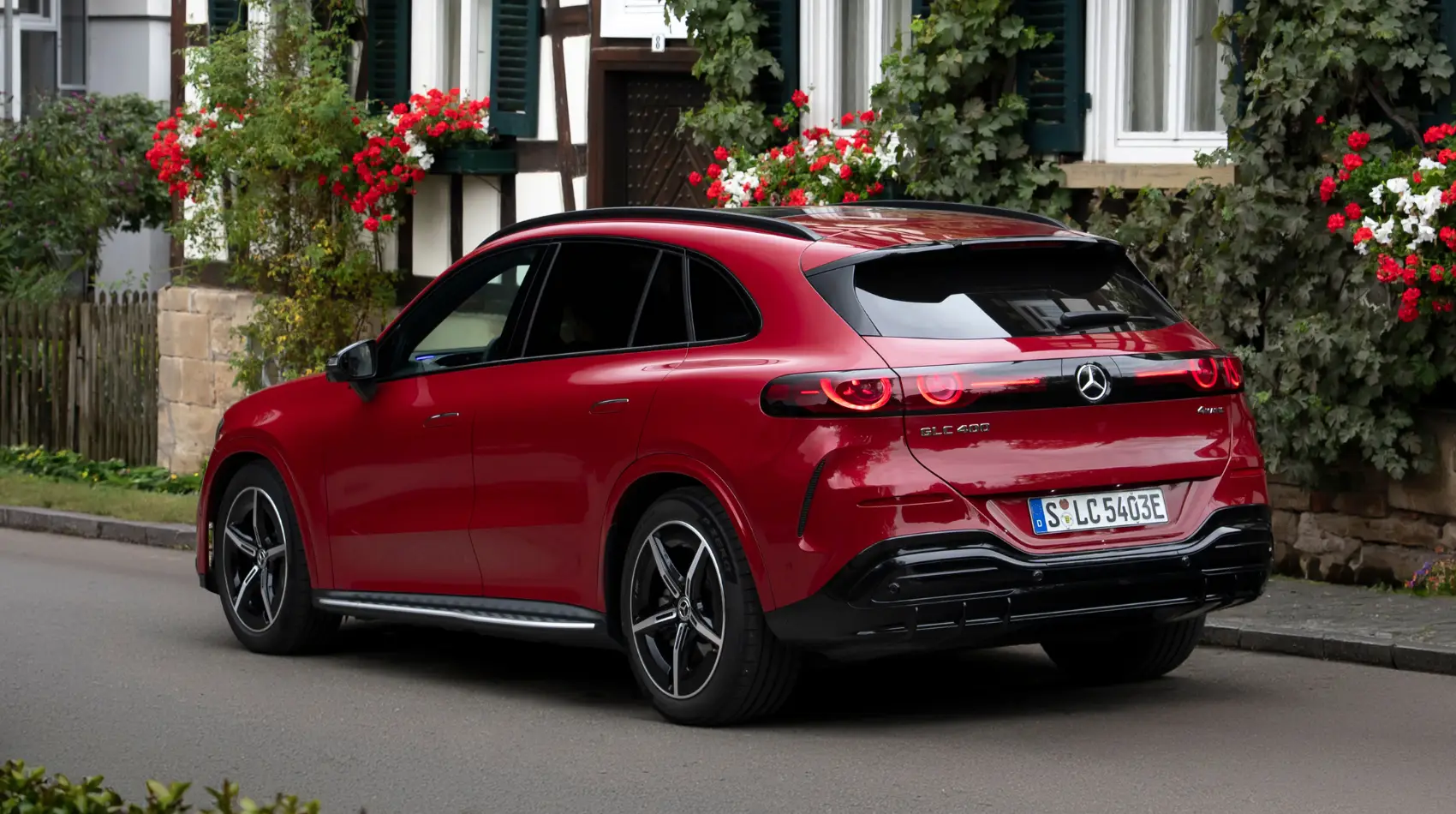
The rest of the design is considerably more restrained. The proportions remain unmistakably GLC, with a familiar SUV silhouette, flush door handles and a relatively clean body. At 4,845mm long and 1,913mm wide, it is not a small SUV, but the 2,972mm wheelbase gives it the sort of footprint that should work well in India too. The version heading for India is expected to use this standard wheelbase rather than the longer version offered in China.
And that is important because the GLC has always been a car that works particularly well as an everyday luxury SUV. It isn’t trying to be a seven-seat school bus or a low-slung performance crossover. It sits in that useful middle ground where you can drive it yourself during the week and hand the keys to a chauffeur at the weekend without feeling as though you’ve bought the wrong car.
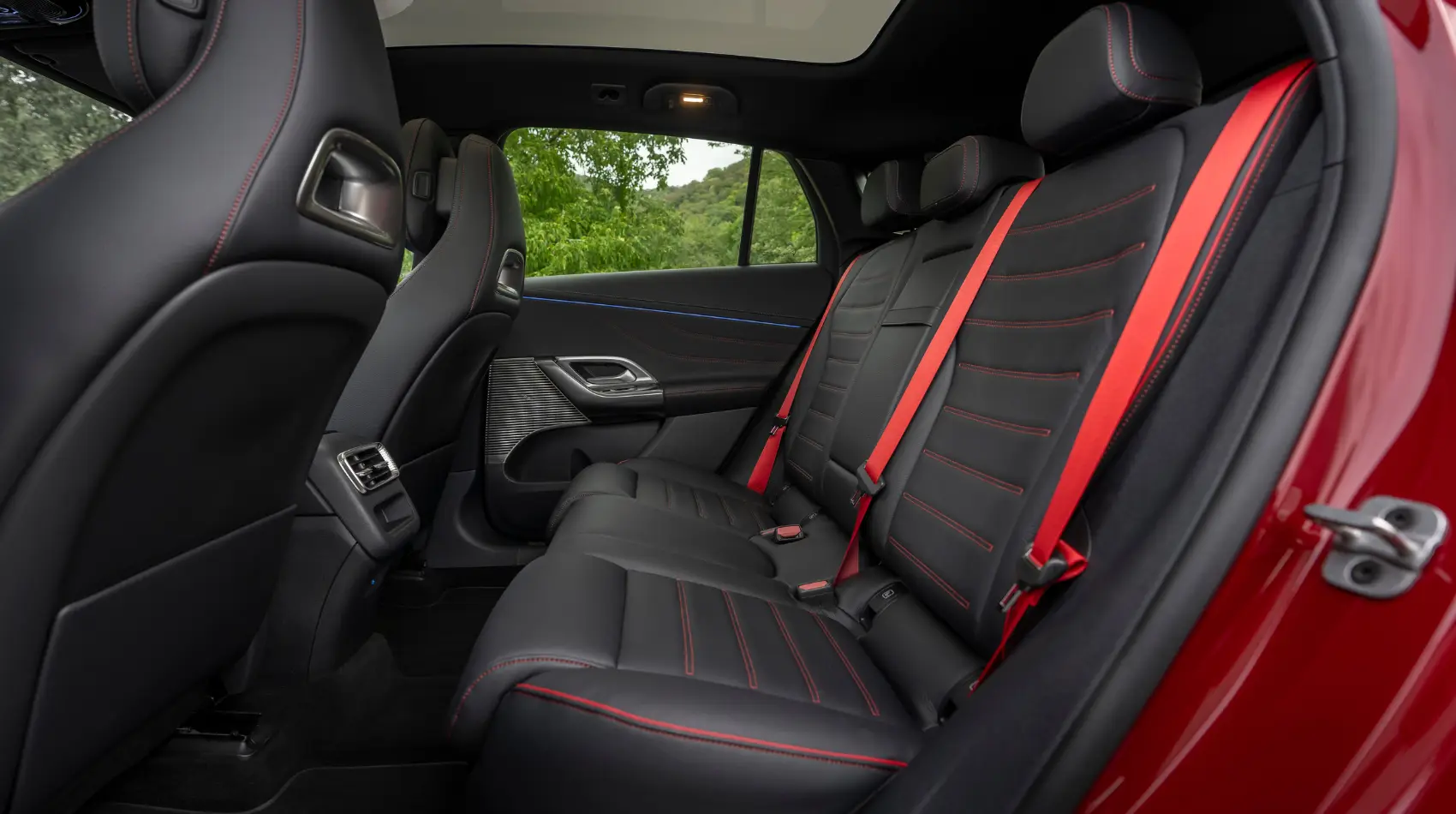
The electric GLC also retains plenty of that practicality. There is a 570-litre boot, expanding to 1,740 litres with the rear seats folded, while a 128-litre frunk adds another useful storage area. So while the electric hardware adds weight, it hasn’t turned the GLC into a packaging compromise.
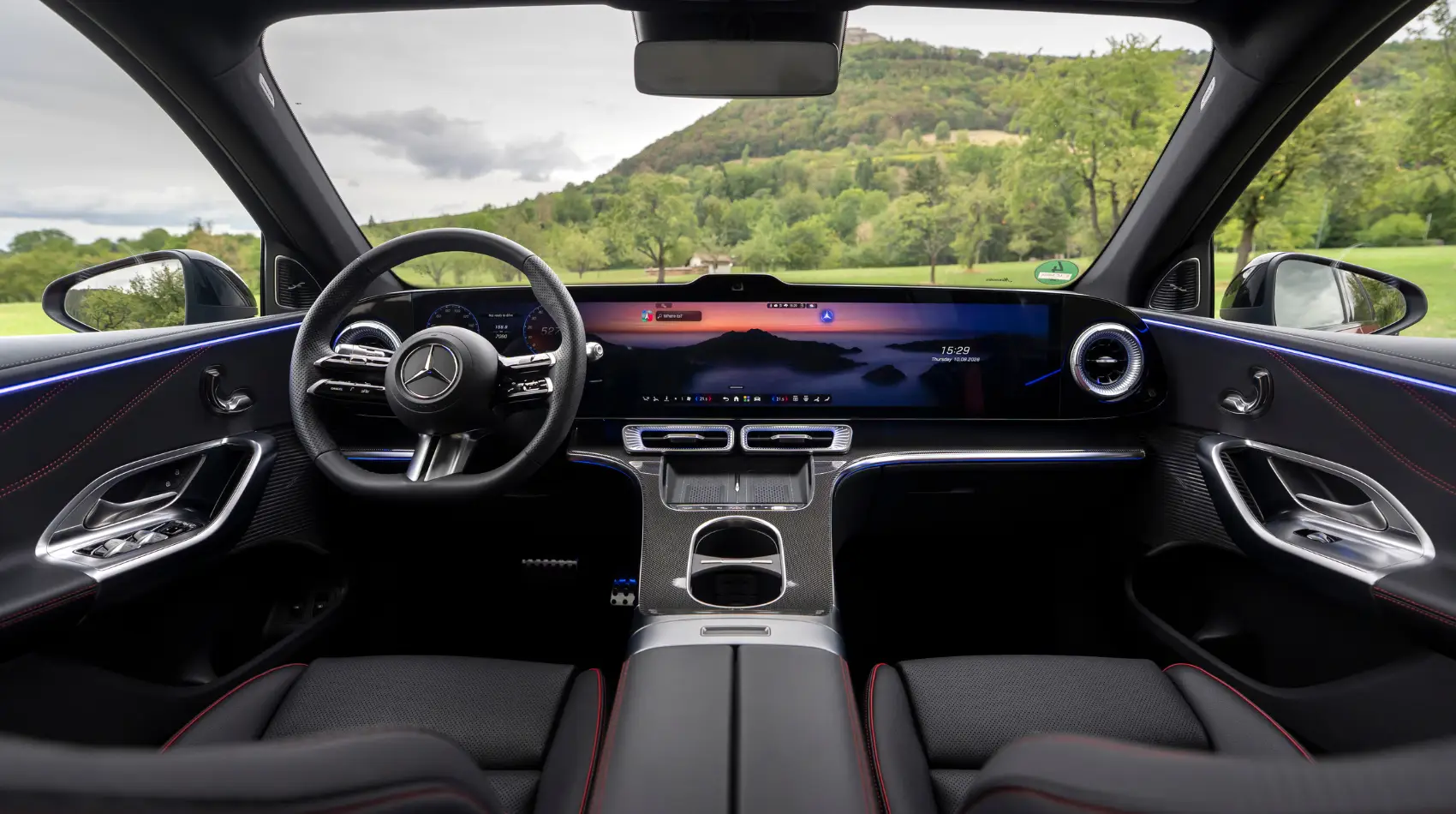
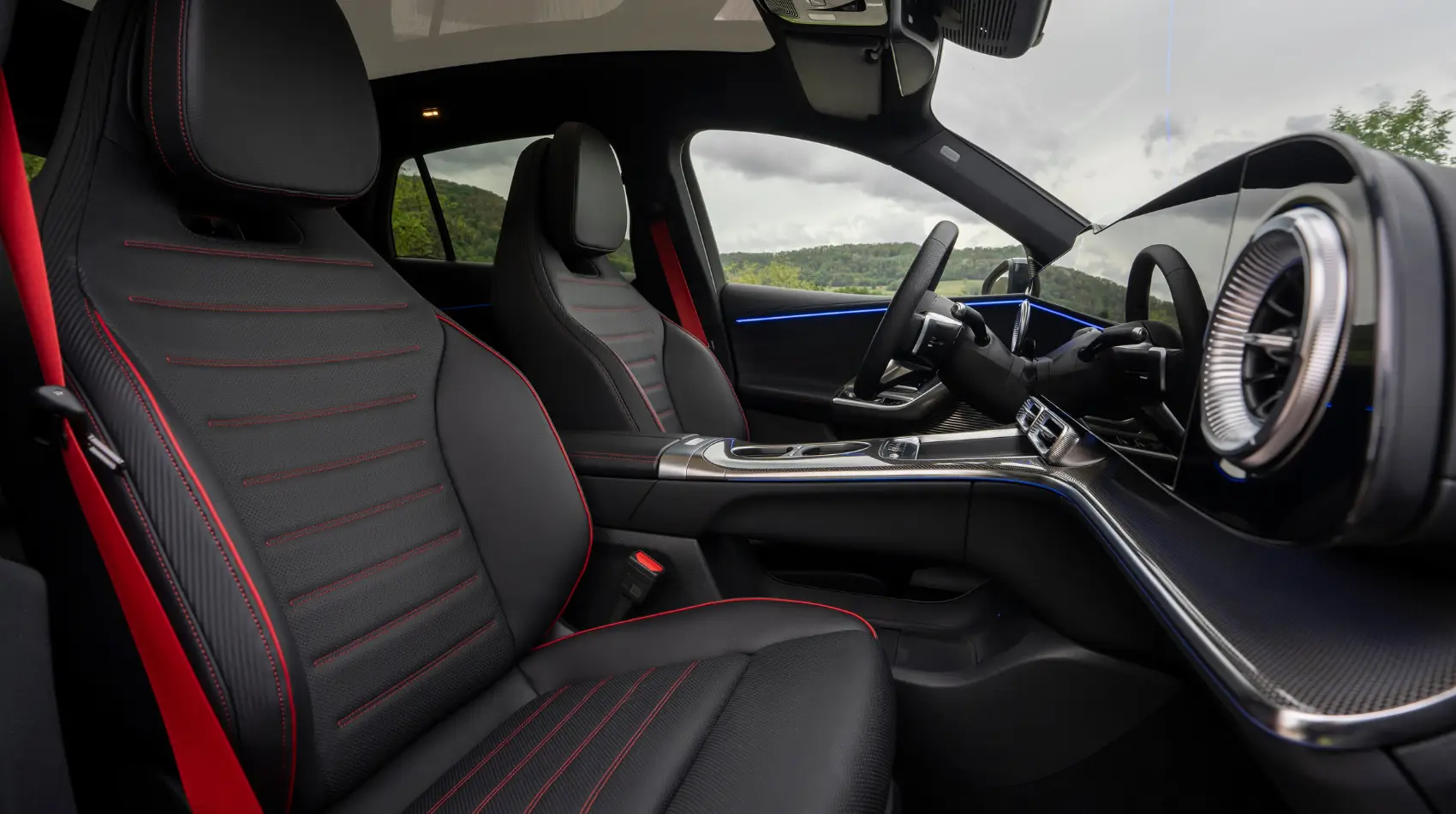
Inside is where Mercedes has decided to spend the serious money.The new MBUX Hyperscreen stretches 99.3cmp or 39.1 inch across the dashboard, combining the driver display, central screen and passenger display into one enormous visual panel. The resolution is a frankly ridiculous 7,680 x 1,260 pixels. It looks spectacular, but Mercedes has also tried to make it useful rather than merely impressive.
The front passenger can stream video while you’re driving, with eye tracking that detects when the driver looks across and automatically switches the passenger content off. Which is probably the automotive equivalent of catching someone looking at your phone over their shoulder.There is also Mercedes’ new MB.OS operating system, which brings infotainment, vehicle functions, charging and connected services together. Behind the architecture sits some serious computing hardware, with up to 254 trillion operations per second available for the vehicle’s automated-driving systems.
Then there is the panoramic SKY CONTROL roof. Mercedes has printed 162 tiny stars into the glass, which can illuminate in 64 colours. It is unnecessary, extravagant and completely Mercedes. I suspect owners will love it. There is also a 15-speaker, 670-watt Burmester 3D surround system with Dolby Atmos, massage seats, augmented-reality navigation, a 360-degree camera and a whole catalogue of other luxury features. This is clearly not intended to be the entry point into Mercedes electric motoring.
The GLC gets seriously quick
But the real test begins once you stop staring at the screens and start driving.The GLC 400 uses two permanently excited synchronous motors, one on each axle, giving it all-wheel drive and 360kW of peak output, equivalent to roughly 490 hp, with 800Nm of torque. That makes for a 0-100km/h time of just 4.3 seconds.
And yes, it is properly quick. Push the accelerator and the GLC launches with the sort of urgency that makes you briefly question whether you’ve accidentally selected a sport mode. There is no waiting for revs, no gearshift and no drama from an engine. Just an enormous wave of torque and a car that suddenly gets very serious about disappearing into the distance.
Yet this is not an AMG in disguise. Mercedes has deliberately kept the GLC’s character on the comfort side of the equation. That is a good thing.The steering is accurate, the body control is impressive for something weighing around 2.5 tonnes and rear-wheel steering helps reduce the turning circle from 12.1m to 11.2m. In an Indian city, that last number could be more useful than the 4.3-second acceleration figure. There is also a TERRAIN mode that alters the drivetrain, steering and braking behaviour for loose surfaces.
The suspension on the car I drove was the passive comfort setup, although AIRMATIC air suspension is available. The standard setup does a convincing job of keeping the ride composed without making the car feel disconnected from the road. That said, the laws of physics haven’t been repealed by Mercedes. This is still a 2,535kg SUV. It changes direction with surprising confidence, but it never feels genuinely light on its feet.
That is perhaps the defining characteristic of the GLC electric. It is very accomplished, but it is not particularly interested in pretending to be a sports car.And then there is the clever bit underneath.The GLC gets an 800-volt electrical architecture and can accept up to 330kW of DC charging. Mercedes claims a 10-80 per cent charge in around 22 minutes under the specified conditions, while the official WLTP range stretches from 568km to as much as 715km depending on specification and conditions.
There is also a two-speed gearbox on the rear motor. First gear is used to deliver strong acceleration, while second gear helps with high-speed efficiency and power delivery. It is an interesting engineering solution, particularly because most EVs are content with a single-speed transmission.
The real test will be India
Range and charging figures on a European test route are only half the story.For India, the GLC electric’s success will depend heavily on charging infrastructure and, ultimately, price. Mercedes has confirmed that the car is coming to India, with bookings expected to open in the first week of October and the launch scheduled before the end of 2026. More importantly, it will be locally assembled in India. That should give Mercedes considerably more freedom on pricing than importing the car as a fully built unit.
The final Indian price has not been announced yet, but this is where the GLC electric will have to be clever. The BMW iX3 is coming, Audi’s Q6 e-tron is on its way and the Porsche Macan Electric offers a considerably more performance-oriented interpretation of the premium electric SUV. Mercedes also has to contend with its own GLC 300, which remains the familiar choice for buyers who aren’t ready to make the electric jump.
And that, ultimately, is why this car is more interesting than its specifications suggest.The GLC electric isn’t trying to convince you that electric cars are exciting. That’s easy. With 800Nm and 4.3 seconds to 100km/h, it already has that argument won.
It is trying to convince you that electric motoring can still feel like Mercedes motoring.After a day driving it around Stuttgart, that argument is surprisingly convincing. The GLC electric feels quiet, luxurious, technologically ambitious and effortlessly quick, but it hasn’t sacrificed the everyday usability that made the GLC successful in the first place. It isn’t as driver-focused as a Porsche Macan Electric, nor does it have the sheer novelty factor of some newer EVs. And the weight is always lurking beneath the surface.But perhaps that is precisely the point.
VERDICT: The GLC, without the engine
The Mercedes-Benz GLC 400 4MATIC with EQ Technology is not the most exciting electric SUV in this segment, nor is it trying to be. The Porsche Macan Electric is more engaging, while the BMW iX3 brings its own set of strengths. The GLC’s real achievement is more subtle: it manages to make the transition from combustion to electric feel remarkably natural.
It is fast enough to embarrass plenty of performance cars, yet its real strengths lie elsewhere. The quiet cabin, supple ride, generous space, sophisticated technology and effortless performance are exactly what you would expect from a modern GLC. The 800-volt architecture, rapid charging capability and impressive WLTP range also mean Mercedes has not treated the electric drivetrain as an afterthought.
There are caveats. At 2,535kg, it is a heavy SUV, and while rear-wheel steering and well-controlled body movements disguise that weight remarkably well, they cannot make it disappear. And for India, everything will eventually come down to one unanswered question: how much will Mercedes charge for it?
With local assembly confirmed and the launch scheduled for the end of 2026, Mercedes has an opportunity to position the GLC electric very carefully. It has to be close enough to the existing GLC to make sense, but compelling enough to persuade buyers that switching to electric is worth making.That is the real reason I came away impressed by this car. Mercedes hasn’t reinvented the GLC. It has taken something familiar and carefully moved it into its next chapter.
The GLC electric doesn’t feel like an electric car trying to become a Mercedes. It feels like a GLC that happens to have an electric powertrain. And for Mercedes, that may be exactly the point.