Hyundai has taken a clear step into serious off-road territory with the reveal of the Boulder concept at the 2026 New York International Auto Show. While it may look like a design exercise at first glance, the bigger story sits underneath — this concept previews Hyundai’s first body-on-frame platform, which will eventually underpin a pickup truck expected by 2030.
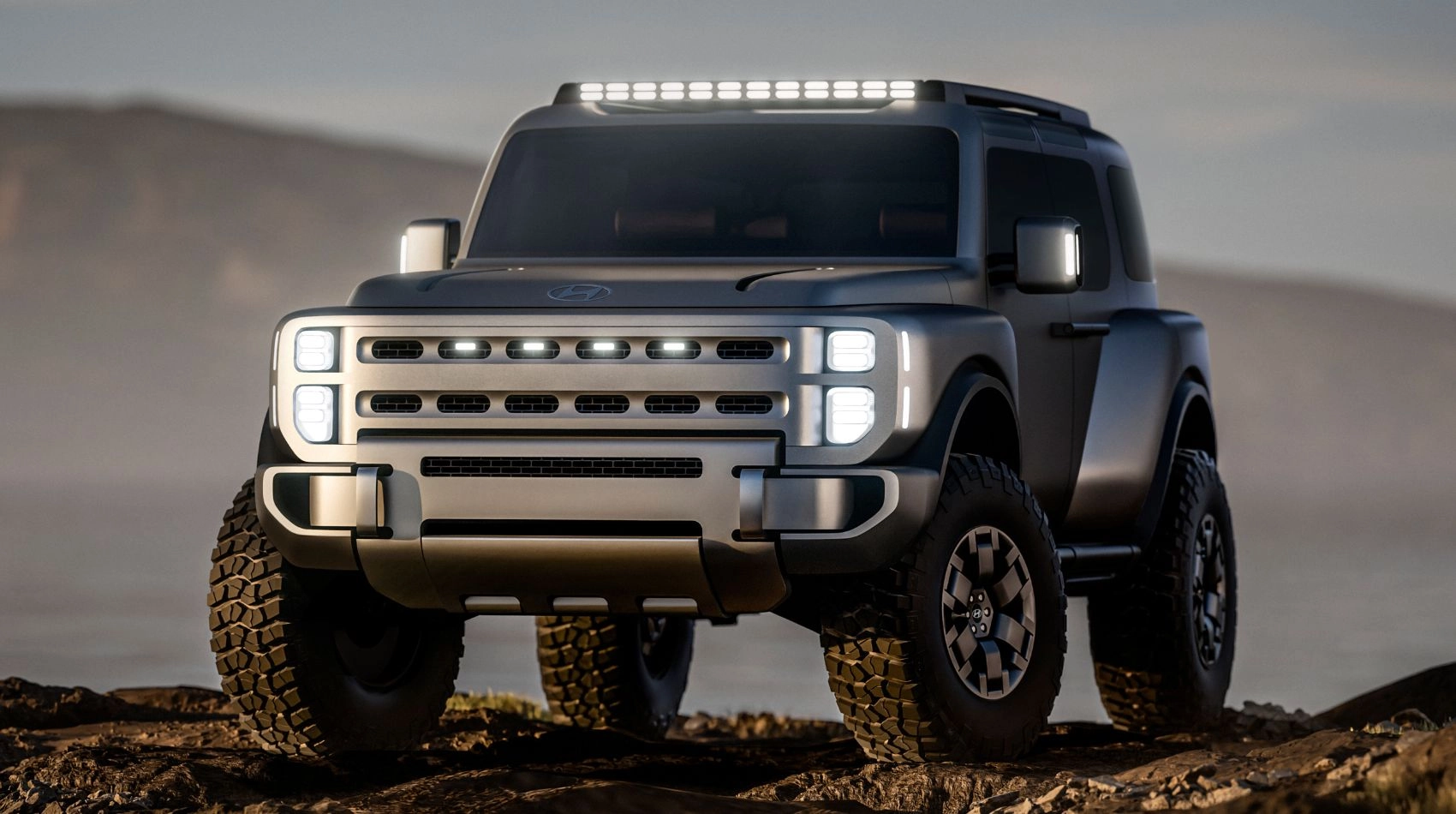
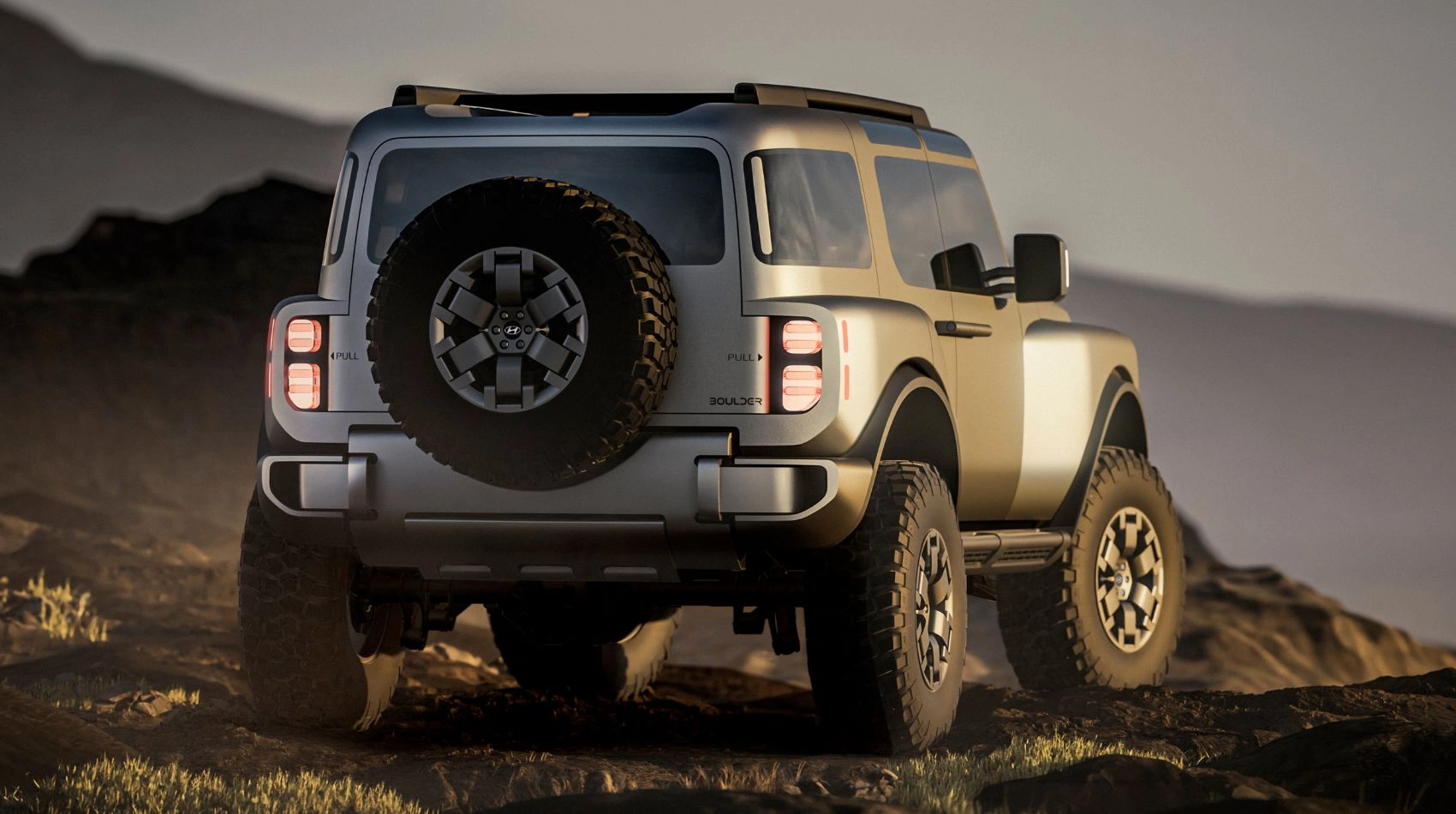
The design leaves little room for interpretation. Hyundai calls it “Art of Steel,” and the Boulder leans heavily into that idea with a boxy, upright stance and sharply defined surfaces. It’s deliberately tough, with proportions that prioritise presence and capability over sleekness. Up front, a ridged bonnet sits above a distinctive lighting signature made up of pill-shaped elements inspired by Morse code. These are paired with vertically stacked LED headlamps and a chunky bumper that integrates tow hooks, reinforcing its off-road intent.
From the side, the focus shifts to functionality. The Boulder rides on 18-inch wheels wrapped in all-terrain tyres, with pronounced wheel arches and generous ground clearance. Side steps add usability, while rear-hinged doors bring a concept-car touch. On top, a roof rack with integrated lighting hints at its adventure-ready brief.
The rear is where practicality really comes through. A dual-hinged tailgate can be opened from either side, making it easier to access in tighter spaces. There’s a full-size spare wheel mounted externally, and a roll-down rear windscreen that allows longer items to be carried without compromising space. Hyundai also describes the Boulder as a “blank canvas,” suggesting it could support a wide range of accessories and customisation options depending on the user’s needs.
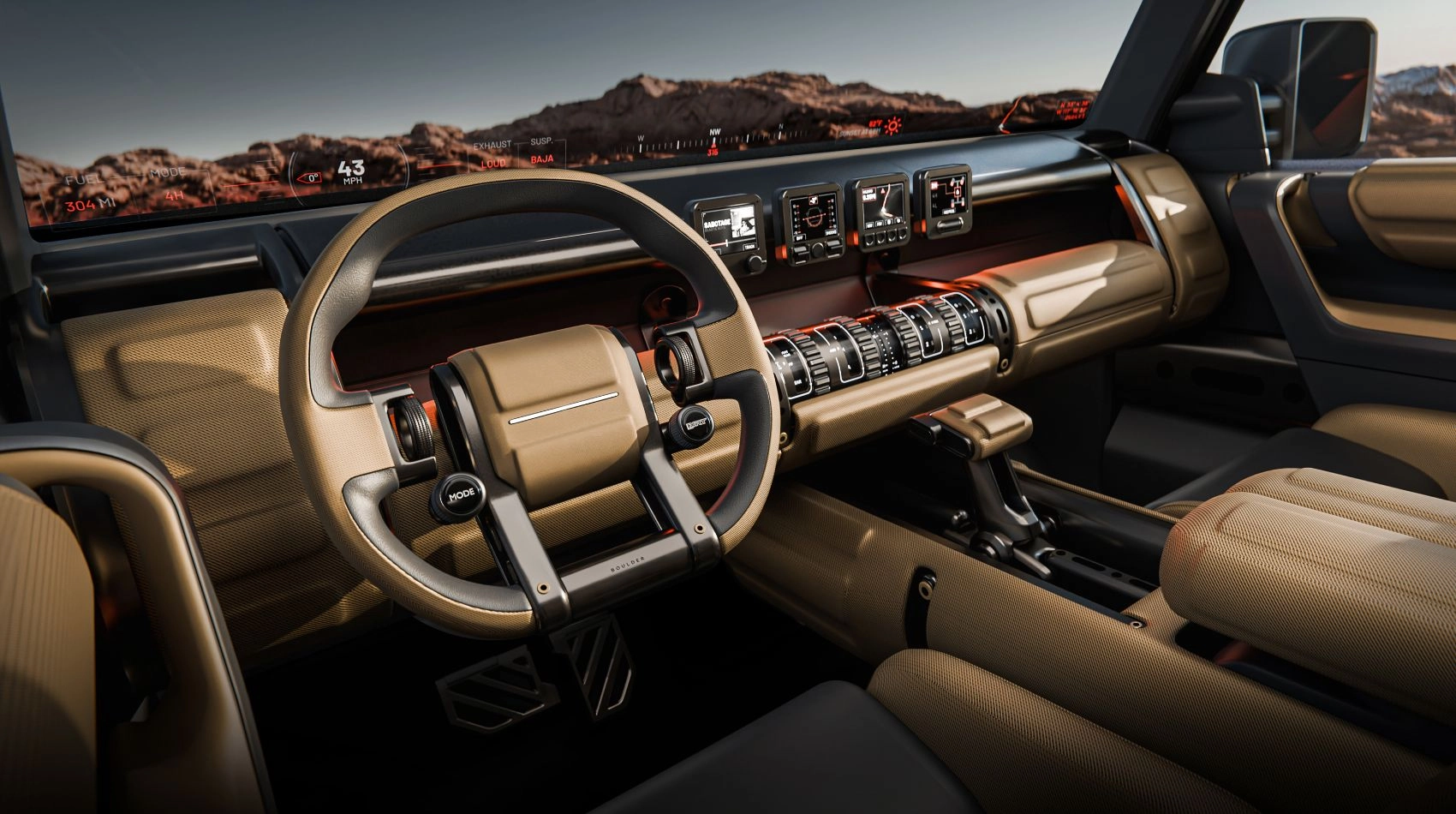
Inside, the cabin continues the rugged, functional theme. Finished in a two-tone beige and black layout, it focuses on durability with robust materials used across high-contact areas like grab handles. The dashboard combines physical controls with digital interfaces, including four separate squared-out screens that display navigation, media and off-road data. A full-width head-up display adds another layer of information delivery.
Technology plays a key role in enhancing usability. The steering wheel features rotary controls for different off-road modes, while a real-time, software-driven guidance system acts as a digital spotter — helping drivers navigate difficult terrain more confidently. Practical touches such as fold-out tray tables further reinforce its usability during outdoor use.
While the Boulder itself is unlikely to reach production in this exact form, its significance lies in what it represents. The underlying body-on-frame architecture is very real, and it signals Hyundai’s intent to enter a space traditionally dominated by established off-roaders and pickup trucks.